EBRC Postdoc Fellowships
EBRC Postdoctoral Fellowships are one year positions that leverage previous training to work with EBRC programs and to conduct an individual research project. Postdocs are an integral part of the EBRC Team and have the opportunity to learn and make significant contributions during their appointment. In addition to the independent and focus area projects, postdocs participate in EBRC core activities (annual meetings and retreats); contribute to EBRC cross-cutting efforts regarding bioeconomy advancement, responsible innovation, and diversity, equity, and inclusion; have opportunities for relevant training in science policy; and meet government officials and policymakers through EBRC events and, when possible, periodic trips to Washington, DC.
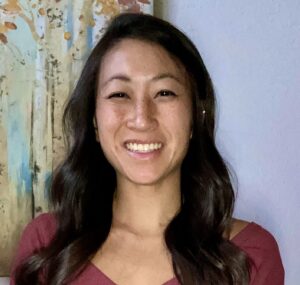
Julietta Sheng (2024-2025)
Julietta recently completed her Science Policy Postdoctoral Fellowship with the Engineering Biology Research Consortium (EBRC), where she supported the Education & Engagement and Roadmapping Focus Areas. She helped to organize and initiate the EBRC-sponsored special issue in JSPG on “Advancing Science & Technology Policy for the Next-Generation Bioeconomy.” She also contributed to the development of the Community BioFutures initiative, which aims to establish a national infrastructure to support local bioeconomy networks for engineering biology education and outreach.
Julietta is currently a Program Manager for the Education & Engagement Focus Area at EBRC, where she supports education and community-building efforts, including the continued development of the Community BioFutures project.
Julietta received her PhD in Biomedical Sciences/Neuroscience with Drs. Stuart Tobet and Robert J. Handa at Colorado State University. Outside of work, she likes to try new food recipes, read psychological thrillers, and go on long walks with her puppos.
Currently: Program Manager for the Education & Engagement, EBRC
Sebastian Rivera (2024-2025)
Prior to joining EBRC, Sebastian received his PhD in Chemical Biology and a certificate in Science, Technology, and Public Policy from the University of Michigan, where he was also a Chemistry-Biology Interface Training Fellow. During his postdoc with EBRC, Sebastian helped lead projects on nucleic acid synthesis screening and co-authored EBRC’s Strengthening a Safe and Secure Nucleic Acid Synthesis Ecosystem report. His independent project, Risk Mitigation for Biological Design Tools, provides commentary and recommendations on risk mitigation strategies that balance the dual-use nature of AI enabled biological design tools. He is currently a Program Manager for EBRC, with a focus on security and AIxBio related projects.
Currently: Program Manager AIxBio and Security, EBRC
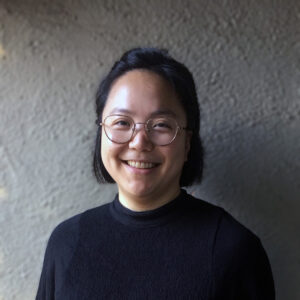
Cynthia Ni (2022-2023)
Cynthia Ni joined EBRC as a Postdoctoral Scholar in September 2022, working with the Policy & International Engagement Working Group and leading the organization of the EBRC Global Forum 2.0. She played a key role in EBRC’s Engineering Biology Global Metrics and Technical Standards for the Bioeconomy, conducted policy work in response to the 2022 Bioeconomy Executive Order, and contributed to several other EBRC initiatives. Cynthia earned her PhD in Chemical Engineering from MIT in 2022, focusing on genetically engineered E. coli to utilize mixed feed streams for biosynthesis – a project motivated by the desire to convert food waste into useful products. She was also involved in departmental DEI initiatives, peer counseling, and improving the graduate student experience across the institute. Cynthia is currently the Director of Innovation Programs at BEAM Circular.
Currently: Director of Innovation Programs, BEAM Circular
Wilson Sinclair (2022-2023)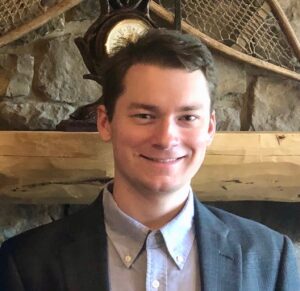
Wilson Sinclair was a Postdoctoral Scholar at EBRC from 2022-2023, working in the Security focus area on bioeconomic investment and biosecurity policy. He graduated with a Ph.D. in Chemistry from Stanford University where he used chemical biology methods to study host-pathogen interactions in tuberculosis infection for therapeutic discovery. His independent project focused on academic and federal policies to enable transdisciplinary research and responsible innovation. He is now the Assistant Director for Emerging Biotechnology Policy at the National Institutes of Health in the Office of Science Policy where he leads horizon scanning activities and the development and implementation of biosecurity and bioeconomic policies.
Currently: Assistant Director (Acting) for Emerging Biotechnology, NIH Office of Science Policy

Sifang Chen (2021-2022)
Sifang Chen was a Postdoctoral Scholar at EBRC from 2021-2022, working closely with the Research Roadmapping Working Group and leading the development of EBRC’s Engineering Biology for Climate & Sustainability: A Research Roadmap for a Cleaner Future. Prior to joining EBRC, she worked on DNA computing and DNA data storage as a postdoctoral researcher at the University of Washington. She also interned and worked as a visiting researcher at Microsoft Research, where she developed chemical-based wearables and low-cost pollution sensors. Sifang received her Ph.D. in Physics from the University of Washington in 2019, researching DNA-based programmable materials.
Currently: Senior Managing Science and Innovation Advisor, Carbon180
Albert Hinman (2021-2022)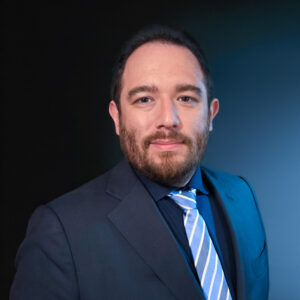
Dr. Albert Hinman was a postdoctoral fellow with EBRC from February 2021 to May 2022. He led the projects that culminated in An Assessment of Short-Term Milestones in EBRC’s 2019 Roadmap, Engineering Biology and Actions to Enable an Equitable and Innovative U.S. Bioeconomy. He also served as a Research Associate for the Schmidt Sciences report The U.S. Bioeconomy: Charting a Course for a Resilient and Competitive Future. Following his time at EBRC, he completed the Genetics and Public Policy Fellowship program sponsored by the National Human Genome Research Institute and the American Society of Human Genetics. He was subsequently hired by the U.S. House of Representatives to work on federal science policy issues.
Currently: Professional Staff Member, US House of Representatives
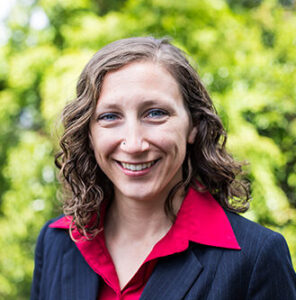 Becky Mackelprang (2018-2019)
Becky Mackelprang is the Director for Security Programs at the Engineering Biology Research Consortium. She leads EBRC’s Security Focus Area, bringing stakeholders across academia, industry, and government together to integrate security awareness into the policy and practice of engineering biology. Becky leads the development of commentary and recommendations on issues such as screening by synthetic DNA providers and the security implications at the intersection of artificial intelligence and engineering biology. She has implemented strategies to incorporate security into researcher education and training. Becky is committed to supporting an engineering biology research and development ecosystem that maximizes societal benefit while using a multi-faceted approach to support safe, secure, and productive innovation. Previously, Becky was an EBRC Science Policy Postdoctoral Scholar, an AAAS Mass Media Fellow, a science communication postdoctoral researcher at UC Berkeley, and received her Ph.D. in Plant Biology from UC Berkeley.
Currently: Director of Security, EBRC
Eric Lee (2018-2019)
Eric Lee, PhD (he/him), is a Senior Biological Scientist in the U.S. Government Accountability Office. He was a postdoctoral fellow at EBRC from 2019-2020. As a fellow, he led and designed the microbiome engineering roadmap and contributed to the materials science roadmap. Prior to EBRC, he received his Bachelor of Arts in Biochemistry from Columbia University and his Ph.D. in Infectious Diseases & Immunity at the University of California, Berkeley. After leaving EBRC, he was a AAAS Science & Technology Policy Fellow at the U.S. Agency for International Development (USAID), and now supports science and technology issues for the U.S. Congress on topics such as regenerative medicine, antiviral drug development, and biosecurity, as part of the Science, Technology Assessment, and Analytics Team at GAO.
Currently: Senior Biological Scientist, Government Accountability Office