[VIRTUAL] Writing Workshop: An EBRC Roadmap for Materials Engineering

Participation in this virtual workshop is by invitation only. Please contact roadmap@ebrc.org for more information.


As a follow-up to EBRC’s 2019 roadmap Engineering Biology, we are developing a technical research roadmap for materials from engineering biology, to be published in Summer 2020, focusing on technologies related to:

  • The structure and functionality of biological and inorganic materials,
  • Production of novel and defined biopolymers,
  • Engineering cells and consortia to produce challenging natural materials and compounds, and
  • Tools and technologies for the production of living materials that incorporate  cells to sustain active and responsive behaviors.

The roadmap will also address applying these technologies, with broad implications for industry, agriculture, medicine, and other biotechnology sectors.

This writing workshop will be a critical opportunity to create the goals, objectives, and milestones of a roadmap for materials from engineering biology, and to articulate the impact of engineering biology applied to novel materials. Workshop activities are expected to include:

  • Plenary discussions addressing scope, high-level goals and challenges, and appropriateness of milestones;
  • Breakout groups to draft and revise content specific to technical themes and/or application spaces; and
  • Plenary and breakout group review of material.

Agenda

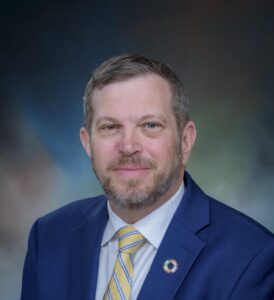
Deepti Tanjore

At ABPDU, our passion for bio-innovation drives us. Every day. Whether we’re evaluating biomass, experimenting with microorganisms, optimizing new processes, or performing assays and analyses, our end goal never changes. Simply put, we want to enable you to successfully take your bio-innovation to market.

We’ve been operational since 2012, collaborating with researchers in the bio-products industry, the National Labs, and academia to optimize and scale technologies to enable the commercialization of bio-based chemicals, materials, and fuels.

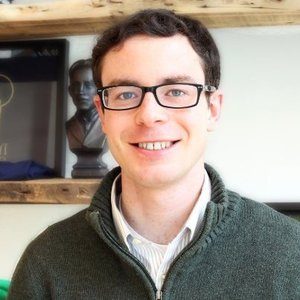
Patrick Cirino

Patrick Cirino is Associate Professor in the Departments of Chemical and Biomolecular Engineering, and Biology and Biochemistry, at the University of Houston (Houston, TX). He received his PhD degree in chemical engineering from The California Institute of Technology, working with advisor Frances Arnold in the area of cytochrome P450 directed evolution. He then worked as a postdoctoral research associate in microbiology at the University of Florida, under Lonnie Ingram. Current research at the University of Houston incorporates directed evolution and synthetic biology to study and engineer protein-based sensors, biosynthesis pathways, and biocatalysts for production of natural products and functionalization of hydrocarbons.

Nima Hajinajaf

Nima Hajinajaf is currently a Ph.D. student of Chemical Engineering at Arizona State University in Prof. Varman’s Lab. He received his master’s in Chemical Engineering from the University of Tehran. His previous work was on “Photobioreactor optimization for CO2 removal and wastewater treatment by microalgae”. Currently, his work is on the Metabolic Engineering of Cyanobacteria and Bacteria to produce chemicals

Writing Workshop: An EBRC Roadmap for Microbiomes Engineering

Participation in this workshop is by invitation only. Please contact roadmap@ebrc.org for more information.

Draft Agenda Workshop Documents Folder


Microbiomes have the capacity to substantially influence their environment in novel ways, and therefore engineering and applying these technologies has broad implications for industry, agriculture, medicine, and other biotechnology sectors.

This writing workshop will be a critical opportunity to refine the scope, topics, and themes of a roadmap for microbiome engineering, and to create the technical content of the roadmap. Workshop activities are expected to include:

  • Plenary discussions addressing scope, high-level goals and challenges, and appropriateness of milestones;
  • Breakout groups to draft and revise content specific to technical themes and/or application spaces; and
  • Plenary and breakout group review of material.
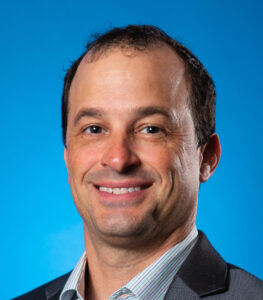
Malice Analysis, University of Washington

Register Here

Biology is easier than ever to engineer. This reality requires researchers to take proactive steps to consider the security implications of their work. The Engineering Biology Research Consortium (EBRC) is holding an interactive workshop to help you identify potentially malicious applications of your work, mitigation options, and what to do if you identify something and don’t know how to proceed. This four-hour, technically-focused workshop will include plenary presentations and discussion and small group analysis of participant projects. Refreshments will be served culminating with lunch as part of the final debrief. Participants that complete all aspects of the workshop will receive a certificate of completion which can be noted on your CV.

This workshop is supported by the U.S. Department of Homeland Security under Grant Award Number, 2017‐ST‐108‐FRG002.

Malice Analysis, Colorado State University

Biology is easier than ever to engineer. This reality requires researchers to take proactive steps to consider the security implications of their work. The Engineering Biology Research Consortium (EBRC) is holding an interactive workshop to help you identify potentially malicious applications of your work, mitigation options, and what to do if you identify something and don’t know how to proceed. This four-hour, technically-focused workshop will include plenary presentations and discussion and small group analysis of participant projects.  Participants that complete all aspects of the workshop will receive a certificate of completion which can be noted on your CV.

Tuesday, December 8, 2020
1:00-5:00 PM Mountain Time, 12:00-4:00 PM Pacific Time

Register Here

Malice Analysis: Colorado State is being hosted by CSU faculty to better build and support a local security community in Colorado. Thus, this Malice Analysis workshop will preferentially accept participants from the Fort Collins area. However, all are welcome to register and will be admitted based on availability and registration date. Additional workshops will also be forthcoming. Contact Helix@ebrc.org, if you’re interested in hosting a virtual Malice Analysis workshop for your institution.

This workshop is supported by the U.S. Department of Homeland Security under Grant Award Number, 2017‐ST‐108‐FRG002.

Eric Lee

Eric recently received his PhD in Infectious Diseases and Immunity at the University of California, Berkeley. In graduate school, he studied isoprenoid metabolism in the bacterial pathogen Listeria monocytogenes. Outside of the lab, he was an active member of the Science Policy Group at Berkeley and was involved with science advocacy at the local, state, and federal levels, most notably by working with Assemblymember Bill Quirk to propose California Assembly Bill 1178, which aimed to increase labeling standards for over-the-counter probiotic supplements. In his spare time, he enjoys windsurfing at the Berkeley marina. He will primarily be working with the EBRC Roadmapping Working Group.

Becky Mackelprang

Becky Mackelprang is the Director for Security Programs at the Engineering Biology Research Consortium. She leads EBRC’s Security Focus Area, bringing stakeholders across academia, industry, and government together to integrate security awareness into the policy and practice of engineering biology. Becky leads the development of commentary and recommendations on issues such as screening by synthetic DNA providers and the security implications at the intersection of artificial intelligence and engineering biology. She has implemented strategies to incorporate security into researcher education and training. Becky is committed to supporting an engineering biology research and development ecosystem that maximizes societal benefit while using a multi-faceted approach to support safe, secure, and productive innovation. Previously, Becky was an EBRC Science Policy Postdoctoral Scholar, an AAAS Mass Media Fellow, a science communication postdoctoral researcher at UC Berkeley, and received her Ph.D. in Plant Biology from UC Berkeley.

Gene Olinger

Dr. Gene Olinger is the Director of the Galveston National Laboratory and a Professor in the Department of Microbiology & Immunology at the University of Texas Medical Branch (UTMB). He also serves as the Sealy Distinguished University Chair in Tropical & Emerging Virology and Co-Director of the Scholarly Concentration in Translational Research (SciTR). For over 20 years, Dr. Olinger has conducted and supervised in vitro and in vivo research in maximum biocontainment laboratories (BSL-2 to BSL-4) across government, industry, and academic institutions. His work has focused on high-consequence pathogens, global health security, and biodefense. Internationally recognized as a subject matter expert in virology, immunology, biorisk, biosecurity, and biosafety, he has played a critical role in outbreak response efforts, coordinating diagnostic, serological, and clinical assays to monitor patients during and after epidemics. Dr. Olinger has extensive experience in the development of medical countermeasures, including prophylactic treatments, vaccines, diagnostics, and therapeutics. In recent years, he has expanded his expertise to synthetic biology, AI/ML as well as innovative workforce development through mixed-reality and blended learning, science policy, and bioeconomy team-building.

Matthew Owens

Matt was an early team member of the NYC-based global education start-up, General Assembly, and helped spearhead GA’s first programs in NYC and Los Angeles. Before this, he worked as a strategy consultant with Stax, Inc. in Boston and as an analyst for a SF-based start-up, Gratio Capital. Matt has also worked with the founding teams of several science based ventures, including Agile Sciences and Innova Dynamics. He is a graduate of the Management and Technology and Integrated Product Design (MSE) programs at the University of Pennsylvania. In Philadelphia, Matt served on the board of Philly Startup Leaders and as an Engagement Manager for the cleantech practice of Wharton’s Small Business Development Center. He is an avid runner and when not at Harlem Biospace he can likely be found running through the city.

Synbio Manufacturing Innovation Institute Stakeholders Meeting

The EBRC is hosting a Synbio MII Stakeholders Meeting on January 24, 2020 in Houston, TX. We will outline our general vision for the institute and discuss community needs. Specifically, we will host a dialogue on Membership & Structure, R&D Planning, Institute Capacity Needs, Location, IP & Data Sharing, and Workforce Development. We will use input from this meeting to draft a framework of the Institute for community feedback, continued dialogue, and ultimately to create of a strong, proposing team.

As outlined in the U.S. Department of Defense recent Request for Information and Notice of Intent, the FOA will request the Synbio MII focus on innovations in biomanufacturing non-biomedical products, be structured to address both DoD and commercial applications, and focus on maturing technologies from TRL 4 to 7.

Read our Dear Colleagues Letter

This meeting is open to relevant biomanufacturing stakeholders and is subject to capacity limits. Organizations not US-owned and operated inside the United States should contact SynbioMII@ebrc.org prior to registering. Advance registration is required.

Update (17 Jan): Registration is nearly at capacity. If you would like to participate, please email SynbioMII@ebrc.org and we will do our best to accommodate you.

Updated Meeting AgendaRead our Q&A

IMPORTANT DATES

  • January 17, 2020 – Last day to register, if we don’t reach capacity beforehand.
  • January 24, 2020 – Meeting will run from 8:30 AM to 4:00 PM. (We recommend a departing flight after 5:30 PM to fully participate)

WORKSHOP VENUE & HOST HOTEL INFORMATION:

Houston Airport Marriott at George Bush Intercontinental 
18700 John F Kennedy Blvd, Houston, TX 77032 | 281-443-2310

Negotiated room rate: $159/night plus taxes/fees [A link will be provided when your registration is accepted.]

Point of Contact

You may contact the EBRC Team at SynbioMII@ebrc.org