Synthetic Biology US 2024

Don’t miss Synthetic Biology US 2024! Join leading omics experts and researchers for a two-day event accelerating the development of synthetic biology tools to enable effective therapeutics development.

Returning for the 3rd year, the 2024 event again brings together a panel of prominent leaders and scientists, sharing new case studies, original data and industry outlook. Connect, collaborate, and innovate with global academic and research organisations, as well as pharma representatives, for high-level discussions on pioneering approaches to developing advanced synthetic biology tools for target discovery, production optimisation, AI/ML approaches as well as synthetic biology-based therapeutics case studies.

Mark your calendar to be part of this dynamic gathering!

3rd Annual Oligonucleotides Congress

Oxford Global’s 3rd Annual Oligonucleotides Congress, 13 – 15 March 2023, London, UK, will be attended by over 500 industry innovators to network about the latest advancements in oligonucleotide chemistry. Key leaders will be delving into novel platforms & technologies for the successful delivery of oligonucleotides, the development of greener synthetic processes, as well as innovative computational approaches & methods for discovery and analytical development.

Alongside our in-depth presentations will be regular networking breaks, giving you the chance to connect and collaborate with other experts in your field and learn more about solutions and services on offer to accelerate your work.

Co-located with the 17th Annual Proteins & Antibodies Congress, 11th Annual Peptides Congress and 2nd Annual Sustainability in Biologics Congress, these events will deliver over 80 exciting industry presentations across 3 days and providing unparalleled opportunity for high level scientific discussion.

Organ Modelling and 3D Cell Culture 2024

Connecting leaders in drug discovery to optimise organ modelling techniques and facilitate advanced applications.

Formulation & Delivery 2024

Learn from and meet leading experts in pharmaceutical science, addressing the critical strategic advances and technical innovation in formulation, drug delivery, RNA therapeutics & inhaled therapies.

The 2024 event will be opened by the highly acknowledged expert Thomas von Erlach, Chief Scientific Officer at Vivtex highlighting Drug Delivery Systems For Biologics. This is the event to attend to stay ahead of the curve.

Key focuses this year include:
Small Molecule Drug Formulation – showcasing AI-driven automation in formulation processes and a panel on the ongoing progress in sustainable manufacturing

Biologics Drug Delivery – encompassing strategies for improved oral delivery and a feature workshop on characterisation of exosomes for drug delivery

Bioanalysis: Stability, Characterisation, Developability – covering protein characterisation, aggregation prevention, and digital twins for advanced lyophilisation

Small Molecule Drug Delivery – highlighting a workshop on PROTAC drug delivery for improved bioavailability and enhanced targeting

Biologics and New Modalities Formulation – emphasising advances in vaccine formulations and longer-acting forms

Potential Changes to the Policies for Oversight of DURC and the P3CO Policy Framework

Publication Date: October 2023

Potential Changes to the Policies for Oversight of Dual Use Research of Concern (DURC) and the Potential Pandemic Pathogen Care and Oversight (P3CO) Policy Framework: An EBRC Response to OSTP RFI 88 FR 60513.

Identifying Ambiguities, Gaps, Inefficiencies, and Uncertainties in the Coordinated Framework for the Regulation of Biotechnology

Publication Date: February 2023

This RFI requested relevant data and information, including case studies, that may assist in identifying any regulatory ambiguities, gaps, inefficiencies, or uncertainties in the Coordinated Framework for the Regulation of Biotechnology, particularly with regard to new and emerging biotechnology products.

National Biotechnology and Biomanufacturing Initiative: An EBRC Response to OSTP RFI 87FR77901

Publication Date: January 2023

This RFI sought public input on how advances in biotechnology and biomanufacturing can help us achieve goals that were previously out of reach and what steps can be taken to ensure we have the right research ecosystem, workforce, data, domestic biomanufacturing capacity, and other components to support a strong bioeconomy.

Elizabeth Kellogg

Elizabeth Kellogg did her undergraduate studies at UC Berkeley and received a PhD from the University of Washington, working on computational biology in the group of David Baker. She then became a postdoctoral fellow in the lab of Eva Nogales at UC Berkeley using cryo-electron microscopy. Her scientific background results in a scientific approach that seeks to understand biology with a quantitative perspective, relying on biological structure determination and design. Since starting her own group at Cornell University in 2019, Dr. Kellogg has sought to understand how transposons reshape genomes and how they can be repurposed as genome-editing tools. In particular, her group has investigated the behavior and molecular mechanisms of programmable, CRISPR-associated transposons (CASTs), to determine how DNA integration is regulated spatially and temporally in a genomic context, using a combination of biochemical, structural, single-molecule and genetic approaches. Among other honors, Dr. Kellogg was selected as Pew Biomedical Scholar in 2021 and received the 2023 Margaret Oakley Dayhoff Award from the Biophysical Society. She joined St. Jude as an Associate Member in 2023.

Janet Standeven

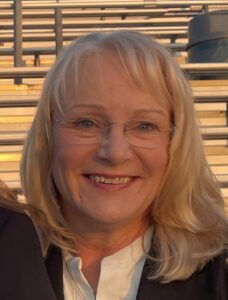
An educator with 28 years of classroom experience in Core Sciences, Social Sciences and Biotechnology. Founded the Lambert iGEM program in 2012. In 2022 Lambert’s team was named the Grand Prize Winner of the iGEM Jamboree. The iGEM competition is the leading collegiate competition in the field of synthetic biology. She is a 2022 recipient of a NIH SEPA grant with Dr. Bhamla of Georgia Institute of Technology. In collaboration with members of the Bhamla lab she leads students in research and development of synthetic biology projects that also include hardware and software components. Ongoing projects include the ElectroPen, a 23 cent electroporator and other frugal devices for extraction of DNA and quantification of data.

Ms. Standeven received a BA in Anthropology and Social Studies Teaching Certificate from Millersville University of Pennsylvania. She earned her Master of Chemical Life Science from the University of Maryland in 2013. During her master’s studies she was a recipient of a G.I.F.T. fellowship with the Styczynski Group at Georgia Institute of Technology and subsequently received RET, support with the Styczynski group from 2014-2018. She is a recipient of numerous teaching awards and recognitions including Teacher of the Year in 2011 for Riverwatch Middle School, 2018 for Lambert High School, Forsyth County School STAR teacher in 2019 and 2023, in addition to being recognized as Biotechnology Teacher of the Year in Georgia for 2016. She was an attendee at the White House Bioeconomy Summit in 2019. She currently participates on the Human Practices committee for the iGEM foundation and serves as a Master Teacher for GABIO’s Rural Teacher Training Initiative.

Space Health Roadmap In-person Workshop 1

This workshop is by invitation only, with a limited number of attendees. This active writing workshop will focus on drafting our technical research roadmap to advance engineering biology tools and technologies for human health and well-being in space and related application opportunities on Earth.

Registration for this workshop is now closed.

Detailed Agenda Coming Soon! The workshop will be held at the J. Craig Venter Institute in La Jolla, CA. Participants can expect the workshop to run from 8:00am-5:00pm on December 14, and 8:00am-3:00pm on December 15.

Workshop Objectives

  • Participants will identify and discuss opportunities for advancement in engineering biology to support the health and well-being of human travelers to space, including applications in food and nutrition, medicine, and environmental control.
  • Participants will directly contribute to the roadmap by drafting roadmap elements, including breakthrough capabilities, milestones, and discrete technical challenges.
  • Participants will have the opportunity to network and share ideas with fellow researchers across disciplines, opening the door to future collaborations and partnerships.

Travel Support and Meeting Hotel:
We anticipate covering travel expenses for academics, including students and postdocs. Please see EBRC’s full travel policy here.

Hotel information coming soon. Please indicate on the registration page if you anticipate needing hotel accommodations. If your travel is not covered by EBRC, you can provide payment at check-in. Please contact helix@ebrc.org with any questions.

For more information about the roadmap or workshop, please contact Emily (eaurand@ebrc.org)

Space Health Roadmap In-person Workshop 2

This workshop is by invitation only, with a limited number of attendees. This active writing workshop will focus on drafting our technical research roadmap to advance engineering biology tools and technologies for human health and well-being in space and related application opportunities on Earth.

Registration is now closed. 

For those eligible for travel support, please register by February 8; Registration closes February 16.

Detailed Agenda Coming Soon! Participants can expect the workshop to run from 8:00am-5:00pm on March 4, and 8:00am–3:00pm on March 5.

Workshop Objectives

  • Participants will identify and discuss opportunities for advancement in engineering biology to support the health and well-being of human travelers to space, including applications in food and nutrition, medicine, and environmental control.
  • Participants will directly contribute to the roadmap by drafting roadmap elements, including breakthrough capabilities, milestones, and discrete technical challenges.
  • Participants will have the opportunity to network and share ideas with fellow researchers across disciplines, opening the door to future collaborations and partnerships.

Travel Support:
We anticipate covering travel expenses for academics, including students and postdocs. Please see EBRC’s full travel policy here.

Meeting Hotel:

Hilton NASA Clear Lake
3000 NASA Pkwy
Houston, TX 77058

Please indicate on the registration page if you anticipate needing hotel accommodations; once the workshop location has been selected, we will follow up to confirm your hotel reservation needs. If your travel is not covered by EBRC, you can provide payment at check-in. Please contact helix@ebrc.org with any questions rather than contacting the hotel directly.

For more information about the roadmap or workshop, please contact Emily (eaurand@ebrc.org)

For information on EBRC’s travel policies, please contact helix@ebrc.org.

Space Health Roadmap In-person Workshop 3

Workshop registration is now closed. If you are still interested in attending, please email roadmapping@ebrc.org.

This active writing workshop will focus on drafting our technical research roadmap to advance engineering biology tools and technologies for human health and well-being in space and related application opportunities on Earth.

A draft agenda is available here.

Workshop Objectives

  • Participants will identify and discuss opportunities for advancement in engineering biology to support the health and well-being of human travelers to space, including applications in food and nutrition, medicine, and environmental control.
  • Participants will directly contribute to the roadmap by drafting roadmap elements, including breakthrough capabilities, milestones, and discrete technical challenges.
  • Participants will have the opportunity to network and share ideas with fellow researchers across disciplines, opening the door to future collaborations and partnerships.

Travel Support and Meeting Hotel:
We anticipate covering travel expenses for academics, including students and postdocs. Please see EBRC’s full travel policy here.

EBRC has coordinated a block of rooms at The Georgian Terrace hotel, near the Georgia Tech campus. Please indicate on the registration page if you anticipate needing hotel accommodations; we will follow up to confirm your room reservation. If your travel is not covered by EBRC, you will need to provide payment at check-in. Please contact helix@ebrc.org with any questions.

For more information about the roadmap or workshop, please contact roadmapping@ebrc.org

EBRC Annual Meeting:
This workshop will precede the EBRC Annual Meeting, May 16-17 at Georgia Tech. Workshop participants are invited to attend. Find more information and registration here.