SPA update from the July 2020 EBRC newsletter

In February, the SPA welcomed thirteen mentor-mentee pairs to the EBRC Mentorship Program, the largest cohort yet. The Mentorship Program creates one-on-one partnerships between graduate students and postdocs and professional EBRC members from industry, nonprofits, and government.

During the virtual EBRC Annual Meeting in early April, the SPA hosted an entrepreneurship-focused panel about the Small Business Innovation Research (SBIR) program. The panel featured representatives from NSF, Fannin Innovation Studio, and Lynntech, Inc.

On April 30, the SPA organized an informal virtual Industry Panel and Networking Session with representatives from EBRC member companies LanzaTech, Tierra Biosciences, BASF, and Twist Biosciences. The event included a panel discussion and networking with the panelists about their careers in the biotechnology industry.

The SPA is working on growing it’s interactive members. We encourage graduate students and postdocs to apply for SPA membership here.
Malice Analysis: September 2020 Virtual Workshops

EBRC is hosting several Malice Analysis Workshops during the month of September to train researchers to critically evaluate the security implications of their research. Pick the workshop time and date that fits your schedule and join us!

Malice Analysis: Assessing Biotechnology Research for Security Concerns

EBRC’s Malice Analysis program trains researchers and others associated with engineering biology to critically evaluate research for potential security concerns. By providing practitioners with the tools and a framework to conduct basic security analyses, EBRC hopes to support a culture in the field of engineering biology that incorporates the consideration and discussion of security into the research and development life-cycle.

Activation of Energy Metabolism through Growth Media Reformulation Enables a 24-Hour Workflow for Cell-Free Expression

Max Z. Levine, Byungcheol So, Alissa C. Mullin, Rob Fanter, Kayla Dillard, Katharine R. Watts, Michael R. La Frano, and Javin P. Oza. ACS Synthetic Biology.

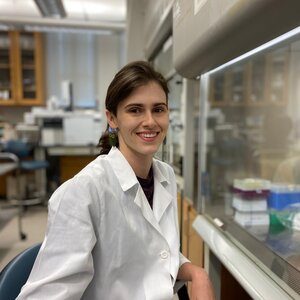
Emily Fulk

I am a PhD student in the Systems, Synthetic and Physical Biology program at Rice University, where I develop synthetic biology tools to understand how microbes in soils and marine sediments interact with their environments. I’m jazzed about the potential for synthetic biology to provide new options for low-carbon energy, biodegradable materials, and sustainable agriculture as well as a better understanding of Earth processes. I hope to continue in these fields throughout my career.

While at Rice, I founded a graduate student group dedicated to promoting sustainable practices on campus and have been active in pursuing science communication and science policy experiences. Prior to graduate school, I graduated with a BS in chemical engineering from Northwestern and spent a year working at the National Renewable Energy Lab.

My non-science alter ego specializes in educational explosions at the Houston Museum of Natural Science (where I volunteer as a docent), climbing rocks, and eating lots of snacks.

You get what you screen for: on the value of fermentation characterization in high-throughput strain improvements in industrial settings

Maren Wehrs, Alexander de Beaumont-Felt, Alexi Goranov, Patrick Harrigan, Stefan de Kok, Sarah Lieder, Jim Vallandingham & Kristina Tyner. Journal of Industrial Microbiology & Biotechnology.

The Genetic Code Kit: An Open-Source Cell-Free Platform for Biochemical and Biotechnology Education

Layne C. Williams, Nicole E. Gregorio, Byungcheol So, Wesley Y. Kao, Alan L. Kiste, Pratish A. Patel, Katharine R. Watts and Javin P. Oza. Frontiers in Bioengineering and Biotechnology.

EBRC Malice Analysis (Virtual) Workshop: September 23, 2020

Register Here

Biology is easier than ever to engineer. While almost all synthetic biologists will use the tools of engineering biology / synthetic biology to understand the world around us and make it a better place, we need to recognize that malicious actors can also use these tools to generate harmful organisms or products. This reality requires researchers to take proactive steps to consider the security implications of their work. The EBRC is holding an interactive virtual workshop to train graduate students and postdocs to assess their own work for potentially malicious utility. We’ll discuss what to do if you identify a potential security issue in your own research or that of your colleagues.

EBRC Malice Analysis (Virtual) Workshop: September 21, 2020

Register Here

Biology is easier than ever to engineer. While almost all synthetic biologists will use the tools of engineering biology / synthetic biology to understand the world around us and make it a better place, we need to recognize that malicious actors can also use these tools to generate harmful organisms or products. This reality requires researchers to take proactive steps to consider the security implications of their work. The EBRC is holding an interactive virtual workshop to train graduate students and postdocs to assess their own work for potentially malicious utility. We’ll discuss what to do if you identify a potential security issue in your own research or that of your colleagues.

EBRC Malice Analysis (Virtual) Workshop: September 18, 2020

Register Here

Biology is easier than ever to engineer. While almost all synthetic biologists will use the tools of engineering biology / synthetic biology to understand the world around us and make it a better place, we need to recognize that malicious actors can also use these tools to generate harmful organisms or products. This reality requires researchers to take proactive steps to consider the security implications of their work. The EBRC is holding an interactive virtual workshop to train graduate students and postdocs to assess their own work for potentially malicious utility. We’ll discuss what to do if you identify a potential security issue in your own research or that of your colleagues.

EBRC Malice Analysis (Virtual) Workshop: September 16, 2020

Register Here

Biology is easier than ever to engineer. While almost all synthetic biologists will use the tools of engineering biology / synthetic biology to understand the world around us and make it a better place, we need to recognize that malicious actors can also use these tools to generate harmful organisms or products. This reality requires researchers to take proactive steps to consider the security implications of their work. The EBRC is holding an interactive virtual workshop to train graduate students and postdocs to assess their own work for potentially malicious utility. We’ll discuss what to do if you identify a potential security issue in your own research or that of your colleagues.

EBRC Malice Analysis (Virtual) Workshop: September 9, 2020

Register Here

Biology is easier than ever to engineer. While almost all synthetic biologists will use the tools of engineering biology / synthetic biology to understand the world around us and make it a better place, we need to recognize that malicious actors can also use these tools to generate harmful organisms or products. This reality requires researchers to take proactive steps to consider the security implications of their work. The EBRC is holding an interactive virtual workshop to train graduate students and postdocs to assess their own work for potentially malicious utility. We’ll discuss what to do if you identify a potential security issue in your own research or that of your colleagues.

Heba Sailem

Dr Heba Sailem is a Research Fellow at the Institute of Biomedical Engineering and the Big Data Institute. Her expertise transcends computer vision, image informatics, and system genetics which allows her to bring a unique perspective to tackling important challenges in cancer biology. She has pioneered the use of computational methods for knowledge discovery from large scale imaging data. Her work includes developing image analysis algorithms, image informatics, data visualisation and integration.