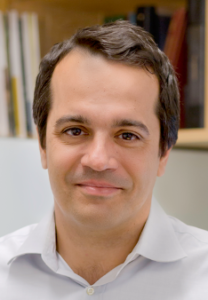
Matthew DeLisa

Matthew P. DeLisa is the William L. Lewis Professor of Engineering in the School of Chemical and Biomolecular Engineering at Cornell University and also the Director of the Cornell Institute of Biotechnology. His research focuses on understanding and controlling the molecular mechanisms underlying protein biogenesis — folding and assembly, membrane translocation and post-translational modifications — in the complex environment of a living cell. He received a B.S. in Chemical Engineering from the University of Connecticut in 1996; a Ph.D. in Chemical Engineering from the University of Maryland in 2001; and did postdoctoral work at the University of Texas-Austin, Department of Chemical Engineering. DeLisa joined the Department of Chemical and Biomolecular Engineering at Cornell University in 2003.

DeLisa has received over a dozen honorific distinctions and prestigious awards for his accomplishments in research including an NSF CAREER Award, a NYSTAR Watson Young Investigator Award, a Beckman Foundation Young Investigator Award, an MIT Technology Review TR35 Award (Top 35 Young Innovators under the age of 35), an Office of Naval Research Young Investigator Award, a NYSTAR Distinguished Faculty Award, the Wiley-Blackwell Biotechnology and Bioengineering Wang Award, and the American Chemical Society BIOT Division Young Investigator Award. More recently, DeLisa was selected to the IDA/DARPA Defense Science Study Group in 2014 and was elected as a fellow of the American Institute for Medical and Biological Engineering in 2014, the American Academy of Microbiology in 2019, and the American Association for the Advancement of Science in 2019.

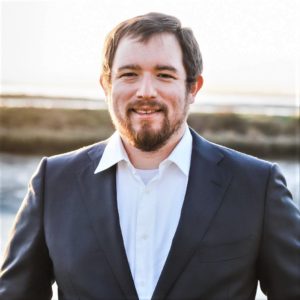
Albert Hinman

Albert recently finished his PhD at Stanford University in the Department of Genetics studying meiotic DNA double-strand break formation in Dr. Anne Villeneuve’s laboratory. In his time at Stanford, he was heavily involved with diversity and inclusion advocacy by being the President of the Stanford Society for the Advancement of Chicanos/Hispanics & Native Americans in Science (SACNAS) Chapter and Coleader of the Stanford Science Policy Group. He is excited to join EBRC and is very interested in understanding how scientific funding, researcher incentives, and the bioeconomy can be developed for greater societal impact within engineering biology. Albert can be found on Slack (@Albert Hinman) and reached via email awh@ebrc.org.

Elizabeth Vitalis

Beth is the Director of the 4S (Safety, Security, Sustainability, and Social Responsibility) program at BioMADE. In this role she is working with BioMADE members to build mechanisms and partnerships to help ensure the social values are embraced and integrated into all Biomanufacturing pursuits as we grow the Bioeconomy. Prior to BioMADE, she led a proactive Biosecurity program for Inscripta’s digital genome engineering platform while engaging the broader community to collaboratively advance security, responsibility, and education in bioengineering. Her contributions spanning two decades at Lawrence Livermore National Laboratory advanced a range of collaborative biodefense and global security efforts including multi-institute projects to promote biorisk detection and response. Over the years, she has enjoyed teaching community college, university, and graduate-level biology courses as well as forging community science education partnerships and events. Beth earned a BA in Chemistry from Concordia College in Minnesota and a PhD in Biomedical Sciences from the University of California, San Francisco.

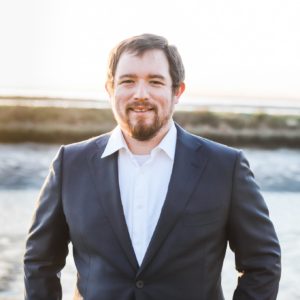
Albert Hinman

Albert recently finished his PhD at Stanford University in the Department of Genetics studying meiotic DNA double-strand break formation in Dr. Anne Villeneuve’s laboratory. In his time at Stanford, he was heavily involved with diversity and inclusion advocacy by being the President of the Stanford Society for the Advancement of Chicanos/Hispanics & Native Americans in Science (SACNAS) Chapter and Coleader of the Stanford Science Policy Group. He is excited to join EBRC and is very interested in understanding how scientific funding, researcher incentives, and the bioeconomy can be developed for greater societal impact within engineering biology.

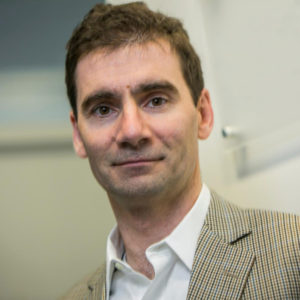
Leonidas Bleris

Leonidas Bleris is an Associate Professor with the Bioengineering Department of the University of Texas at Dallas. Before joining UTD, Bleris was a Postdoctoral Fellow at the FAS Center for Systems Biology at Harvard University. Bleris earned a Ph.D. in Electrical Engineering from Lehigh University in 2006. He received a Diploma in Electrical and Computer Engineering in 2000 from Aristotle University of Thessaloniki, Greece. Bleris was awarded the Christine Mirzayan Science and Technology Policy Graduate Fellowship from the National Academy of Science (NAS), and served with the Board of Mathematical Sciences and their Applications. During 2009-2010, Bleris was a Visiting Scientist at the FAS Center for Systems Biology at Harvard University, and since 2008 an Independent Expert with the European Commission under the “Science, Economy and Society” directorate. Bleris served as the University of Texas at Dallas Representative for the 2011-2012 Tuning Oversight Council for Engineering and Science, Committee on Bioengineering, and received the 2014 Junior Faculty Research Award from the Erik Jonsson School of Engineering and Computer Science. In 2018 Bleris was awarded a Cecil H. and Ida Green Chair in Systems Biology Science. His research has focused on systems biology, mammalian synthetic biology and genome editing, and has received support from the National Institutes of Health (NIH) and the National Science Foundation (NSF) including the NSF CAREER award.