Biomarkers US 2024

Discover the latest advancements in biomarkers at the 8th Annual Biomarker & Precision Medicine US Congress. Join experts from global pharma, top biotechs, and renowned academic institutions to explore emerging tools and strategies in translational science, diagnostics, and biomarker development.

Built with industry experts in mind, the conference program highlights:
• Exciting biomarker technologies impacting R&D in 2024
• Multi-omics, spatial biology, digital markers, and next-gen diagnostics
• The opportunity to engage with regulators, diagnostics manufacturers, and biopharma peers

Willy A. Valdivia-Granda

I am the founder of Orion Integrated Biosciences. I lead a group of researchers developing new techniques to decode microbes’ genomic information and map short DNA fragments to their source of origin, virulence, and possible genetic manipulation. My research includes the use of artificial intelligence algorithms including large language models, neural networks, and generative adversarial networks to design a new generation of biotentities for biotechnology applications. I also lead the advancement of a new generation of analytical tools for risk assessment and early warning of biothreats that can affect health, trade, and national security. This work includes processing large data sets from multiple sources, including geospatial, trade, news outlets, security, and economic signals and indicators using machine learning and artificial intelligence algorithms. I have research projects with collaborators in several countries within the European Union, New Zealand, Guinea, Ukraine, Colombia, and Brazil. I serve as a subject matter expert and adviser to several funding agencies and policymakers within the U.S. government, and Hong Kong Research Council overseeing funding programs of more than USD 200 Million. This role not only underscores the significance of our work but also facilitates the integration of computer science principles into the development of solutions for pressing global challenges in health and security.
From Intent to Impact: Enabling Transdisciplinary Research for Responsible Scientific Stewardship

Publication Date: March 2024 | Originally published in the Journal of Science Policy & Governance

Global challenges are complex and must be tackled in a holistic manner. Understanding and addressing them requires collaboration across disciplines, often uniting the humanities and social and natural sciences, to ask better questions and identify practical and revolutionary solutions. Universities can be excellent vehicles for transformational change as they educate the next generation of civically-motivated thinkers to create meaningful action and impact. Too often systemic, artificial barriers exist within these institutions that prevent meaningful transdisciplinary collaboration from succeeding. We recommend that universities identify grand challenges and foster a culture of cross-department collaboration with appropriate internal and external resources to enable broader impacts. Together, funders and institutional policymakers play a critical strategic role in fostering civic scientists and transdisciplinary researchers to solve multifaceted global problems.

Alexander Refsnes Andrassy

Research in cell culture models and synthetic biology innovations

Lynn Rothschild

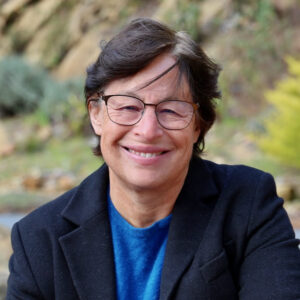
Lynn Rothschild is passionate astrobiologist focusing on the origin and evolution of life on Earth and elsewhere, while at the same time pioneering the use of engineering biology to enable space exploration. Her research focuses on how life, particularly microbes, has evolved in the context of the physical environment, both here and potentially elsewhere. A graduate of Yale, Indiana University and Brown, she has brought her imagination and creativity to the burgeoning field of synthetic biology, articulating a vision for the future of synthetic biology as an enabling technology for NASA’s missions, including human space exploration and astrobiology. From 2011 through 2019 she served as the faculty advisor of the Stanford-Brown iGEM team. Her lab tested these plans in space on in the PowerCell secondary payload on the DLR EuCROPIS satellite. A past-president of the Society of Protozoologists, she is a fellow of the Linnean Society of London, The California Academy of Sciences and the Explorer’s Club. She was awarded the Isaac Asimov Award from the American Humanist Association, and the Horace Mann Award from Brown University. She has been a NASA Innovative Advanced Concepts (NIAC) fellow seven times. Lynn was formerly Professor (Adjunct) at Stanford where she taught “Astrobiology and Space Exploration” for a decade.