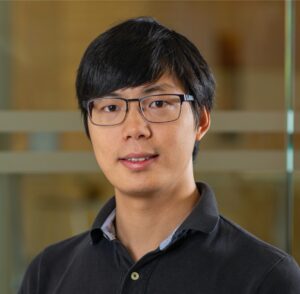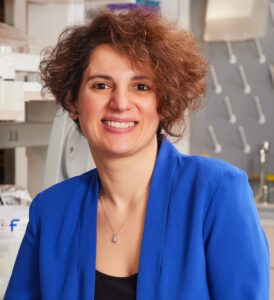
Rabia Yazicigil

Rabia Yazicigil is an Assistant Professor of ECE Department at Boston University. She was a Postdoctoral Associate at MIT and received her Ph.D. degree from Columbia University in 2016. Her research focuses on the development of Cyber-Secure Biological Systems, leveraging living sensors constructed from engineered biological entities seamlessly integrated with custom-designed semiconductor chips. This unique synergy harnesses the advantages of biology while incorporating the reliability and communication infrastructure of electronics, offering a unique solution to societal challenges in healthcare, environmental monitoring, and sustainable biomanufacturing. She has received numerous awards, including the NSF CAREER Award (2024), Early Career Excellence in Research Award for the Boston University College of Engineering (2024), the Catalyst Foundation Award (2021), Boston University ENG Dean Catalyst Award (2021), and “Electrical Engineering Collaborative Research Award” for her Ph.D. research (2016). She was selected as a member of the 2024 National Academy of Engineering (NAE) US Frontiers of Engineering (USFOE) cohort.

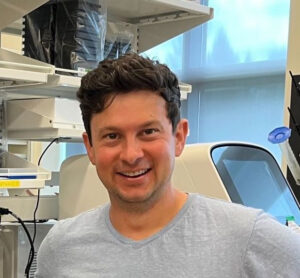
Reza Zadegan

R. Clay Wright

Clay Wright is an Assistant Professor in the Department of Biological Systems Engineering at Virginia Tech. His lab focuses on understanding and engineering chemical signaling pathways from plants and fungi. Clay received his BS in Chemical and Biomolecular Engineering from North Carolina State University and PhD in the same from Johns Hopkins University, where he worked with Professor Marc Ostermeier to engineer cancer therapeutic enzymes that are selectively active in the presence of a cancer marker. For his postdoctoral research, he worked with Professors Jennifer Nemhauser and Eric Klavins at University of Washington to study evolution and function of receptors for auxin, a critical plant growth hormone. Clay was recently awarded an NIH MIRA to further our understanding and engineering of chemically activated ubiquitin ligases, such as those that coordinate auxin signaling and other plant hormone signaling pathways.

Eric Young

Eric Young received undergraduate degrees in Chemical Engineering and Biological Engineering from the University of Maine at Orono. He received his Ph.D. in Chemical Engineering from the University of Texas at Austin as an NSF Graduate Research Fellow. He completed postdoctoral research at Massachusetts Institute of Technology developing the MIT-Broad Foundry. Dr. Young is an Associate Professor of Chemical Engineering, with affiliate appointments in Biomedical Engineering and Bioinformatics and Computational Biology at Worcester Polytechnic Institute. His research objective is to understand and engineer microbes that improve the human condition. This research program informs his educational goal – to train the current and future workforce for an economy shaped by engineered biology.

Fan Hong

Fan is interested in developing biomolecular tools to dive into the complexity of biology (decoding and regulating cellular functions on the molecular basis at the tissue scale). Before joining the faculty at the University of Florida, Fan was a Postdoc Fellow at Wyss Institute at Harvard University where he worked on the DNA advanced in situ spatial multi-omics (e.g., DNA thermal-plex) in the Yin Lab. Thermal-plex enables multiplexed fluorescent imaging of biomolecules with unprecedented feasibility and speed for tissue biospecimen analysis. Fan completed his Ph.D. at Biodesign Institute at Arizona State University and worked in the Yan Lab, Green Lab, and Sulc Lab, where he developed methods to program nucleic acids in vitro (e.g., Framework DNA nanoarchitecture), in vivo (e.g., SNIPR), and in silico (e.g., crowder-oxDNA) to address grand questions with chemical approaches to biology. Those methods enable the control of nucleic acid folding into complex framework biomolecular architectures from the nanoscale to the macroscale, the regulation of cellular gene expression based on the single nucleotide mutation in cells with de-novo-designed RNA riboregulators, and the investigation of the biophysical behavior of nucleic acid folding in the crowding cellular environment with molecular dynamics.