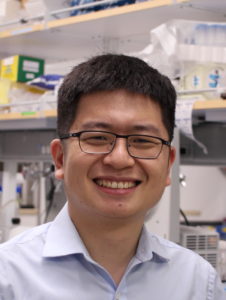
Seongkyu Yoon

Seongkyu Yoon is Professor in the Francis College of Engineering at the University of Massachusetts (UMass), Lowell. Currently Dr. Yoon is working as a co-director of Massachusetts Biomanufacturing Center, is the UMass site director of the National Science Foundation Industry–University Cooperative Research Centers Program Research Center (NSF-IUCRC), the Advanced Mammalian Biomanufacturing Innovation Center (AMBIC), and the UMass lead for ManufacturingUSA in Biomanufacturing (NIIMBL). His research interests include process system engineering, synthetic and systems biotechnology, regulatory sciences, and biomanufacturing innovation. He is leading a systems and synthetic biology research group while conducting research in systems and synthetic biotechnology, life science informatics, and regulatory sciences with goals to develop an innovative biomanufacturing platform of protein-cell-gene biotherapeutics. Dr. Yoon received his PhD in chemical engineering from McMaster University, Canada, and his MBA from Babson College.

LanzaTech

Skokie, Illinois

Company size: 315 worldwide

Anticipated number of internship positions: 4

Opportunity for remote/virtual internship in 2023: On-site internships strongly preferred, but opportunity for remote computational internships

www.lanzatech.com

Elizabeth Bayha

Betsy Bayha is on Zymergen’s Learning and Development team, managing programs aimed at developing leadership skills for employees.

She graduated from San Francisco State University in May 2020 with a Master of Science degree in Industrial/Organizational Psychology, returning to school after a ten-year career as a documentary film producer for Lucasfilm and PBS.

Betsy also worked at the UCSF School of Medicine on the Bridges curriculum transformation initiative for first-and second-year Med-school students. She has an undergraduate degree from the University of California, Berkeley.

S Venkata Mohan

Dr. S. Venkata Mohan is working as a Scientist in CSIR-Indian Institute of Chemical Technology (CSIR-IICT), Hyderabad since 1998. He has done his B.Tech (Civil Engineering), M.Tech (Environmental Engineering) and Doctoral research in engineering discipline from Sri Venkateswara University, Tirupati. He was Visiting Professor at Kyoto University (2005), Alexander von Humboldt (AvH) Fellow at Technical University of Munich, Germany (2001-02) and Kyung Hee International Fellow, South Korea (2018). Dr Mohan research majorly intended to understand and respond to the human-induced environmental change in the framework of sustainability in the interface of environment and bioengineering. He specifically explored the potential of negatively valued waste as viable feedstock for harnessing clean energy and biomaterials by developing novel and sustainable technologies through nexus approach. His main research interests are in the areas of Advanced Waste Remediation, Aciodogenesis, Microbial Electrogenesis, Photosynthesis, CO2 biosequestration, Circular Bioeconomy, Self-regenerative systems and Biorefinery. He also undertook various research projects associated with societal relevance and industrial/consultancy projects in the area of environment and management. He has successfully demonstrated the production of Low carbon (Bio)Hydrogen with simultaneous waste remediation at pilot scale and established a first of its kind waste biorefinery platform. Dr Mohan authored more than 350 research articles, 60 chapters for books, edited 4 books and has 9 patents. His publications have more than 18,900 citations with an h-index of 75 (Google Scholar). He has guided 27 PhDs, 2 M.Phils and more than 100 M.Tech/B.Tech/M.Sc students.

Dr Mohan is recipient of the coveted ‘Shanti Swarup Bhatnagar (SSB) Prize’ for the year 2014 in Engineering Sciences from the Government of India. He also received several awards and honors, which include, ‘DBT-Tata Innovation Fellow 2018’ by Department

Bioindustrial Manufacturing And Design Ecosystem

We are excited to announce that we have been selected to establish the Department of Defense’s Bioindustrial Manufacturing Innovation Institute. You can find some initial information below and we encourage you to subscribe for updates.

Press Release

U.S. Department of Defense awards $87.5 million to EBRC-led BioMADE establishing the Bioindustrial Manufacturing Innovation Institute

EMERYVILLE, Calif. – The U.S. Department of Defense (DoD) has awarded a Cooperative Agreement to establish the Bioindustrial Manufacturing And Design Ecosystem, or BioMADE. Established by the Engineering Biology Research Consortium (EBRC), BioMADE joins eight DoD-sponsored Manufacturing Innovation Institutes (MII) as part of the Manufacturing USA network and becomes the 16th institute creating an end-to-end ecosystems for domestic manufacturing to secure America’s future through manufacturing innovation, education, and collaboration. The 7-year award includes $87.5M in federal funds and is being matched by more than $180M from non-federal sources.

“The Department of Defense is committed to promoting U.S. biotechnology innovation and securing America’s bioindustrial base. Through today’s award, we are pleased to work with new partners to accelerate the Department’s biotechnology modernization and the development of this field which is so critical to our Nation’s future security and prosperity,” said Michael Kratsios, Acting Under Secretary of Defense for Research and Engineering.

For over a century, America has used biology to manufacture products like fuels and solvents. In recent decades, products such as lactic acid have led to the development of renewable plastics not dependent on crude oil. Today, a vast array of renewable products produced by the latest advances in engineering biology are entering nearly every sector of the economy.

“Bridging the gap between lab-scale research and at-scale manufacturing, BioMADE builds an on-ramp to accelerate commercialization of biotechnology inventions originating from American R&D in universities, start-ups, and National Labs. I am grateful to the proposal team of more than 30 companies, 33 universities, 24 community colleges, and 6 nonprofits across 31 states that worked with us to develop a winning proposal” says Douglas Friedman, Executive Director of EBRC and CEO of BioMADE.

Modern biotechnology benefits from a rapid convergence of technologies which historically have not worked in concert. Specifically, biomanufacturing materials at scale with biology requires complex coordination of automation, computational sciences, process engineering, and materials sciences in an environment that promotes safe and equitable deployment of technologies. BioMADE will marshal insights from manufacturers and innovators advancing bioindustrial manufacturing technologies while simultaneously enhancing the structure of this young but robust innovation ecosystem.

Minnesota-based Cargill was an active participant in BioMADE’s development and looks forward to bringing its longstanding biomanufacturing capabilities to the institute. “We are excited that the Department of Defense has selected BioMADE to establish the Bioindustrial Manufacturing Innovation Institute.” says Florian Schattenmann, CTO of Cargill. “We are excited to work with BioMADE and the rest of the industry to identify and innovate on shared challenges in scaleup and downstream processing to further strengthen the US economy in the production of bioindustrial products.”

BioMADE is poised to be headquartered on the St. Paul campus of the University of Minnesota, a top ten U.S. public research university and a leader in chemical engineering, materials science, genomics, computational biology, and high-performance computing.

“We are honored to host BioMADE and believe that this institute will advance a new and significant biomanufacturing innovation ecosystem,” said University President Joan T.A. Gabel. “Our region–the Bold North–is home to 16 Fortune 500 companies and a highly sought-after educated workforce. We anticipate many future industrial biomanufacturing firms being created here, taking advantage of proximity to the agricultural raw materials needed for their production, the depth of talent we offer, and the business infrastructure that already serves related firms like Cargill, General Mills, CHS, and Land O’Lakes.”

Slated to join the University’s soon-to-be-constructed Microbial Cell Production Facility (MCPF), BioMADE’s internal efforts will focus on scale-up and downstream processing of laboratory R&D to commercial production. Working seamlessly with satellite offices in Berkeley, CA and Cambridge, MA, and with partners across the country, BioMADE will focus on catalyzing the creation of a secure domestic supply chain of bioindustrial products.

Zach Serber, CSO and co-founder of Zymergen – a Bay Area science and materials innovation company – says, “Zymergen is thrilled to work with BioMADE to identify industry needs and advance technologies and programs that will help the entire bio economy by bringing innovative, high performance and sustainable products to market faster. The BioMADE team fills an important role in this emerging category; providing proof-of-concept manufacturing capacity and helping develop key capabilities in the manufacturing workforce, both of which are critical to strengthening U.S. competitiveness. We are proud to be a part of this initiative and look forward to working with other partner organizations.”

In addition to its focus on technical innovation, education and workforce development are central to BioMADE’s mission to train and ready a robust domestic workforce for manufacturing jobs across the industry. Collaborating with a national network of biotechnology focussed training institutions and organizations, BioMADE will reach across the educational spectrum and across the country to expand biotechnology training to include biomanufacturing.

A commitment to incorporating ethical, legal, and social implications (ELSI) will be part of the fabric of BioMADE. All technical, educational, workforce, and community projects will include effort dedicated to relevant ELSI topics. Members will have access to experts in bioethics, biosecurity, biosafety, and other ELSI topics while dedicated ELSI advisors will work alongside BioMADE’s technical and workforce leadership.

“We at EBRC could not have led this team without the critical insights and involvement of our partner institutions, and their commitment to the vision of a thriving public-private solution to advance domestic biomanufacturing,” said Friedman. “Turning to the future, we look forward to an inclusive and comprehensive ecosystem of institutions across the country, unified with the goal of advancing US biomanufacturing capabilities, creating products that are as high performing as they are environmentally sustainable.”
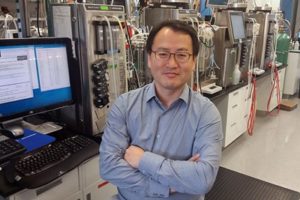

Modular cell-free expression plasmids to accelerate biological design in cells

Ashty S Karim, Fungmin Eric Liew, Shivani Garg, Bastian Vögeli, Blake J Rasor, Aislinn Gonnot, Marilene Pavan, Alex Juminaga, Séan D Simpson, Michael Köpke, Michael C Jewett.  ACS Synthetic Biology.

Renee Wegrzyn

Renee is a Vice President of Business Development at Ginkgo Bioworks. Prior to Ginkgo, she was Program Manager in the Biological Technologies Office (BTO) of the Defense Advanced Research Projects Agency (DARPA), where she leveraged the tools of synthetic biology and gene editing to enhance biosecurity, support the domestic bioeconomy, and outpace infectious disease. Her DARPA portfolio included the Living Foundries: 1000 Molecules, Safe Genes, Preemptive Expression of Protective Alleles and Response Elements (PREPARE), and Detect it with Gene Editing (DIGET) programs. Prior to joining DARPA as a PM, Renee led teams in private industry in the areas of biosecurity, gene therapies, emerging infectious disease, neuromodulation, synthetic biology, and diagnostics. Renee holds a PhD and BS in Applied Biology from the Georgia Institute of Technology, was a Fellow in the Center for Health Security Emerging Leaders in Biosecurity Initiative (ELBI), and completed her postdoctoral training as an Alexander von Humboldt Fellow in Heidelberg, Germany.

EBRC SPA Government and Science Policy Virtual Career Panel and Networking Session

EBRC SPA Government and Science Policy Virtual Career Panel and Networking Session

Date: Thursday, October 15, 2020
Time: 1:00pm – 2:00pm EDT/ 10:00am – 11:am PDT

Register Here

The EBRC Student and Postdoc Association (SPA) is hosting a virtual Government and Science Policy career panel and networking session to provide graduate students and postdocs with insights into government and policy careers, with an emphasis on how to enter this space from a science PhD background. This event will consist of a 30 min moderated Q&A panel followed by an optional 30 min networking session. Participants will indicate whether they would like to attend the networking session portion of the event and rank their networking session panelist preference on the registration form. The networking session will be capped on a first-come, first-serve basis, with priority given to existing Student and Postdoc Association members. If you are interested in joining the EBRC SPA, please find the application form here.  If you elect to participate in the networking session, you will be notified in the days leading up to the event regarding which panelist’s networking session you will be attending (space permitting).


George Lu

George Lu obtained his undergraduate degree at the University of Alberta in Canada, before moving to the UC San Diego for his Ph.D. study on protein structural biology. He then became a postdoctoral fellow in the lab of Mikhail Shapiro at Caltech, where he focused on the engineering of gas-filled protein nanostructures for biological imaging and cellular control. Dr. Lu was previously awarded the Young Investigator of the Year from the World Molecular Imaging Society for his work on the development of acoustically erasable MRI reporter genes. The independent lab was newly established in the Bioengineering Department at Rice University in 2020 with the support of the NIH Pathway-to-independence (K99/R00) and the Cancer Prevention and Research Institute of Texas (CPRIT) Scholar awards.