Precision Medicine World Conference 2022 (PMWC)

Join the 2022 Precision Medicine World Conference on June 28-30,2022 located at the Santa Clara Convention Center! The program will include:

  • Three-day Program
  • Seven Simultaneous Tracks
  • 400+ Speakers
  • Awards Reception
  • Company Showcases
  • Exhibition Floor

EBRC’s Dr. India Hook-Barnard will present at PMWC 2022. India will chair the UC Precision Medicine Programs: Achievements and Challenges session on June 28.

PMWC is the largest & original annual conference dedicated to precision medicine, bringing together recognized leaders, top global researchers and medical professionals, and innovators across healthcare and biotechnology sectors to showcase practical content that helps close the knowledge gap between different sectors, thereby catalyzing cross-functional fertilization & collaboration in an effort to accelerate the development and spread of precision medicine. Click here for more information.

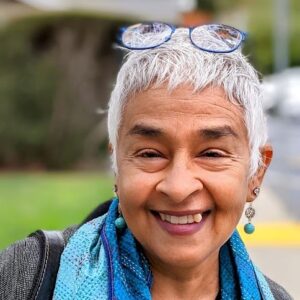
Devaki Bhaya

Chad Haynes

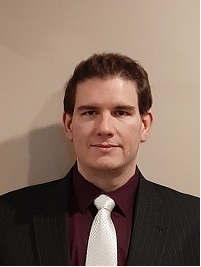
Chad Haynes is the Director of Government Strategy and Technology Partnerships at LanzaTech, Inc. In this role, he works across the company’s science, engineering, and government relations teams to help coordinate and design R&D projects with mutual interest and benefit to Federal agencies and offices. Additionally, his role involves engagement with policy and regulatory stakeholders to help accelerate the deployment of sustainable technologies. Prior to joining LanzaTech, Dr. Haynes was a Lead Associate at Booz Allen Hamilton, serving as a technology and management consultant to U.S. Dept. of Energy ARPA-E and the U.S. Biomass R&D Board. He previously served as an AAAS Science and Technology Policy Fellow at the USDA ARS. He holds a PhD in Biochemistry from the University of Kentucky, and completed postdoctoral training at Caltech.

Natalie Gogotsi

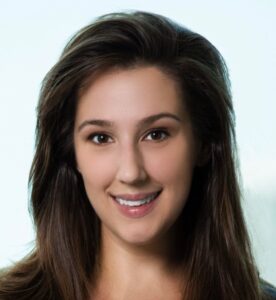
Natalie Gogotsi is a Materials Engineer at Lockheed Martin’s Advanced Development Programs (Skunk Works) as part of the Revolutionary Technology Program. She received a joint B.S./M.S. in Chemical Engineering from Drexel University with a minor in Materials Science and Engineering. She then went on to receive her Ph.D. in Materials Science and Engineering from the University of Pennsylvania where her research focused on developing quantum dots for optical applications. Since joining Lockheed Martin in early 2020 she’s become heavily involved in the Engineered Biology Portfolio, helping grow the portfolio as both a technical contributor and project lead. In addition to the Engineered Biology work, she also works on topic areas including metamaterials and other advanced materials.

Adam Woomer

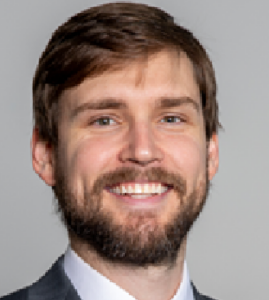
Dr. Adam Woomer is a materials scientist at the Advanced Technology Center in Lockheed Martin Space, which specializes in the incorporation of advanced materials into next-generation devices and applications. In collaboration with the Army Research Laboratory, Dr. Woomer is currently applying his materials expertise to the field of synthetic biology, with a particular focus on the self-assembly and design of novel materials for protective coatings and optical technologies. Before joining Lockheed Martin in 2019, he received his Ph.D. in chemistry from the University of North Carolina at Chapel Hill in 2018 and his B.S. in chemistry from the University of Connecticut in 2013.

Jeffrey Stuart

Dr. Jeff Stuart is the Biotechnology and Engineered Biology Tech Domain Lead for Lockheed Martin’s Corporate Global Research and Technology Innovation Team, within the Chief Technology Officer’s organization. He is a subject matter expert in nanobiotechnology and has led a diverse portfolio of programs covering a wide variety of topics, including synthetic biology, additive manufacturing, and flexible electronics. Jeff received his PhD in Biophysics from Syracuse University, holds 4 patents, and has authored/co-authored more than 30 publications, including multiple book chapters. From 2008 -2018, he worked at the Lockheed Martin (LM) Advanced Technology Laboratories, before moving to LM Corporate in 2018 to managed engagements with the Manufacturing USA Innovation Institutes. Jeff has been honored with the LM Outstanding Leadership Award, the LM ATL Award of Distinction, and the Lockheed Martin NOVA Award.

Prior to Lockheed Martin, Jeff held research faculty positions at Syracuse University and the University of Connecticut. He has been PI on multiple grants from AFRL, ARO, NSF, the Army Institute for Collaborative Biotechnology, industry, and The NanoBio Manufacturing Consortium, where he served as Chair of the Governing Council through 2018. He currently serves on the BioMADE Education and Workforce Development Committee. In addition, Jeff serves on Lockheed Martin’s technical liaison team to NextFlex and was named a NextFlex Fellow in 2019.

Tom Tubon

Thomas Tubon is currently appointed as the Chief Workforce Development Officer for the recently-funded BioIndustrial Manufacturing and Design Ecosystem (BioMADE) Manufacturing Innovation Institute. BioMADE joins eight DoD-sponsored institutes as part of the Manufacturing USA network and is the16th institute invested in creating an end-to-end ecosystems for domestic manufacturing to secure America’s future through manufacturing innovation, education, and collaboration. Dr. Tubon leads the Education and Workforce Development initiatives of the BioMADE Institute, with a focus on building employment readiness for bioindustrial manufacturing and engineering biology.

Prior to his appointment with the BioMADE MII, Dr. Tubon served as a Professor in the Biotechnology Program at Madison Area Technical College for 13 years. During this time, he led several National Science Foundation Advanced Technological Education grant projects to establish and scale an emerging technology program in Stem Cells and Cell Manufacturing and oversee a Coordination Network project for Advanced Manufacturing of Cell and Tissue Products. While at Madison College, Dr. Tubon was responsible for the development of bioscience workforce and strategic implementation of programs for local, regional, and national-level adoption and scale-up. In this role, he has facilitated the creation of a broad network of industry, community, and academic stakeholders, that promote career pathways in Science, Technology, Engineering, and Mathematics (STEM). Dr. Tubon also serves as a subject matter expert with the NSF ATE Mentor Connect and Project Vision Programs.

Since 2019, Dr. Tubon has served as a CoPI on the NSF ATE InnovATEBIO Center for Biotechnology Education, and the NSF Advancing Research Impact in Society (ARIS) Center leadership team for workforce development and strategic partnerships.
Dr. Tubon holds a Ph.D. in Molecular Genetics from Stony Brook University and Cold Spring Harbor Laboratory and a BS in Molecular Biology from San Diego State University.
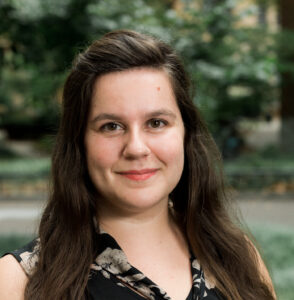
Oliver May

I have studied Technical Biology at the University of Stuttgart (Germany) and did a postdoc at Caltech (Arnold Lab) on Evolutionary Engineering of Enzymes. After my broad biotech education, I joined industry in 2000 to learn about development and implementation of Biotransformation as well we fermentation processes. After several development steps at my first industrial employer (former Degussa, now called Evonik Industries) I joined DSM in 2006. There I was responsible for a team to develop biocatalytic processes for pharma customers. In 2011 I accepted the job as R&D Director in our Innovation center where we developed biobased processes in the biofuels and bioplastic intermediates field. In 2015 I joined our Food Ingredients business as responsible Scientist for Biochemistry and Microbiology. In 2019 I joined our Animal and Human Nutrition business as Science Fellow for Biotechnology where we developed products and processes in the Nutritional Lipids, Carotenoids and Vitamins field. Since 2022 I am Senior Director Biotechnology and lead our Biotech R&D teams in Lexington (MA) and Columbia (Maryland).

Tim Kilgore

I received my Masters of Science degree from George Mason University in 2007 and have been working with Government organizations over the past 20 years focused on helping these organizations understand advancements in biological sciences and how that can impact their mission space, specifically chemical and biological defense. I am employed with MITRE, a Federally Funded Research Development Center, where I continue to advise programs within the US Government on these areas.

Caroline Kennedy

Caroline Kennedy is a Lead Biotechnologist and Project Leader at The MITRE Corporation. She has worked there for the past eight years, during which she has supported numerous US Government organizations in biodefense and biosecurity matters, both domestic and international. For the past four years, much of her support has been in the field of One Health Security—a timely topic considering the zoonotic origins of the SARS-CoV-2 virus. Ms. Kennedy is also involved in MITRE’s internal R&D work program. She is a co-PI on a review of analytic methods used to detect and characterize veterinary antibiotics in surface water and is working as a Program Thrust Lead for Dr. Marc Salit’s Synthetic Biology R&D program. Ms. Kennedy enjoys working with students and has been an undergraduate team iGEM mentor as well as the MITRE POC for a new MIT/Lincoln Lab/MITRE co-developed Beaver Works Summer Institute course on Computational Biology and the Microbiome. Ms. Kennedy received her BA in Biology from the University of Virginia and is completing her MPH in Epidemiology at George Mason University in May 2022. She is also a mother of two young children and passionate about helping junior employees develop a healthy work/life balance, find their passion, and advocate for themselves as they progress in their careers.

Matthew Downs

My Bachelor’s degree is in Material Science & Engineering focusing on Polymers from University of Florida and received my PhD in Biomedical Engineering focusing on Bioimaging & Neuroscience from Columbia University. I am currently a Lead Biomedical Engineer at the MITRE Corporation and work on projects spaning from synthetic bioimaging, medical injury standards, biotechnology development, and synthetic biology. This includes regular interactions and partnerships with members of Government, industry, and academia.

Stephen Gasior

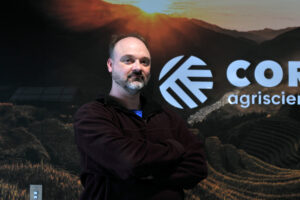
My role at Corteva is as a molecular biologist working to enhance and develop new technologies for making recombination DNA vectors. But, I was an academic grad student and postdoc before teaching college biology for 9 years. Then I joined Corteva in 2016. (https://www.linkedin.com/in/slgasior/)

Actions to Enable an Equitable and Innovative U.S. Bioeconomy

Publication Date: May 2022

The fourth industrial revolution will likely be fueled by operationalizing biomanufacturing and engineering biology. Critical to realizing the benefits of these opportunities will be a diverse workforce and ensuring that the benefits of biotechnology will be equitably dispersed across the United States. In this policy paper, Albert Hinman discusses workforce development, resource cultivation, and open science opportunities for a more inclusive and equitable bioeconomy.

Maxime Boneza

I am currently a third year PhD Candidate in the Biochemistry Molecular Biology and Biophysics (BMBB) program at the University of Minnesota Twin-Cities. Before I joined the BMBB program, I graduated from Southwestern University, in Georgetown Texas, with a Bachelor of Science in Chemistry in 2016. I then spent 3 years as a Lab Technician for Eco-Services in Houston Texas, which is a subsidiary of PQ Corporation specializing in sulfuric acid manufacturing.