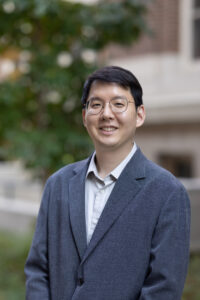
Seung Hwan Lee

Seung Hwan “Allen” Lee is an Assistant Professor of Chemical Engineering and Materials Science and Ray D. & Mary T. Johnson/Mayon Plastics Professor at the University of Minnesota, Twin Cities. His passion for engineering microorganisms to enable sustainable energy and chemical production began during his undergraduate research at UCLA under Prof. James Liao. After completing his undergraduate studies, he earned his Ph.D. in Chemical and Biomolecular Engineering from Rice University, where he worked under the guidance of Prof. Ramon Gonzalez. His undergraduate and doctoral research focused on the efficient biological utilization of one-carbon (C1) compounds through engineering native and synthetic metabolic pathways. As one of the co-inventors of the Formyl-CoA Elongation (FORCE) pathways, he helped develop a novel approach for converting C1 feedstock into value-added small molecules. During his postdoc under the guidance of Prof. Greg Stephanopoulos at MIT, he has expanded his research to include engineering non-model organisms, leveraging their inherent abilities to efficiently utilize C1 and C2 feedstocks. Beyond his research, Allen is actively engaged in biotechnology and climate technology communities, participating in organizations such as the Society for Industrial Microbiology and Biotechnology (SIMB), the Engineering Biology Research Consortium (EBRC), and the MIT Energy Conference.

International Engagement Bootcamp

Registration is now closed. Please contact helix@ebrc.org with questions.

Join us for this EBRC member-exclusive event!

Tuesday, January 27th, 2026
11:30am – 5:30pm Eastern | 8:30am – 2:30pm Pacific

Virtual — Zoom details will be provided to registrants

This EBRC virtual workshop is a focused “bootcamp” designed to inform and prepare EBRC members interested in participating in international governance processes, such as the UN Convention on Biological Diversity (CBD), the International Union for Conservation of Nature (IUCN), and related international groups. The workshop will provide an overview of how international bodies operate, why their decisions matter for engineering biology, and how scientific input is incorporated through peer review, online forums, expert technical groups, and formal intergovernmental negotiations.

Drawing on the experience of scientists, policymakers, and practitioners who have participated in these processes over many years, the sessions will cover substantive issue areas (ecology and conservation, biosecurity, and the bioeconomy), as well as practical guidance on how to contribute constructively in written reviews, online discussions, expert meetings, and consensus-based negotiations.

The goal is to equip interested members of EBRC with the context, skills, and confidence needed to participate meaningfully in these activities, including the upcoming CBD activities (which will take place in 2026).

[Full Agenda Coming Soon]

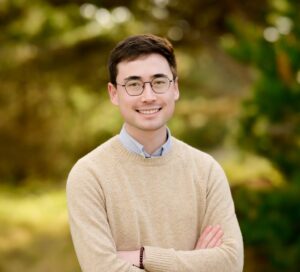
Rodrigo Ledesma-Amaro

Rodrigo Ledesma-Amaro is a Professor at Imperial College London, where he leads a research group working on Engineering Biology and sustainability. He is the director of the Bezos Centre for Sustainable Proteins and the Microbial Food Hub. His research focuses on the use of microorganisms to convert renewable feedstocks into valuable products (such as food ingredients). He has published over 200 articles, most on topics related to microbial bioproduction (precision, biomass and traditional fermentation).
Rodrigo obtained his PhD at the University of Salamanca (Spain). Before joining Imperial, he carried out his postdoctoral research at the National Research Institute for Agriculture, Food and the Environment (INRAE, France). He has been a visiting researcher at Chalmers University of Technology (Sweden) and AIST (Japan).

Joshua Wentzel

Josh Wentzel is the Assistant Director of the Biosecurity and Pandemic Policy Center, part of the Scowcroft Institute for International Affairs at the Texas A&M Bush School of Government & Public Service.​ Based at the Bush School DC, Josh has six years of experience working in Congress, where he spent time in both chambers, working in the House and on the Senate Committee on Health, Education, Labor and Pensions (HELP) working on pandemic preparedness, stockpiling, and biosecurity issues. During the COVID-19 pandemic response, Josh joined the U.S. Department of Health and Human Services, working closely with the Assistant Secretary for Preparedness and Response (ASPR) on distribution of COVID-19 medical countermeasures, daily situational awareness reports, and ASPR testimony to Congress and communication with State and Local governments. He holds a BA in International Studies from Emory University and an MS in Biohazardous Threat Agents and Emerging Infectious Diseases from Georgetown University.