Response to DOE’s Request for Information on Partnerships for Transformational AI Models
Publication Date: January 2026
EBRC’s response to DOE’s Request for Information on Partnerships for Transformational AI Models.
Publication Date: January 2026
EBRC’s response to DOE’s Request for Information on Partnerships for Transformational AI Models.
See the Request for Information as published in the Federal Register Vol. 90, pg 56138.
Keywords: DOE, RFI, biotechnology, biomanufacturing, standards, infrastructure, AI
Disclaimer: The following publications are intended for personal use. All persons reproducing, redistributing, or making commercial use of this information are expected to adhere to the terms and conditions as asserted by the copyright holder. Transmission or reproduction of protected items beyond that are allowed by fair use as defined in the copyright laws requires the written permission of the copyright owners.
Publication Date: January 2026
EBRC’s response to the National Science Foundation for Technology, Innovation, and Partnerships (NSF TIP) offers recommendations to align workforce development with evolving industry needs to expand U.S. engineering biology and biotechnology capacity. Such efforts will strengthen the American workforce and help maintain U.S. competitiveness and leadership in emerging technologies.
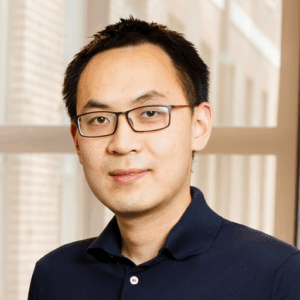
Dr. Dianzhuo (John) Wang earned his Ph.D. in Applied Physics from Harvard. His research integrated biophysics and machine learning to forecast viral variants and develop state-of-the-art models for protein design. As CSO of TwentyTwo, he leads research strategy to develop machine learning tools to prepare for biological risks.
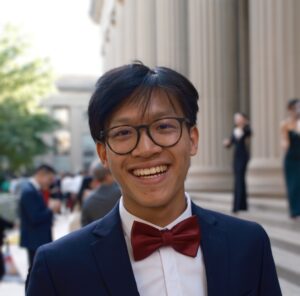
Evan was previously at SecureBio working on desktop synthesizer security, ultraviolet PPE, and AIxBio evaluations. He finished his Bachelor’s and Master’s last year at MIT, and he’s leading TwentyTwo to work on improving security for the life sciences ecosystem.
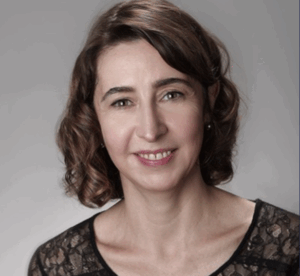
Sophie is the technical lead for the International Screening Standards initiative, which seeks to support the harmonization and standardization of screening approaches around the world. She is a member of the International Gene Synthesis Consortium (IGSC), the OECD Synthetic Biology Working Party, Pandemic Action Network (PAN), several other international policy fora and the former French representative at ISO TC 276: Biotechnology working group.
Previously, Sophie played a critical role in the revision of the ASPR/HHS Screening Framework Guidance for providers and users of synthetic nucleic acides, namely by providing expert input on the specific challenges faced by benchtop device manufacturers, and the solutions developed by them. At the EU level, Sophie actively contributes to discussions around the EU Biotech Act and the Bioeconomy, working collaboratively with key stakeholders across the synthetic biology ecosystem. She regularly speaks at international conferences including SynBioBeta, SynbiCITE, and the OECD.
She has spent much of her career working at the interface of science, public policy, and health, building trusted relationships with governments, civil society, and the private sector. Prior to joining IBBIS, she held senior roles in international organizations, think tanks, and the private sector. She lectures on governance and emerging technologies at Sciences Po (Paris). Sophie holds post-graduate degrees from the Sorbonne Law School, Johns Hopkins School of Advanced International Studies (SAIS), and the London School of Hygiene and Tropical Medicine (LSHTM).
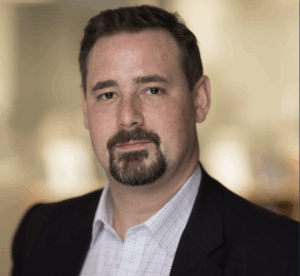
Piers D. Millett, Ph.D. is Executive Director of the International Biosecurity and Biosafety Initiative for Science (IBBIS). Dr. Millett is a certified biorisk management professional, with a specialization in biosecurity.
Dr. Millett was Deputy Head of the Implementation Support Unit for the Biological Weapons Convention (BWC), a treaty for which he worked for over a decade. He has consulted for the World Health Organization, supporting its integration of research and development into responses to public health emergencies and considering the health implications of advances in technology. As Vice President for Responsibility for iGEM Foundation (International Genetically Engineered Machines Competition), Dr. Millett established and ran a program strengthening the culture of responsibility and risk management with more than 350 projects each year, involving more than 6,000 young scientists and engineers from 45 countries across every inhabited continent.
Trained originally as a microbiologist, Dr. Millett has worked closely with the citizen science movement, synthetic biologists, the biotechnology industry as well as national and international policymakers and decisionmakers. He has collaborated with a range of intergovernmental organizations spanning human and animal health, humanitarian law, disarmament, security, border control, law enforcement, and weapons of mass destruction— both inside and out of the United Nations system.
He holds a Ph.D. in International Relations and Affairs, an MRes in Research Methodology, and an MA in International Politics and Security Studies—all from the University of Bradford. He has a BSc in Microbiology from the University of Leeds.
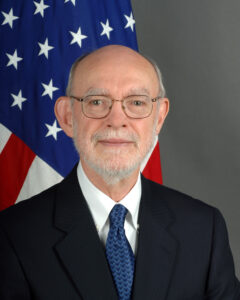
Ambassador (ret) Robert P. Mikulak is an independent expert on chemical and biological security issues. Until mid-December 2025, he served as an expert on these issues at the United States Department of State, focusing on measures for strengthening the Biological Weapons Convention, ensuring that advances in biology are not used to create new biological weapons, and investigation of alleged use of chemical or biological weapons. He is also an expert consultant for the UN Office of Disarmament Affairs.
From November 2010 until his retirement in July 2015, Ambassador Mikulak was the United States Permanent Representative to the Organization for the Prohibition of Chemical Weapons (OPCW). He previously served in the State Department and the U.S. Arms Control and Disarmament Agency in a series of increasingly responsible technical and policy positions related to prohibition of chemical and biological weapons. During the decade-long negotiation of the 1992 Chemical Weapons Convention, he was the deputy U.S. negotiator and senior U.S. expert.
Ambassador Mikulak was awarded the OPCW-The Hague Award in 2019 for outstanding contributions toward a world free of chemical weapons. Other honors include high-level awards from the Secretaries of State and Defense and the American Association for the Advancement of Science.
Ambassador Mikulak received his undergraduate degree in chemistry at Hamline University in St. Paul, Minnesota and his Ph.D. in organic chemistry from the Massachusetts Institute of Technology. He did post-doctoral research at the Max Planck Institute for Biophysical Chemistry in Göttingen, Germany and the Massachusetts Institute of Technology.

Allen Liu received a B.Sc. degree in Biochemistry (Honors) from the University of British Columbia in 2001. He obtained his Ph.D. in Biophysics in 2007 from the University of California-Berkeley and received his post-doctoral training at The Scripps Research Institute-La Jolla. He started his group in 2012, and he is currently the Associate Chair for Graduate Education and a Professor in Mechanical Engineering, Biomedical Engineering, and Biophysics at the University of Michigan. His current research interests lie in cellular mechanotransduction and bottom-up synthetic biology, and his lab uses tools from quantitative cell biology, synthetic biology, biophysics, and microfluidics. He has received the NIH Director’s New Innovator Award, a Young Innovator by Cellular and Molecular Bioengineering (CMBE), a Rising Star from CMBE-Biomedical Engineering Society (BMES), and was named a Future of Biophysics Burroughs Wellcome Fund Symposium speaker. He is an elected Fellow of the BMES, and a recipient of the Endeavour Executive Fellowship (Australia) and the Alexander von Humboldt Fellowship for Experienced Researcher (Germany)
What are engineered microbes? How are they created? And why are scientists developing them? In this lecture, Joff Silberg, Ph.D., Professor of Biosciences at Rice University, will describe what synthetic biology is and how it can be used to develop engineered microbes that have new functions that can identify disease outbreaks, breakdown chemicals, and develop more sustainable fertilizers.
This event is part of the “Engineered Microbes for Environmental Release” webinar series that brings together voices from synthetic biology, ecology, policy, science and technology studies, biotechnology, ethics, and history to explore the social, technological, and environmental dimensions of these innovations. Hosted by the Baker Institute’s Science and Technology Policy Program and co-sponsored by the Rice Synthetic Biology Institute, this webinar series was supported by a grant from Schmidt Sciences and the National Science Foundation (#2223678 & 2515431).
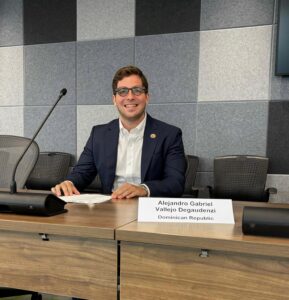
I am a biotechnologist and biosecurity specialist with active research and policy engagement at the intersection of synthetic biology, public health, and regulatory governance. My work combines molecular biology, genomics, and bioethics with the development and evaluation of biosafety and biotechnology regulatory frameworks in Latin America and the Caribbean. I have published peer-reviewed research on genomics, molecular diagnostics, and emerging biotechnologies, and I served as a national consultant on biosecurity for international organizations including FAO and PAHO/WHO and National organizations like the Ministry of Environment. My professional focus is on enabling responsible innovation in synthetic biology through evidence-based policy, capacity building, and applied research in resource-limited settings.
Publication Date: December 2025
EBRC’s response to the Office of Science and Technology Policy (OSTP) Request for Information on Accelerating the American Scientific Enterprise provides targeted recommendations for the U.S. government’s role in the advancement of biotechnology.
Publication Date: July 2025
An EBRC response to NSF RFI 90 FR 26330: Key Technology Focus Areas for the National Science Foundation’s Directorate for Technology, Innovation and Partnerships.
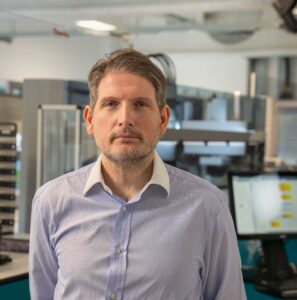
Rennos Fragkoudis completed his PhD on molecular virology and viral pathogenesis at the University of Edinburgh and for ~15 years he concentrated his research on the pathogenesis of arthropod-borne viruses (arboviruses) in both vertebrate and invertebrate systems working with alpha-, flavi- and bunyaviruses.
Since November 2019, Rennos is the Head of the Edinburgh Genome Foundry at the University of Edinburgh’s School of Biological Sciences. In this role, he leads a multidisciplinary team focused on advancing high-throughput Engineering Biology through the innovative application of laboratory automation and robotics. Under his leadership, the Edinburgh Genome Foundry has become a hub for automated Engineering Biology, fostering collaboration across academia and industry and working on a large variety of projects addressing grand challenges.
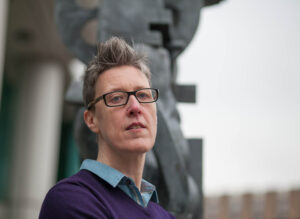
Susan is Professor of Synthetic Biology and Royal Academy of Engineering (RAEng) Chair in Emerging Technologies at the University of Edinburgh. She was Director of the UK Centre for Mammalian Synthetic Biology and is currently the director of the newly funded Engineering Biology Mission Hub for Advanced Therapeutics. Prof Rosser is Co-director of the Edinburgh Genome Foundry for synthetic DNA assembly and cell phenotyping. Her research focuses on using engineering biology approaches for developing and controlling genetic circuits for applications in cell and gene therapies as well as metabolic engineering. Prof Rosser is a member of the UK Engineering Biology Advisory Panel. She is also co-founder of two early-stage start-ups using a combination of AI and engineering biology for new gene therapies and enzyme replacement therapies for rare diseases.