Precision Oncology Europe 2023

Hear from and meet with the leading figures in precision oncology to explore how companies are innovating in precision medicine, digital pathology and molecular testing to accelerate timelines and reduce risk in drug development, with in-depth consideration of the latest multiplexed and cytometry tools impacting biomarker research & validation

NextGen Omics 2023

NextGen Omics 2023 features 4 outstanding programmes, bringing together Europe’s most successful omics research experts under one roof. The series provides an excellent networking platform which consists of key discussion topics in: Next Generation Sequencing & Clinical Diagnostics, Single Cell & Spatial Analysis, Synthetic Biology in Discovery & Therapeutics and Digital PCR & Liquid Biopsies

Workshops on Engineering Biology Metrics and Technical Standards for the Global Bioeconomy

EBRC is co-hosting three regional workshops to identify stakeholder-driven metrics, metrology, and standards to enhance the performance of engineering biology for commercial and industrial activity, with a focus on the needs of start-ups and small companies that are working to bring a tool or product to market. Highlighted topics include supporting translation and scale-up capabilities, improving reproducibility, and enabling clear regulatory frameworks. The information gathered in these workshops will lay the groundwork to establish necessary metrics and open voluntary standards for engineering biology that enable the rapid growth and success of the bioeconomy.

Engineering Biology Metrics and Technical Standards for the Global Bioeconomy

*UPDATE* 5/7/2024 – The full report is out now! Click here to read the report.

EBRC, with partners at the U.S. National Institute of Standards and Technology (NIST), Imperial College London, and the National University of Singapore (NUS), and supported by Schmidt Futures, have published a report focused on determining the engineering biology metrics and technical standards needed to accelerate the global bioeconomy. The report summarizes the key findings that emerged from global stakeholder discussions, pulling together common themes and identified needs that arose across Europe, Asia, and the Americas.

Within six key areas — data standards, metrology and metrics to quantify biological processes, scale-up and scale-out, lexicon and terminology, metrics and standardization for sustainability assessments, and standards to enable use of biomass feedstocks — opportunities are identified for focused activities to develop technical standards and metrics that will enable enhanced performance across the bioeconomy: improving reproducibility, supporting continued scale-up, and accelerating commercialization and industrial growth. A series of non-technical areas are also identified and explored, including: training and education on standards and metrics, engagement with the public and improvement of public perception and trust, regulatory clarity, and biosafety and biosecurity. As well as focusing on areas of common understanding, the report elaborates on some areas where distinct differences exist and global consensus might not be reached, highlighting these as potential focus areas for regional or national efforts going forward.

More information about the project and activities are available here.

Task Force Leadership:
India Hook-Barnard – EBRC
Elizabeth Strychalski – NIST
Paul Freemont – Imperial College London
Matthew Chang – National University of Singapore
Andrea Hodgson – Schmidt Futures
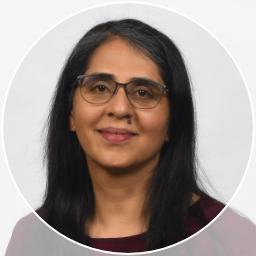
Sheela Vemu

Associate Professor at Biology, Waubonsee Community College, IL. I am a Bio QUEST curriculum consortium fellow, contributor to the development of the Scientific Teaching Course from the National Institute of Scientific Teaching (NIST) and Editorial Board member for CBE-Life Sciences Education (LSE) journal.My doctoral training is in Pharmacology and Molecular biology. Recently, my scholarship has shifted to science education. I enjoy working with all students, especially freshman/sophomores from diverse backgrounds in biology education research projects in the aspects of effective study strategies and metacognition. I am passionate about implementing Course -Based Undergraduate Experiences (CUREs) with the lens of a quantitative data literacy to foster inclusion in a community college classroom. I continue to use project based assignments and data interpretation modules with scientific contributions of scientists who are members of historically excluded groups. Teaching is the way I connect with people, especially young people. I learn so much from them in trying to figure out how to help them learn.I enjoyed co-leading the first ASCN Inclusive STEM Teaching Project ASCN Learning community in 2021. In my workings with various groups, I learned the skills of building learning communities to foster shared common goals and attitudes while promoting an equitable participation of all members. It gave me a platform to bring the voices of the community college landscape with STEM practitioners from other institution types. The opportunities to be informed by the lived perspectives from different stakeholders, led me to ponder about the aspects of implementing and scaling change. I see myself as a change agent at the grassroots level.

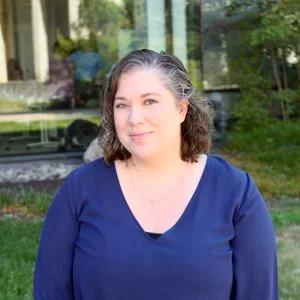
Kaitlin Dailey

I am a Research Instructor at the University of Nebraska Medical Center’s Eppley Institute for Cancer Research, hosted by the labs of Dr. Michael (Tony) Hollingsworth (cancer biology, immunology) and Dr. Ken Bayles (bacterial genetics, microbiology). During my doctoral studies, I became fascinated with the many advantages oncolytic bacteria have over traditional therapeutics. As a result, I pursued specific training in genetic engineering and anaerobic bacteria. I performed ground-breaking studies, accomplishing the first CRISPR-mediated modification of Clostridium novyi-NT and established methodologies that have added to the field of biologic therapeutics. I chose post-doctorate studies at UNMC to further my training in immunology, cancer models, bacterial genetics, and microbiology. My long-term career goal is to establish a diverse and equitable academic research lab focused on genetically engineering single celled organisms for pharmaceutical and biofuel development. Additionally, I ascribe to the teacher/scholar model and intend to use my expertise to generate graduate and undergraduate courses as well as to mentor students in a laboratory setting – while fostering inclusive environments in both circumstances.

Biomarker Analysis Europe 2023

Hear from and meet with the leading figures in biomarker analysis to explore how companies are innovating in biomarker analysis to accelerate timelines and reduce risk in drug development, with in-depth consideration of the latest multiplexed and cytometry tools impacting biomarker research & validation.

Key Speakers:

Mario Richter – AbbVie Deutschland GmbH & Co. KG

Eike Staub – Merck

Siôn Lewis – UCB BioPharma

Li Chin Wong – Prevail Therapeutics

Priyank Patel – Boehringer Ingelheim

Polina Goihberg – Pfizer