EBRC to Collaborate on NSF CFIRE and USPRD Initiatives

The National Science Foundation (NSF) announced the launch of Advancing Cell-Free Systems Toward Increased Range of Use-Inspired Applications (CFIRE), a new $32.4 million initiative that will support four research teams to transform cell-free engineering and applications across industries. This initiative aims to accelerate innovation across sectors and strengthen U.S. leadership in the bioeconomy.

EBRC is excited to work alongside our partners from the University of Tennessee, Knoxville, University of Michigan, Georgia Institute of Technology, b.next, University of Minnesota, Tulane University, exozYmes, and Roke Biotechnologies to develop a robust framework for standards and metrics that will aid in the adoption and scalability of cell-free technology. You can learn more about CFIRE here.

We’re also thrilled to collaborate on NSF’s Use-Inspired Acceleration of Protein Design (USPRD) program with partners from Ginkgo Bioworks, Koliber Bio, University of California, San Francisco, Stony Brook University, and Sepia Biosciences to advance new approaches in protein design that unlock powerful applications for the bioeconomy. You can learn more about USPRD here.

Across both initiatives, EBRC is committed to supporting efforts in biosecurity, ethics, and ELSI to guide responsible and impactful innovation. Please reach out to Emily (CFIRE) or India (USPRD) with any questions or if you would like to further discuss the initiatives. Keep a lookout for updates on our website!
Joy Y. Zhang

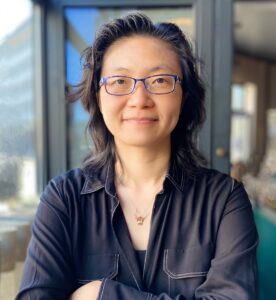
Joy Y. Zhang is a Professor of Sociology and Founding Director of the Centre for Global Science and Epistemic Justice (GSEJ) at the University of Kent. Her research examines evolving science–society dynamics and their implications for the global ethical governance of emerging life sciences. Conceptually, her work advances the theorisation of cosmopolitanisation, decolonisation, commoning, epistemic justice, and subaltern politics. Empirically, her research focuses on four major scientific powers—China, India, the UK, and the US. She has studied the governance and science diplomacy of emerging life sciences—including stem cells, synthetic biology, genome editing, and experimental therapies—alongside climate politics, food movements, and environmental engineering. She currently leads three cutting-edge social research programmes on engineering biology and its applications in critical minerals, biomedicine, and agriculture, with the aim of informing social and policy deliberation in the UK and internationally. She is the author of three academic books and publishes widely in high-impact journals across the natural and social sciences. She is frequently interviewed by global media and advises leading research and policy institutions in Europe and Asia.

Delaney Beckner

Guillaume Cottarel

Guillaume earned his PhD in Molecular Biology and Microbiology from the University of Giessen in Germany. With over twenty-five years of extensive experience in the biotechnology sector, he has demonstrated a strong ability to conceptualize and initiate scientific programs, lead scientific teams, and manage both projects and third-party collaborations effectively. His comprehensive technical expertise, coupled with his business acumen, has played a pivotal role in the success of several companies. Additionally, he is a co-author of 27 publications and a co-inventor on 16 patents.

Arjun Khakhar

My group focuses on using synthetic control systems to re-engineer plants, filamentous fungi, and viruses. I am passionate about fighting global hunger and malnutrition. My major hobbies are cooking, making art, and reading. Science fiction is my favorite genre and I love that my job gives me the opportunity to bring some of the things I have read about closer to reality.

Romel Menacho

Dr. Romel Menacho-Melgar earned his Ph.D. in Biomedical Engineering from Duke University under the mentorship of Dr. Michael D. Lynch. He is the Co-Founder and Chief Scientific Officer of Roke Biotechnologies, a Duke spinout focused on low-cost, scalable protein manufacturing. At Roke, he leads R&D, manufacturing, and commercialization efforts, and has secured over $1M in non-dilutive funding. His work focuses on developing standardized, growth-decoupled protein expression systems and engineering E. coli strains with enhanced expression and built-in downstream simplification.

Laura Shelton

Laura Shelton is a biotech strategist and scientific communicator at bitBiome, where she helps bring next-generation enzyme discovery technologies to the forefront of industrial and academic innovation. With a Ph.D. in biochemistry and metabolomics, Laura has spent her career exploring how small molecule pathways shape biology—and how we can harness them for real-world applications. At bitBiome, she plays a key role in translating advanced microbial genomics and enzyme engineering into stories and strategies that resonate with scientists, partners, and industry leaders.

Biomarkers and Precision Medicine US 2025

Biomarkers & Precision Medicine US takes place on October 27 – 28 in San Francisco, CA. Running across two full days, with 15 tracks across three dedicated programmes it’s the must attend event for those involved in bringing next-generation personalized treatments to market.

In 2025, the event will feature three core programs:

  • Biomarkers – Focusing on the discovery, validation, and application of biomarkers and diagnostics in personalized healthcare.
  • Spatial Biology for Precision Medicine – Highlighting the importance of spatial insights in the development of precision therapies.
  • Digital Pathology & AI – Exploring the integration of digital pathology and artificial intelligence in transforming clinical diagnostics.

The Biomarkers, Spatial Biology for Precision Medicine, and Digital Pathology programmes come together to create a must attend event. The programme offers opportunities to showcase the latest innovations, meet and collaborate with over 1000 senior biomarker and precision medicine scientists from the pharma and biotech industry.

Register now and book your complemetary place at the event- it includes access to over 100 presentations, opportunities to network with 80+ exhibitors, refreshments and drinks reception.

EBRC 2025 Council Retreat

The EBRC 2025 Council Retreat will be hosted at the National Academy of Sciences in Washington, DC December 2-3, 2025. Location to be announced.
Register here

Travel Support and Meeting Hotel:
We anticipate covering airfare and hotel expenses for EBRC Academic Council Members. To book your flights, please contact us at travel@ebrc.org. Please review EBRC’s revised travel policy.

Hotel information will be provided soon.

Health and Safety:
We are committed to hosting a safe event. We will be closely watching CDC recommendations in addition to all relevant local and state guidelines leading up to the Retreat and make any changes necessary for health and safety.

Asia Centre for Health Security Fellowship

Rosetta Commons Biosecurity Fellowship

NRC Research Associateship Program

National Biosafety and Biocontainment Training Program Intramural Research Training Award

Mid-Career Biodefense Bootcamp Fellowship

Joint Graduate School in Biodiverstiy and Biosecurity, Masters/PhD

Horizon Fellowship

Greenwall Fellowship in Bioethics

Generation National Security Leaders Fellowship

Fellowship for Ending Bioweapons Program

Environmental Health, Health Security Track, PhD