6th International Mammalian Synthetic Biology Workshop

The Sixth International Mammalian Synthetic Biology Workshop (mSBW 6.0), will be held at Northwestern University in Evanston, IL (near Chicago) on the weekend of May 18-19, 2019. The mSBW series has grown to become a signature worldwide event. This event brings pioneers of synthetic biology together with experts from other relevant fields to highlight and inspire cutting-edge synthetic biology research, emphasizing both basic and applied science. The workshop format will provide a forum for exposition of the latest developments in the field and discussions of how experts from related fields can benefit from and contribute to mammalian synthetic biology. New features include a pre-conference tutorial series on the afternoon of Friday May 17, 2019, aimed at graduate students, postdocs, and faculty who are new to mammalian synthetic biology and wish to learn relevant techniques and scientific and technological fundamentals.

SynBioBeta 2019: The Global Synthetic Biology Summit

SynBioBeta is where tech meets bio and bio meets tech. Meet the innovators and companies, find new opportunities, partner up and discover the potential of the biological industrial revolution. Join attendees on October 1-3, 2019 in San Francisco to see how synthetic biology is disrupting consumer products, food, agriculture, medicine, chemicals, materials, and more.

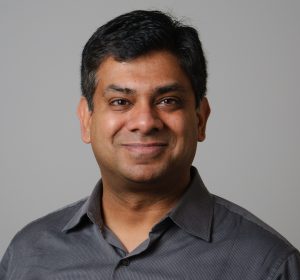
Ranjan Srivastava

Ranjan Srivastava is Professor and Head of the Department of Chemical & Biomolecular Engineering at the University of Connecticut. Additionally, he holds appointments in Biomedical Engineering and Environmental Engineering. He is also a faculty member of the Head and Neck Cancer/Oral Oncology Program at the University of Connecticut Health Center. Dr. Srivastava received his B.S. in Chemical Engineering from Washington University in St. Louis. He received his M.S. and Ph.D. in Chemical Engineering from the University of Maryland-College Park. He held a joint post-doctoral fellowship in Chemical Engineering and Oncology at the University of Wisconsin-Madison where he was an NIH Trainee. His research focus is on the understanding and application of evolutionary dynamics, whether “wet” or computational/algorithmic, to systems and synthetic biology. To that end, his group has used evolutionary approaches to evolve new mathematical models of biological systems, curate existing models at the genome scale via evolutionary algorithms, and optimize bioprocessing strategies.

Renee Wegrzyn

Dr. Renee Wegrzyn joined DARPA as a Program Manager in 2016, where she applies the tools of genome engineering and synthetic biology to support biosecurity, enable flexible biomanufacturing, and outpace infectious disease. Her portfolio includes the Living Foundries, Safe Genes, and PREPARE programs. Living Foundries seeks to transform biology into an engineering practice by developing the tools, technologies, methodologies, and infrastructure to prototype and scale engineered microbes that can produce molecules that are of value for government and commercial use. Safe Genes aims to deliver novel biological capabilities to facilitate the safe and expedient pursuit of advanced genome editing applications, while also providing the tools and methodologies to mitigate the risk of unintentional consequences or intentional misuse of these technologies. PREPARE (Preemptive Expression of Protective Alleles and Response Elements) is focused applying the tools of genome engineering to create potent, transient, and reversible medical countermeasures to combat biological, chemical, and radiological threats to public health and national security. Prior to joining DARPA as a PM, Dr. Wegrzyn was a Senior Lead Biotechnologist at Booz Allen Hamilton, where she led a team that provided scientific and strategic support in the areas of biodefense, biosecurity, and biotechnical innovation to DARPA and other federal and private institutions. She is a former Fellow of the UPMC Center for Health Security Emerging Leaders in Biosecurity Initiative. Dr. Wegrzyn also led research and development teams in the biotech industry focused on the development of multiplex immunoassays and peptide-based disease diagnostics. Dr. Wegrzyn holds Doctor of Philosophy and Bachelor of Science degrees in Applied Biology from the Georgia Institute of Technology, with an undergraduate minor in Bioengineering. She completed her postdoctoral training as an Alexander von Humboldt Fellow in Heidelberg, Germany.

Samuel Leach

Sam is a 2nd year PhD student in Chemical and Biological Engineering at Northwestern University. He received his Bachelor of Science in Chemical and Biomolecular Engineering from the Georgia Institute of Technology. He currently researches utilizing the type III secretion system in Salmonella for efficient, large scale biomanufacturing. He is interested in next-generation biotechnology, scale-up engineering, and science diplomacy.

Julie Ming Liang

I am a graduate student in the Tullman-Ercek lab at Northwestern.

Seeking participants for “EBRsee” outreach initiative!

EBRsee will be a series of videos and podcasts for the public. If you are interested in participating or to learn more, please contact education@ebrc.org.

Artificial Photosynthetic Cell Producing Energy for Protein Synthesis

Samuel Berhanu, Takuya Ueda, Yutetsu Kuruma. Nature Communications.

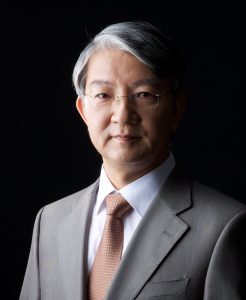
Sang Yup Lee

Dr. Sang Yup Lee is Distinguished Professor at the Department of Chemical and Biomolecular Engineering, Korea Advanced Institute of Science and Technology (KAIST). He is currently the Dean of KAIST Institutes, Director of BioProcess Engineering Research Center, and Director of Bioinformatics Research Center. He served as a Founding Dean of College of Life Science and Bioengineering. He has published more than 580 journal papers, 82 books/book chapters, and more than 630 patents, many of which licensed. He received numerous awards, including the National Order of Merit, National Science Medal, Ho-Am Prize, POSCO TJ Park Prize, the Best Scientist and Technologist Award, James Bailey Award, Merck Metabolic Engineering Award, Elmer Gaden Award, Charles Thom Award, and Marvin Johnson Award. Professor Lee also delivered numerous named lectures around the world. He is currently Fellow of American Association for the Advancement of Science, American Academy of Microbiology, American Institute of Chemical Engineers, American Institute of Medical and Biological Engineering, Society for Industrial Microbiology and Biotechnology, the World Academy of Sciences, Korean Academy of Science and Technology, National Academy of Engineering of Korea, and National Academy of Inventors USA. As of 2018, he is one of 13 people in the world elected as Foreign Associate of both National Academy of Engineering USA and National Academy of Sciences USA. He is honorary professor of University of Queensland, Shanghai Jiao Tong University, Wuhan University, Hubei University of Technology, Beijing University of Chemical Technology, Jiangnan University, and Tianjin Institute of Industrial Biotechnology. He has served as the Chairman of the Global Agenda Council on Emerging Technologies and also Biotechnology, and is currently co-chair of the Global Future Council on Biotechnology and a member of the Global Future Council on the Fourth Industrial Revolution, World Economic Forum. Prof. Lee is editor-in-chief of Biotechnology Journal (Wiley) and Metabolic Engineering (Elsevier), and also editor and editorial board member of many international journals. He founded the World Council on Industrial Biotechnology in 2010 and served as a Founding Chair for two years. He served as a member of the Presidential Advisory Council on Science and Technology of Korea and a member of Government Performance Evaluation Committee, and is currently serving as a member of the Central Strategic Committee of the Ministry of Strategy and Finance. His research areas are metabolic engineering, systems biology, synthetic biology, systems medicine, industrial biotechnology and nanobiotechnology.