Internship at The Nucleus Institute

Posted: 03/31/2026

About the Company/Organization:

The Nucleus Institute
Type: Nonprofit/NGO
Size:
http://www.nucleusutah.org/

The Nucleus Institute is Utah’s engine for innovation.

We drive collaboration between government, higher education, and industry to advance the state’s innovation economy. By aligning public and private efforts, we accelerate ideas from research to real-world impact.

Nucleus is a leader in initiatives like the Innovation District at The Point, the Nucleus Innovation Fund, and the Utah Policy Innovation Lab—building the infrastructure, funding, and partnerships that power Utah’s future.


Internship Project/Opportunity

Location: Lehi, UT
Anticipated internship dates: Summer 2026
Target intern experience level: Undergraduate Students, Graduate Students
https://employment.utah.edu/lehi-ut/policy-intern-nucleus/B07C964E534B4A93B015633225F994ED/job/

Open Date: 03/23/2026

Requisition Number: PRN16867N

Job Title: OCHE Intern

Working Title: Policy Intern, Nucleus

Career Progression Track: UGR

FLSA Code: Nonexempt

Patient Sensitive Job Code? No

Type: Non Benefited Staff / Student

Temporary? Yes

Standard Hours per Week: Up to 19

Full Time or Part Time? Part Time

Shift: Day

Is this a work study job? No

City: Lehi, UT

Pay Rate Range $15.00

Close Date 06/23/2026

Priority Review Date (Note – Posting may close at any time)


Work Schedule Summary

  • 10-12 hours per week (flexible schedule for independent work) for two consecutive semesters.
  • This position is primarily remote but candidates must be able to travel to Salt Lake once per week for structured in-person learning. This internship will start May 13th.


Job Summary

PolicyLab serves as a core component of the Nucleus Institute’s mission, bridging frontier research and state governance to deliver clear, actionable guidance to Utah’s Legislature. This selective internship is designed to cultivate the next generation of policy leaders, immersing students in the full arc of the legislative process while distilling expert scientific knowledge into real-world policy impact.

PolicyLab interns engage in a specialized, two-semester program. Responsibilities include observing the legislative process firsthand, contributing to a long-term research agenda, and executing independent policy projects. Strong research and writing skills, an aptitude for systems thinking, and a commitment to translating scientific expertise into actionable legislative solutions are essential.


Responsibilities

  • Framework Mastery: Complete training in foundational policy frameworks, including systems thinking, wicked problems, and deliberative democracy.
  • Legislative Learning: Connect with local lawmakers to gain firsthand understanding of state policymaking.
  • Research Infrastructure: Design, build, and maintain a comprehensive research database system for tracking tech innovation policy developments across various jurisdictions (local, state, national, international).
  • Data and Analysis: Create stakeholder mapping tools, develop standardized templates for research briefs, and gain competence in research workflow and citation management systems (e.g., Zotero, Notion).
  • Applied Policy Research: Conduct comparative policy analysis (e.g., AI regulation approaches), support evidence-based policy research through data collection, policy design thinking, and policy evaluation.
  • Cohort Leadership & Knowledge Sharing : Serve as a mentor and transition lead by training incoming interns, thoroughly documenting research workflows, and ensuring the program’s sustained operational success.


Minimum Qualifications

  • High School Diploma, or equivalency
  • Current undergraduate and graduate students attending Utah universities. We encourage students from all majors to apply.
  • Strong research and writing skills with the ability to synthesize complex information accurately and concisely.
  • Genuine interest in technology policy and innovation shaping Utah’s future.
  • Availability to commit to 10-12 hours per week for the duration of the internship.


Additional Information

The University is a participating employer with Utah Retirement Systems (“URS”). Eligible new hires with prior URS service, may elect to enroll in URS if they make the election before they become eligible for retirement (usually the first day of work). Contact Human Resources at (801) 581-7447 for information. Individuals who previously retired and are receiving monthly retirement benefits from URS are subject to URS’ post-retirement rules and restrictions. Please contact Utah Retirement Systems at (801) 366-7770 or (800) 695-4877 or University Human Resource Management at (801) 581-7447 if you have questions regarding the post-retirement rules.

This position may require the successful completion of a criminal background check and/or drug screen.

The University of Utah values candidates who have experience working in settings with students and patients from all backgrounds and possess a strong commitment to improving access to higher education and quality healthcare for historically underrepresented students and patients.

All qualified individuals are strongly encouraged to apply. Veterans’ preference is extended to qualified applicants, upon request and consistent with University policy and Utah state law. Upon request, reasonable accommodations in the application process will be provided to individuals with disabilities.

The University of Utah is an Affirmative Action/Equal Opportunity employer and does not discriminate based upon race, ethnicity, color, religion, national origin, age, disability, sex, sexual orientation, gender, gender identity, gender expression, pregnancy, pregnancy-related conditions, genetic information, or protected veteran’s status. The University does not discriminate on the basis of sex in the education program or activity that it operates, as required by Title IX and 34 CFR part 106. The requirement not to discriminate in education programs or activities extends to admission and employment. Inquiries about the application of Title IX and its regulations may be referred to the Title IX Coordinator, to the Department of Education, Office for Civil Rights, or both.

To request a reasonable accommodation for a disability or if you or someone you know has experienced discrimination or sexual misconduct including sexual harassment, you may contact the Director/Title IX Coordinator in the Office of Equal Opportunity and Affirmative Action ( OEO /AA). More information, including the Director/Title IX Coordinator’s office address, electronic mail address, and telephone number can be located at: https://www.utah.edu/nondiscrimination/

Online reports may be submitted at oeo.utah.edu

https://safety.utah.edu/safetyreport This report includes statistics about criminal offenses, hate crimes, arrests and referrals for disciplinary action, and Violence Against Women Act offenses. They also provide information about safety and security-related services offered by the University of Utah. A paper copy can be obtained by request at the Department of Public Safety located at 1658 East 500 South.

Strengthening Safety and Security of Biological Research Globally in Support of the Biological Weapons Convention

This project seeks to support and promote global best practices in biorisk management and research oversight, thereby supporting States Parties’ national Biological Weapons Convention (BWC) implementation efforts. By working with policymakers, senior practitioners, laboratory operations and maintenance (O&M) personnel, and stakeholders across the research lifecycle, EBRC will endeavor to build community to support i) O&M for high containment labs, ii) review and oversight of high-risk research, and iii) the growth of empirically-based biosafety practices.

Webinar – Relational Governance for Engineered Organisms

In this lecture, Riley Taitingfong, Ph.D., Postdoctoral Fellow at University of Arizona, will focus on practical tools and frameworks for supporting Indigenous governance of emerging biotechnologies, with particular relevance for engineered microbes for environmental release (EMERs). Drawing on concepts and strategies from the Indigenous Data Sovereignty movement, Taitingfong will show how governance approaches rooted in connectivity, reciprocity, and responsibility to place can translate into concrete guidance for actors exploring the use of engineered microbes in the environment. By situating EMERs within relational governance approaches, Taitingfong asks how decision-making processes can align scientific objectives with local priorities while accounting for power imbalances and honoring long-held relationships to lands, waters, and more-than-human kin. Taitingfong will introduce tools to demonstrate how Indigenous governance frameworks can be operationalized in practice. Together, we will consider how these tools offer pathways for integrating relational accountability into EMER development and supporting community-driven approaches to biotechnology.

Internship at GenBio AI

Posted: 03/10/2026

About the Company/Organization:

GenBio AI
Type: Company
Size:
https://genbio.ai/

Headquartered in Silicon Valley, we are a newly established start-up where a collective of visionary scientists, engineers, and entrepreneurs are dedicated to transforming the landscape of biology and medicine through the power of generative AI. Our team comprises leading minds and innovators in AI and biological science, pushing the boundaries of what is possible. We are dreamers who reimagine a new paradigm for biology and medicine.

We are committed to decoding biology holistically and enabling the next generation of life-transforming solutions. As the first mover in pan-modal Large Biological Models (LBM), we are pioneering a new era of biomedicine, with our LBM training leading to ground-breaking advancements and a transformative approach to healthcare. Our robust R&D team and leadership in LLMs and generative AI position us at the forefront of this revolutionary field. With headquarters in Silicon Valley, California, and a branch office in Paris and Abu Dhabi, we are poised to make a global impact. Join us as we embark on this journey to redefine the future of biology and medicine through the transformative power of Generative AI.


Internship Project/Opportunity

Location: Palo Alto, CA / Abu Dubai / Paris
Anticipated internship dates: Open
Target intern experience level: Graduate Students
https://jobs.lever.co/genbio/97d1b075-b30a-4ed6-9ba3-d6690a606348/apply?lever-source=LinkedIn&source=LinkedIn&lever-source=LinkedInJobs&lever-source=LinkedInJobs

Job Description:

  • You will work with the team to conduct cutting-edge research in AI, foundation models, and computational biology. Your primary tasks will include improving existing models and exploring new methodologies to advance our AI capabilities in biology
  • You will collaborate with the team on designing and executing large-scale experiments, analyzing complex datasets, and applying statistical techniques to validate the performance and robustness of AI systems
  • Additionally, you will work closely with AI/machine learning researchers and computational biologists to develop Genbio AI’s state-of-the-art biology foundation models and drive the research agenda to generate impact

Qualification:

  • Currently enrolled in a full-time master’s or PhD (preferred) program in Computer Science, Artificial Intelligence, Machine Learning, or a related technical field (preferably in the United States)
  • A strong coder with excellent skills in C/C++ and Python
  • Fluent in deep learning frameworks like PyTorch (and/or JAX), Hugging Face (Datasets, Accelerate, Transformers, etc.), Megatron-LM, DeepSpeed, etc
  • Have a solid understanding of GPU, CPU, or other AI accelerator architectures
  • Familiar with LLM (and/or other foundation model) architectures (such as attention mechanisms, state-space models, MoE, etc.) and training infrastructure (e.g., large-scale GPU clusters)
  • Have experience improving ML accuracy using low-precision formats
  • Have 1+ years of relevant industry experience
  • Derive a great deal of satisfaction from every percentage point of performance improvement
  • Have experience writing and optimizing compute kernels using CUDA or similar languages

Nice to Have:

  • Current PhD in Computer Science and Engineering with a specialization in Computer Architecture, Parallel Computing, Compilers, or other systems
  • Co-optimizing computing infrastructure and deep learning frameworks for optimal performance on specific workloads. Identify and resolve performance bottlenecks through profiling and system analysis
  • Experience collaborating with data scientists and machine learning engineers to integrate distributed training capabilities into GenBio
  • AI’s model development and deployment frameworks
  • Proficient in Python with experience in GPU-accelerated libraries (e.g., CUDA, cuDNN)
  • Knowledge of performance profiling and optimization tools for HPC and deep learning

EBRC Sci Comm Workshop Series: “Communicating Science Effectively”

EBRC is excited to host “Communicating Science Effectively”, an interactive, virtual training series open to all EBRC members! Over the course of three 60-minute sessions, participants will learn research-based theories underlying effective science communication and have the opportunity to apply these principles through hands-on instruction, practice, and feedback. The series will culminate with an in-person session during the EBRC Annual Meeting (register here!). This is a great opportunity for anyone interested in leveling up their communication and engagement skills!

Because the sessions build on one another, participants are expected to attend all three virtual sessions.

Questions? Please feel free to reach out to Julietta (julietta@ebrc.org)!

Register Here


Workshop Series Schedule

Session 1: Sci Comm 101 (virtual) | Friday, March 20, 2026 (3 PM ET/12 PM PT)

During this initial session, participants will consider the aim of their communication and go through the basics of effective science communication.

Objectives include:

  • Learn how to define clear communication goals and align messaging with desired outcomes;
  • Explore strategies for identifying and understanding your audience’s background, expectations, and needs; and
  • Understand the basics of ensuring your key points are communicated clearly.

Participants will also engage in interactive discussions to share their communication and engagement goals, challenges, fears, and opportunities.


Session 2: Panel Discussion – Applying Sci Comm in Practice (virtual) | Thursday, April 16, 2026 (3 PM ET/12 PM PT)

During this session, a panel of Sci Comm experts across a variety of fields will share their experiences.

Discussion topics include:

  • Finding and knowing your audience—Panelists will share practical strategies for identifying target audiences, understanding their values and needs, and building meaningful connections.
  • The importance of the messenger—Panelists will discuss how credibility, trust, and identity influence how science is received.
  • Creating and delivering effective messages—Panelists will discuss examples of what makes a compelling story.
    Working with journalists, press officers and professional societies

Participants will additionally be invited to actively engage with the panel, ask questions, share perspectives, and seek expert advice relevant to their own science communication experiences.


Session 3: Crafting your message (virtual) | Friday, May 15, 2026 (3 PM ET/12 PM PT)

This final session will focus on best practices for communicating evidence and strategies for addressing issues such as uncertainty, biases and presenting numerical information

Objectives include:

  • Best practices for communicating evidence and numbers: what are the issues with using words without numbers, the need to communicate absolute risks, natural frequencies, etc;
  • Learn how to clearly communicate different types of uncertainty;
  • Align uncertainty information to the decision context; and
  • Understand how mental models and cognitive biases may affect people’s understanding of evidence and consider how to use transformative explanations and other communication tactics.


Final presentations (in-person) | June 3, 2026 (at the EBRC Annual Meeting)

Participants will prepare a Sci Comm product tailored to a specific audience, topic, and engagement platform (e.g., an Instagram live stream, interview for a local newspaper, a Bluesky thread) to be presented during a live, interactive session at the EBRC Annual Meeting open to all meeting attendees.

This session will offer a unique opportunity for participants to put the skills and strategies learned throughout the workshop series into practice and engage in meaningful dialogue with a broader scientific community.

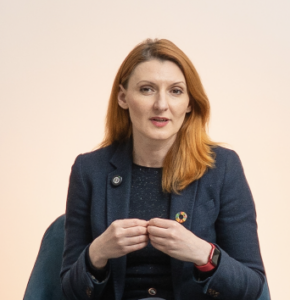
 

Mia Negru

Mia Negru serves as Executive Director of Life With Artificials, a social engagement platform exploring how humans and intelligent systems coexist in areas such as health, work, governance, and everyday life. Through public dialogue, cross-sector partnerships, and policy-oriented initiatives, she works to connect researchers, innovators, regulators, and citizens—ensuring that emerging technologies evolve in alignment with democratic values, ethical principles, and social responsibility.

She studied International Business and Politics at Copenhagen Business School (CBS), where she built a solid understanding of regulatory systems, institutional decision-making, and public–private collaboration in complex policy environments.

Her passion for frontier innovation led her to engage with programs at Singularity University, deepening her focus on artificial intelligence, robotics, and synthetic biology and their long-term societal implications.

Lasse Helmer Pederson

Lasse Helmer Pedersen is a hands-on technologist and strategic advisor working at the intersection of advanced AI, engineering and health technology. As Strategic Advisor on technology for Zibra Holding ApS, he supports a portfolio of tech ventures with AI strategy, innovation governance, and the design of resilient technology ecosystems. Previously, Lasse served as CTO at MindFuture, where he helped build an innovation hub around real-world, responsible applications of artificial intelligence. A long-time practitioner, he has led technology, product development, and IT organizations across telecoms, infrastructure, and software, giving him a practical understanding of how to move complex technologies from concept to deployment at scale.

Lasse is part of the core team in Life with Artificials, contributing strategic advice on how humans and AI can coexist in ways that are safe, beneficial, and aligned with societal values. He is particularly interested in how cutting-edge AI can accelerate engineering biology and health tech while maintaining robustness, security, and public trust.