Expanding access to engineering biology – STEM outreach in high schools

EBRC SPA member Kathryn Brink authors a Nature Communities blog post about increasing engagement in STEM through outreach, providing a first-person perspective about bringing engineering biology to underserved communities.

Complete lesson or course (package): Biochemical Engineering: Molecular engineering course materials

Visu Annaluru

Albert Lu

Javin Oza

PhD in Biomolecular Science and Engineering at UC Santa Barbara; Post-doc in biological engineering at Northwestern University with Dr. Michal Jewett. My research group aims to integrate biological engineering with hypothesis driven science to advance our understanding of human biochemistry and physiology. A major thrust of my research group focuses on adapting biotechnologies for the classroom to enable inquiry-based learning.

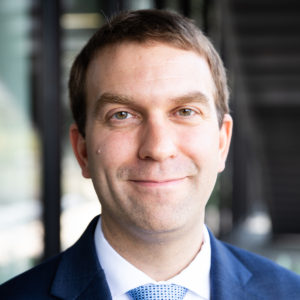
Jeffrey Barrick

Dr. Jeffrey E. Barrick is an Associate Professor of Molecular Biosciences and a member of the Center for Systems and Synthetic Biology at the University of Texas at Austin. He received his B.S. degree in Chemistry from the California Institute of Technology in 2001 and his Ph.D. degree in Molecular Biophysics and Biochemistry from Yale University in 2006. Dr. Barrick performed his thesis research on the discovery and characterization of metabolite-sensing riboswitches in bacteria under the direction of Ronald Breaker. He was then a postdoctoral fellow from 2006 to 2010 with Richard Lenski at Michigan State University where he studied genome dynamics in a 25-year laboratory evolution experiment with Escherichia coli. His honors include an NSF CAREER Award, an NIH Pathway to Independence Award, and an RNA Society/Scaringe Young Scientist Award. Dr. Barrick’s research is at the interface of synthetic biology and microbial experimental evolution. His laboratory is interested in improving the reliability of biological engineering by developing methods to anticipate and prevent unwanted evolution of designed DNA sequences, in understanding how expanded genetic codes impact the evolutionary potential of organisms, and in engineering insect-associated bacterial symbionts for applications in agriculture. They create and maintain open-source software tools for identifying mutations in microbial genomes from next-generation DNA sequencing data (breseq) and for predicting DNA sequences prone to unwanted evolution (EFM Calculator).

Synberc (Synthetic Biology Research Center)

You have been redirected from synberc.org

Synberc: Building the Future with Biology (Synberc 10 Year Book)

About Synberc

Synberc was a multi-university research center established in 2006 and funded for ten years with a grant from the National Science Foundation (NSF) to help lay the foundation for synthetic biology. During its 10 years of NSF support, Synberc made important early contributions to the development of the field of synthetic biology through research from members’ labs, interactions between academic and industry members, and broad-impact activities to support socially responsible innovation. At the conclusion of Synberc’s grant period, the Engineering Biology Research Consortium (EBRC) was founded. Many of the key activities established by Synberc have been adopted, improved, and continued by EBRC. EBRC is continuing to develop additional new activities and programs to support and sustain the impact of research, products, discoveries, and ideas from the synthetic biology community.

Synberc’s mission was threefold:

  1. develop the foundational understanding and technologies to build biological components and assemble them into integrated systems to accomplish many particular tasks;
  2. train a new cadre of engineers who will specialize in synthetic biology; and
  3. engage the public about the opportunities and challenges of synthetic biology.

Just as electrical engineers have made it possible to assemble computers from standardized parts (hard drives, memory cards, motherboards, and so on), Synberc envisioned a day when biological engineers systematically assembled biological components such as sensors, signals, pathways, and logic gates to build bio-based systems that solve real-world problems in health, energy, and the environment.

Synberc researchers applied engineering principles to biology to develop tools to improve how fast — and how well — synthetic biologists could go through the design-test-build cycle. These included smart fermentation organisms that can sense their environment and adjust accordingly, and multiplex automated genome engineering, or MAGE, designed for large-scale programming and evolution of cells. Synberc also pursued the discovery of applications that would lead to significant public benefit, such as synthetic artemisinin, an anti-malaria drug that costs less and is more effective than former plant-derived treatment.

History

In 2006, motivated by the possibility that microbes could be systematically engineered to produce virtually any product from sugar, a group of leading synthetic biologists successfully proposed Synberc to the National Science Foundation. Synberc was a ten-year multi-institutional research project working to lay the foundations for the field of synthetic biology which was emerging at the time. Synberc grew a trusted network of academic researchers working on foundational tools and technologies with a research program that created the enabling tools and technologies that have given rise to many bio-based applications. Synberc’s integrated Policy & Practices group developed and promoted leading examples of responsible synthetic biology research and application in four areas: biosafety and biosecurity; environmental applications and regulation; ownership, sharing and innovation; and community and leadership development. Synberc also built a robust industry partnership that includes nearly 50 small and large companies, non-profits, and industry associations.

With its federal funding ending in 2016, Synberc called upon the federal government to work with academic and industrial researchers to launch a national initiative in engineering biology and thus the Engineering Biology Research Consortium (EBRC) was launched to sustain and coordinate federal investments, coordinate regulatory and safety policies, catalyze public-private partnerships, and encourage education programs to create leaders in biotechnology practice and policy.

Research

Synberc’s research programs focused on projects that developed the foundational understanding and technologies needed to routinely build large numbers of useful biological systems from standard interchangeable parts. Synberc also developed a set of collaborative, cross-cutting testbed projects that drove the development of tools and technologies, and provided proof of principle in building complex applications for real-world problems.

Overview

Synberc’s research program focused on the development of:

PARTS – The most basic unit in the design of synthetic biological systems

DEVICES – Engineered genetic objects that are designed to function under specified conditions, and that can be created by combining parts

CHASSIS – Host cells that are designed to run a genetic program.

PRACTICES – Policies, procedures and ways of thinking about ethical, legal and social issues, as well as safety and security.

TESTBEDS – Synberc developed several testbeds to test the integration of Parts, Devices, Chassis and Practices into an integrated application to solve a particular societal challenge.  These testbeds ranged from tumor-destroying bacteria to chemical-producing microbes to nitrogen-fixing plants. Many of these testbeds were inspired by industry needs.

Synberc’s specific goals were to:

  • Develop a conceptual framework for designing small biological components, or parts, that could be assembled into devices to perform a well-characterized function under specified conditions;
  • Develop chassis (assembly substrate and power supply) to host the engineered devices and to assemble several devices as “systems” that accomplish a larger objective or goal ;
  • Develop a set of standards for the interactions of the parts and devices so that devices can be built more readily and reproducibly (enabling composition);
  • Offer the parts, devices, and chassis as open source to other researchers and companies; and
  • Link these engineering goals within a comprehensive practices framework.

In addition to the thrusts and testbeds highlighted above, Synberc developed a core of cross-cutting research that provided foundational tools and technologies to advance synthetic biology internally and externally. These projects include automated DNA construction, models and design, safety and security, and registries and repositories.

Research Resources

Synberc facilitated the development of a number of research resources for the synthetic biology community. These resources can be accessed on the EBRC Resources page.

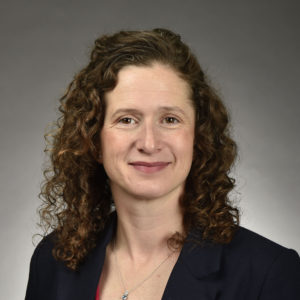
Anne Meyer

The Meyer lab performs research targeted at re-engineering bacteria to synthesize bio-inspired materials with improved properties. This approach has the potential to replace traditional chemical approaches that require extreme environmental conditions, expensive equipment, and the generation of hazardous waste. As a first step we have targeted bacterial production of patterned artificial nacre, a biomineralized material lining seashells that combines high mechanical strength with high fracture toughness. Combination of our biological materials-producing systems with our newly developed 3D bacterial printers will allow the rapid and straight-forward production of spatially structured biomaterials.

Sarah Glaven

Dr. Sarah Glaven is a research biologist at the U.S. Naval Research Laboratory (NRL) with over 12 years of experience in the field of microbial electrochemistry and electromicrobiology, processes in which microorganisms are used to catalyze electrode reactions and transport electrons over micron size distances. Dr. Glaven is recognized worldwide as an expert in the basic science of this field and for her recent work using meta-omics to understand electron transfer and carbon fixation of a marine cathode bacterial biofilm community. Dr. Glaven has published over 35 peer-reviewed articles in microbial electrochemistry, work that has been cited over 1400 times. She also holds a patent on the use of biocathodes for microbial reductive dechlorination in contaminated groundwater (#8,277,657, “Systems and methods for microbial reductive dechlorination of environmental contaminants”). More recently, Dr. Glaven has begun incorporating tools and practices of synthetic biology in her research to engineer extracellular electron transfer (EET). She also currently serves on the editorial board of ASM’s mSystems, the new journal Biofilms, and is the current President of the International Society for Microbial Electrochemistry and Technology (ISMET).

EBRC 2019 Global Forum for Engineering Biology: Initial Review of Synthetic Biology National Strategies

This workshop is an invitation-only event.

VENUE

Chaminade Resort & Spa 

One Chaminade Lane, Santa Cruz, CA 95065

MEETING OVERVIEW

The EBRC Global Forum is an international summit on national synthetic biology roadmaps and strategies. Our goal is to bring together leading representatives from more than 15 countries with active synthetic biology national strategies, programs, and roadmaps. It is an opportunity for international leaders in the field to present and discuss national strategies for synthetic or engineering biology in a relaxed, not-for-attribution forum.

The agenda of two full days includes plenary sessions to exchange information and to review key international and national trends, developments, and themes shaping engineering biology strategies and policies worldwide. We will also hold discussions focused on the common elements, opportunities and challenges for collaborative activities and initiatives that will advance synthetic biology/engineering biology as a global enterprise and exploration into the creation of a virtual and ongoing Global Forum for Engineering Biology.

The Forum is an invitation-only event to be held at the Chaminade Resort & Spa in Santa Cruz, California, USA. Registration fee includes hotel accommodations, meals, and a reception.

TRAVEL INFORMATION

The closest airports are San Jose International Airport – SJC (34 miles) or San Francisco International Airport – SFO (62 miles).

Ground transportation to and from SJC or SFO:

Sub Shuttle (www.subshuttle.com) +1-866-256-8182

Santa Cruz On Time Airport Car (www.santacruzontimeairportshuttle.com) +1-831-421-9999

Blue Water Limo (www.bluewater.limo) +1-831-477-0170

Santa Cruz Airport Flyer (www.santacruzflyer.com)  +1- 831-423-5937

BioBuilder Teacher Training Workshops

Attention all teachers: There are still open spots for BioBuilder’s three-day professional development workshops this summer! Tuition scholarships are available. See the BioBuilder Professional Development website for more info.

New publication from Jewett Lab

A new publication from Jessica Stark (Mike Jewett‘s lab at Northwestern Univ.) describes the use of cell-free synthetic biology in easy-to-use educational kits for teaching CRISPR and antibiotic resistance to high schools students. Check out the paper in ACS Synthetic Biology.

[VIRTUAL] EBRC 2020 Annual Meeting

While we are disappointed that we have been forced to cancel our annual meeting in Houston, we would like to take advantage of the blocked time on your calendar by conducting a number of activities, including our Working Group meetings, in a virtual format. These meetings will be held consecutively to facilitate participation by any members that care to join. We encourage any and all of you to listen in to those working groups that may be of interest to you. This is a great opportunity to get involved with what we’re doing. Below is full list of EBRC activities including:

  • Working Group Meetings
  • Student and Postdoc Association SBIR Workshop
  • Virtual Seminar Series
  • Review of an EBRC ethics statement
  • Virtual Poster Session

Here are the schedule and registration links for the Working Group meetings and SPA workshop:

Thursday, April 2nd

Friday, April 3rd

Please use the links to register for the meeting or meetings you intend to attend. A calendar invite containing an agenda and ZOOM information for each event will follow shortly.

SPA Workshop/Panel:
How to Apply for a Small Business Innovation Research (SBIR) Program Grant

Are you a graduate student or postdoc interested in entrepreneurship or looking to commercialize your research? Join the SPA for a panel on the Small Business Innovation Research (SBIR) program, a federal program that provides funding for startups and small businesses to engage in innovative research and development with commercialization potential. Our panel features Dr. Erik Pierstorff (SBIR/STTR Program Director at the National Science Foundation), Dr. Rachel Jordan (Research Scientist at Lynntech, Inc.), and Dr. Michael Heffernan (Principal at Fannin Innovation Studio).

Weekly Seminar Series:
In order to supplement the departmental seminars that have been cancelled in recent days, the EBRC will be holding a Weekly Seminar Series. We will be reaching out to the speakers we had scheduled for the annual meeting to begin building the program. But please feel free to connect me with colleagues interested in speaking to us, EBRC members or not. The times will be Tuesdays at 11:00 AM (PDT) one week, and Wednesdays at 1:00 PM (PDT) the following week, alternating for the duration of the program. This alternating schedule will allow the majority of members to attend at least every other week, despite class schedules. A schedule of dates and speakers will be published on ebrc.org prior to the virtual meetings.

EBRC Ethic Statement:
The EBRC Security Working Group has been developing an Ethics statement for the Consortium. The statement as well as background and framing information will be distributed on Friday March 20, 2020. We request that the other Working Groups dedicate some portion of their time to reviewing and commenting on this statement. The Security Working Group will address comments and work with Working Group Chairs and interested parties to produce a “final” version to be socialized with the whole of the membership prior to publication on the website. We look forward to your input and comments.

Virtual Poster Session:
In lieu of a poster session at the Annual Meeting, we are organizing a virtual “poster hall” that will be available from March 31 through April 3. Presenters will be asked to send a poster PDF or 4-5 PowerPoint slides to helix@ebrc.org by 11:59 PM PDT on March 29. Alternative media formats (e.g., a 5-min Zoom presentation or Prezi presentation) are welcome as supplements. On March 31, links to view posters on Google Drive will be provided to those who register for the poster session. By managing permission settings for viewing the posters, we aim to limit dissemination beyond those associated with our meeting. However, we recognize that some may not feel comfortable with unpublished work being available online, even to a restricted group. If that is the case, presenters should focus their posters on previously published data.

On Thursday April 2 after the working group meetings, we will host a live poster session using Zoom. Presenters will be divided into small groups (3-4 people) and assigned to a Zoom discussion room. Attendees will be able to enter rooms to speak with poster presenters.

General instructions about the ZOOM platform will be distributed shortly. Specifics on the working group sessions will be sent out by the chairs of those groups prior to the meeting. We look forward to your participation in moving forward the goals of our field.

EBRC Seeking Science Policy Postdocs

UC Berkeley and the Engineering Biology Research Consortium (EBRC) are seeking postdoctoral scholars interested in science policy. Learn more and apply today.

Global Biofoundry Alliance Launches

A group of over 15 biofoundries from around the world came together in in Kobe, Japan to launch the Global Biofoundry Alliance. Read more about it in Nature Communications.

Department of Defense Security Workshop

J. Kenneth Wickiser

Current: Associate Professor and Director of Life Science, Department of Chemistry and Life Science, West Point, NY
2007-2012 Faculty, Department of Chemistry and Life Science, West Point, NY
2004-2007 Postdoctoral Associate, Laboratory of Molecular Neuro-oncology, Rockefeller University, NY
1999-2004 Graduate Student, Department of Molecular Biophysics and Biochemistry, Yale University, CT
1992-1999 Army Officer, pilot, staff officer, ROTC instructor, AL, AZ, GA, and PR.
1988-1992 Cadet, West Point, NY

Lawrence Kennedy

6th International Mammalian Synthetic Biology Workshop

The Sixth International Mammalian Synthetic Biology Workshop (mSBW 6.0), will be held at Northwestern University in Evanston, IL (near Chicago) on the weekend of May 18-19, 2019. The mSBW series has grown to become a signature worldwide event. This event brings pioneers of synthetic biology together with experts from other relevant fields to highlight and inspire cutting-edge synthetic biology research, emphasizing both basic and applied science. The workshop format will provide a forum for exposition of the latest developments in the field and discussions of how experts from related fields can benefit from and contribute to mammalian synthetic biology. New features include a pre-conference tutorial series on the afternoon of Friday May 17, 2019, aimed at graduate students, postdocs, and faculty who are new to mammalian synthetic biology and wish to learn relevant techniques and scientific and technological fundamentals.

SynBioBeta 2019: The Global Synthetic Biology Summit

SynBioBeta is where tech meets bio and bio meets tech. Meet the innovators and companies, find new opportunities, partner up and discover the potential of the biological industrial revolution. Join attendees on October 1-3, 2019 in San Francisco to see how synthetic biology is disrupting consumer products, food, agriculture, medicine, chemicals, materials, and more.