Bioinspiration: A Motivation for Investing in Foundational Biological Research in the U.S.

Publication Date: June 2026

Bioinspiration is a growing field that translates biological principles into engineering solutions, often yielding significant returns even from niche research. Bioinspired technologies have the potential to generate billions for the U.S. economy and contribute to millions of jobs in fields including construction, healthcare, and chemical manufacturing. To promote this growth, significant investment must be made in the innovation pipeline from foundational research to commercialization.

Citation: O’Neil, J. and Aurand, E.R. Bioinspiration: A Motivation for Investing in Foundational Biological Research in the U.S. Engineering Biology Research Consortium. June 2026. https://doi.org/10.25498/E4425J

Keywords: bioinspiration, bioinspired design, biomimicry, congress, SBIR, STTR, valley of death

Download PDF


Disclaimer: The following publications are intended for personal use. All persons reproducing, redistributing, or making commercial use of this information are expected to adhere to the terms and conditions as asserted by the copyright holder. Transmission or reproduction of protected items beyond that are allowed by fair use as defined in the copyright laws requires the written permission of the copyright owners.
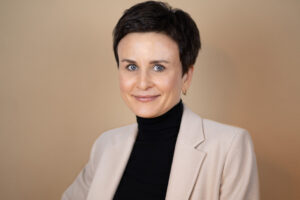

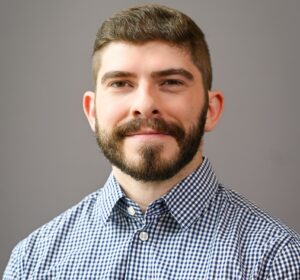
Nataliya Shok

Dr. Nataliya Shok is an accomplished academic with over 10 years of transdisciplinary experience in health and science policy research. Holding dual PhDs in political science and the history of science and technology, Dr. Shok brings a deep understanding of the complex intersections between these fields. As a seasoned program manager, she possesses strong analytical skills and a wealth of experience in policy development, strategic planning, and communications. She has effectively blended administrative leadership and teaching at prestigious medical schools in Russia and Kazakhstan. In 2019, she enriched her expertise as a visiting scholar at Wake Forest University.

At Georgetown, Dr. Nataliya Shok teaches in the Graduate Program in Biohazardous Threat Agents & Emerging Infectious Diseases, as well as in the Graduate Program in Biomedical Science Policy and Advocacy. In addition, she leads a Russia-focused team within a project on COVID-19 public health management in Asia, Russia, and Oceania, initiated by Dr. Tomoko Steen. Nataliya’s team investigates Russian approaches to global health and their implications for health security and future pandemic preparedness amid strategic competition.
Throughout her career, she has contributed to and led multiple research projects across academia, government, and civil society organizations, demonstrating her commitment to advancing impactful policy solutions. Her research findings became a subject of visiting lectures and talks across America and Europe – Cornell University, Wake Forest University, University of Notre Dame, Arizona State University, Ohio State University, Brussels School of Governance, Ulm University, Asfendiyarov Medical University, etc.

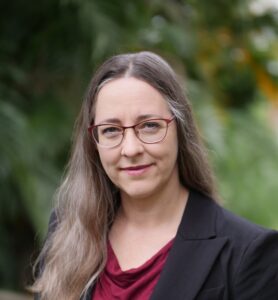
Rosa Santomartino

Blake Rasor

Blake Rasor received a B.S. in biology & microbiology from Miami University in Oxford, Ohio. Then he earned a Ph.D. in chemical & biological engineering from Northwestern University, working with Prof. Mike Jewett to study and engineer metabolism in cell-free systems. Before joining NC State, Blake was an EMBO postdoctoral fellow at the Max Planck Institute for Terrestrial Microbiology, where he worked with Prof. Tobias Erb to study photosynthesis using components from algae and cyanobacteria. Blake joined the faculty of Chemical and Biomolecular Engineering at NC State University in 2025 as a part of the new biomanufacturing-focused cluster. His research combines systems and synthetic biology approaches to engineer biocatalysis platforms with a focus on cell-free systems, 1-carbon metabolism, and photosynthesis.

Claudia Vickers

Professor Claudia Vickers is an internationally recognised leader in synthetic biology and metabolic engineering, with over 25 years of experience spanning academia, government, and industry. She is Professor at the Queensland University of Technology and Founder and Director of BioBuilt Solutions.

Professor Vickers has played a central role in building the synthetic biology ecosystem in Australia and connecting it globally. She was founding President of Synthetic Biology Australasia, where she established and grew a regional community spanning academia, industry, and government, including major conferences and collaborative networks that have helped bring the field to critical mass in Australia. As inaugural Director of CSIRO’s Synthetic Biology Future Science Platform, she grew a A$13M initiative into a A$60M national program involving over 200 researchers across more than 40 national and international partner organisations, establishing Australia’s first nationally accessible BioFoundry and creating enduring frameworks for cross-sector collaboration.

Professor Vickers is deeply engaged in international policy and strategy for engineering biology. She has represented Australia in global forums including the OECD (Synthetic Biology and Biofutures Working Groups), the World Economic Forum (Co-Chair, Global Future Council on Synthetic Biology), and the FAO. She contributed to Australia’s national synthetic biology roadmap and has advised federal and state governments through ministerial briefings and expert working groups. Her experience spans translation and industry engagement, including executive roles in biotechnology companies and advisory work with industry, investors, and government. Alongside this, she leads a research program focused on engineering biological systems for sustainable production, with over 100 publications and significant international impact.

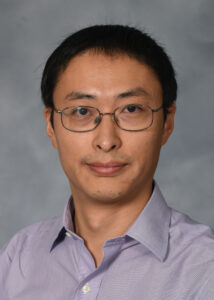
Tianhu Sun

I am interested in plant secondary metabolism, metabolic engineering, and plant molecular farming. Currently I am focusing on revealing carotenoid biosynthesis using tomato and Arabidopsis as model systems and multiple vitamin biofortification in seeds using synthetic biology and genetic engineering methods. Another research topic of my lab is using plant system to produce therapeutic proteins.

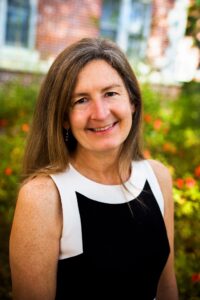
Tamara Mandell

Tamara Mandell, M.Ed., serves as Director of Biotility at the University of Florida (UF Biotility), where she leads national efforts to build a skilled, future ready bioscience workforce. Applying more than a decade of combined academic research and industrial biotechnology experience, she leads with a pragmatic approach to aligning competencies and skills with regulated manufacturing and research environments. Tamara led the development of the Biotechnology Aptitude and Competency Exam (BACE), a nationally recognized credential that provides employers with validated measures of workforce ready skills and expands pathways into biotechnology careers. A champion for learners, instructors, and the broader bio industrial community, she seeks to embed industry practices, competencies, and skills into multi-level curricula to support a talent pipeline capable of contributing to engineering biology and biomanufacturing innovation.
She oversees Biotility’s portfolio of industry recognized, ISO/IEC 17024 aligned credentials, developed with biotechnology employers and governed by a national industry advisory board to ensure rigor and continued relevance. Her leadership focuses on stackable credentials with cross-cutting standards leading to increased career options and advancement across biotechnology sectors. A strong advocate for maintaining high standards while expanding access, Tamara emphasizes the role of validated credentials in strengthening employer–education alignment and supporting a safe, ethical, and well qualified biotechnology workforce. Tamara holds a B.S.E. in Biology and a Master of Education in Curriculum and Instruction, foundations that bridge scientific expertise with evidence based educational design. This combination drives her commitment to shaping a capable, credentialed, and forward-looking bioscience workforce equipped to support the responsible growth and innovation goals of the broader bioscience industries.

New EBRC Publication! Securing the U.S. Bioeconomy: A Managed Access Framework for Biotechnology Innovation

EBRC Science Policy Postdoctoral Fellow Jon Judd has published a new independent policy memo examining federal governance of biological data: Securing the U.S. Bioeconomy: A Managed Access Framework for Biotechnology Innovation.

The U.S. leads in biological data production, but fragmented governance and incompatible formats mean that data sitting in federal repositories today cannot fuel the AI-enabled discoveries the bioeconomy needs.

His memo argues for a managed-access approach and puts forward three recommendations:

  • Congress should authorize a DOE-led federated pilot program anchored at the National Labs to build and test the infrastructure for shared biological data access.
  • NIST should develop a standardized biological data ontology to establish the building blocks for AI-ready data across federal repositories.
  • OSTP should convene an interagency subcommittee to produce a unified data-use agreement, replacing the current patchwork of incompatible access requirements.

The memo reflects input from across the EBRC community and builds on the National Security Commission on Emerging Biotechnology’s call for improved federal biological data infrastructure. We encourage the broader community to read it and share reactions.

Read the full memo here.

David Gillum

Dr. David Gillum is Associate Vice President for Compliance and Research Administration and Adjunct Faculty in the School of Public Health at the University of Nevada, Reno. With more than 30 years of experience, he has led diverse teams across higher education and professional associations, and is widely recognized for his expertise in biosafety, biosecurity, compliance, risk management, and research administration. His research interests focus on the social and ethical dimensions of emerging technologies, including artificial intelligence, biotechnology governance, dual-use research of concern, and potential pandemic pathogens. He has published extensively in outlets such as Science Magazine, StatNews, Frontiers in Bioengineering and Biotechnology, mSphere, Applied Biosafety and Health Security. A former President of ABSA International (2020), Dr. Gillum has received several recognitions including the FBI Director’s Community Leadership Award (2019) and the ABSA International Everett Hanel, Jr. Presidential Award (2024). He is dedicated to fostering collaboration, innovation, and continuous improvement in support of research, education, and public service.

Internship at University of Illinois Urbana-Champaign

Posted: 05/01/2026

About the Company/Organization:

University of Illinois Urbana-Champaign
Type: Other
Size: 10,000
http://illinois.edu

The University of Illinois Urbana-Champaign is dedicated to building upon its tradition of excellence in education, research, public engagement and economic development. More than 3,000 faculty members discover and create new knowledge. Their work is an economic engine for the state and is recognized with many of the world’s top academic and creative awards. The campus’ outstanding academic programs, extraordinary resources and bountiful opportunities attract top-caliber students. They join research teams, spend semesters abroad, create art in old and new ways and lead and participate in hundreds of student organizations. The Urbana campus has more than 425,000 alumni who are global leaders across the spectrum of human endeavor.


Internship Project/Opportunity

Location: Champaign, IL
Anticipated internship dates: August 3-7, 2026
Target intern experience level: Undergraduate Students, Graduate Students, Postdocs
https://ibiofoundry.illinois.edu/summer-school-2026/

Join the University of Illinois Urbana-Champaign on August 3-7, 2026 for iBioFoundry Summer School 2026, an intensive, one-week training program in laboratory automation and AI/ML for synthetic biology.

Gain hands-on experience programming liquid handlers, analytical equipment, and robotics, and learn to build automated workflows using AI/ML-driven design-build-test-learn cycles. The program is free for selected candidates from U.S. institutions. Travel, accommodations, meals, and course materials are all covered.

Who should apply?
Undergraduate students, graduate students, postdocs, technical staff, and faculty working in synthetic biology, metabolic engineering, and related fields.

Application deadline:
June 5, 2026

Learn more and apply:
https://ibiofoundry.illinois.edu/summer-school-2026/