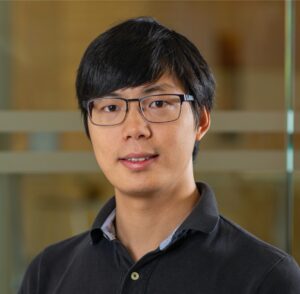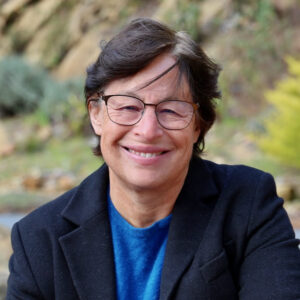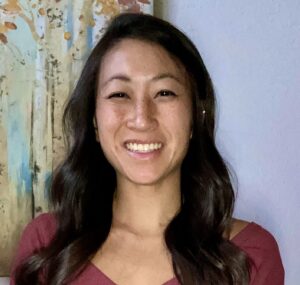
Julietta Sheng

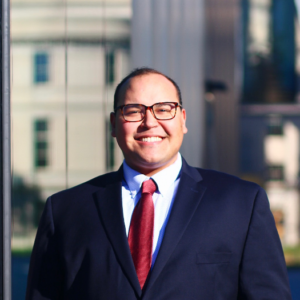
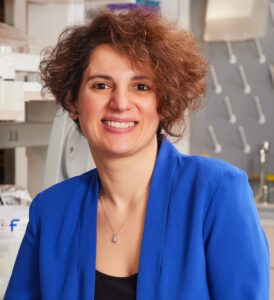
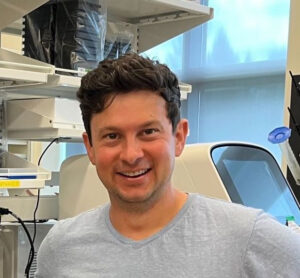
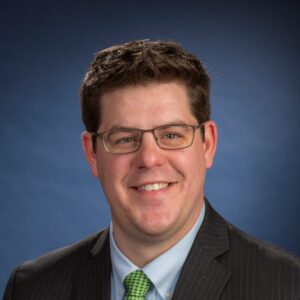
Julietta Sheng is a Program Manager at the Engineering Biology Research Consortium, focusing on Education and Community. Prior to EBRC, she was a Career Enhancement Core Scholar with the Innovation Center on Sex Differences in Medicine (ICON-X), a collaboration between Colorado State University and Massachusetts General Hospital – Boston. Through ICON-X, she partnered with bioengineers, clinicians, and academics to enhance evidence-based research, identify scientific challenges, and develop creative solutions.

Julietta recently earned her PhD in Biomedical Sciences – Neuroscience with Drs. Stuart Tobet and Robert J. Handa at Colorado State University with a focus on sex differences in the brain and body that lead to neuropsychiatric disorders.

Outside of work, Julietta likes to play kickball, read psychological thrillers, and go on long walks with her puppos.
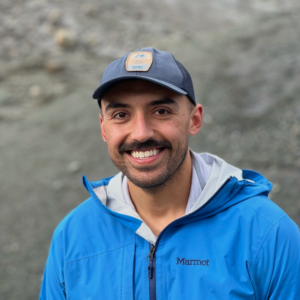
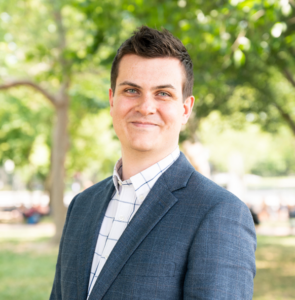
Neil Dalvie

Neil Dalvie did his PhD in Chemical Engineering at MIT, studying therapeutic protein manufacturing. Now, he is a Schmidt Science Fellow in the Synthetic Biology Hive at Harvard Medical School. Neil researches large-scale bioprocessing for mineral processing and is interested in the ethics and regulation of environmental bioengineering.

Cameron Roots

Cameron is a recent graduate and postdoctoral fellow in the Barrick Lab at the University of Texas at Austin. He completed his B.S. in biochemistry and in molecular, cellular, and developmental biology at the University of Washington. Afterwards, he completed a postbactorial study at the National Institutes of Health as an IRTA fellow. His current research is at the intersection of synthetic and evolutionary biology, exploring how engineered systems are prone to mutation and developing tools to help researchers keep theirs stable. His prior policy activities include institutional policy initiatives within the UT Austin Interdisciplinary Life Sciences programs; independent study and programming as a Graduate Archer Fellow; and as an intern on biomanufacturing, biosecurity, and AIxBio federal policy.

Efrain Rodriguez-Ocasio

Efrain Rodriguez Ocasio is originally from Puerto Rico and graduated from the University of Puerto Rico-Mayagüez with a B.S. in Industrial Biotechnology. During his undergraduate studies, Efrain served as a trustee on the Governing Board of the University of Puerto Rico, which oversees the 11 campuses of Puerto Rico’s public University. He earned his Ph.D. in Chemical Engineering at Iowa State University, where he developed microbial platforms for plastic waste upcycling and earned the ISU Research Excellence Award. Efrain is currently a postdoctoral fellow at the Great Lakes Bioenergy Research Center and the University of Wisconsin-Madison. His research integrates metabolic and process modeling to identify new production targets for the decarbonization of the chemical industry and synthetic biology for industrial strain development.

Ross Klauer

Ross Klauer is a PhD candidate in Chemical and Biomolecular Engineering at the University of Delaware. He received his Bachelor of Science Degree in Chemical Engineering from Rose-Hulman Institute of Technology. Ross is co-advised by Dr. Mark Blenner and Dr. Kevin Solomon. Ross’ research focuses on elucidating the polyethylene deconstruction pathway in the digestive system of plastic-eating yellow mealworms. He is working to identify and engineer enzymes for polyethylene deconstruction. Outside of lab, Ross enjoys playing soccer and is a competitive cornhole player.

Rabia Yazicigil

Rabia Yazicigil is an Assistant Professor of ECE Department at Boston University. She was a Postdoctoral Associate at MIT and received her Ph.D. degree from Columbia University in 2016. Her research focuses on the development of Cyber-Secure Biological Systems, leveraging living sensors constructed from engineered biological entities seamlessly integrated with custom-designed semiconductor chips. This unique synergy harnesses the advantages of biology while incorporating the reliability and communication infrastructure of electronics, offering a unique solution to societal challenges in healthcare, environmental monitoring, and sustainable biomanufacturing. She has received numerous awards, including the NSF CAREER Award (2024), Early Career Excellence in Research Award for the Boston University College of Engineering (2024), the Catalyst Foundation Award (2021), Boston University ENG Dean Catalyst Award (2021), and “Electrical Engineering Collaborative Research Award” for her Ph.D. research (2016). She was selected as a member of the 2024 National Academy of Engineering (NAE) US Frontiers of Engineering (USFOE) cohort.

Reza Zadegan

R. Clay Wright

Clay Wright is an Assistant Professor in the Department of Biological Systems Engineering at Virginia Tech. His lab focuses on understanding and engineering chemical signaling pathways from plants and fungi. Clay received his BS in Chemical and Biomolecular Engineering from North Carolina State University and PhD in the same from Johns Hopkins University, where he worked with Professor Marc Ostermeier to engineer cancer therapeutic enzymes that are selectively active in the presence of a cancer marker. For his postdoctoral research, he worked with Professors Jennifer Nemhauser and Eric Klavins at University of Washington to study evolution and function of receptors for auxin, a critical plant growth hormone. Clay was recently awarded an NIH MIRA to further our understanding and engineering of chemically activated ubiquitin ligases, such as those that coordinate auxin signaling and other plant hormone signaling pathways.

Eric Young

Eric Young received undergraduate degrees in Chemical Engineering and Biological Engineering from the University of Maine at Orono. He received his Ph.D. in Chemical Engineering from the University of Texas at Austin as an NSF Graduate Research Fellow. He completed postdoctoral research at Massachusetts Institute of Technology developing the MIT-Broad Foundry. Dr. Young is an Associate Professor of Chemical Engineering, with affiliate appointments in Biomedical Engineering and Bioinformatics and Computational Biology at Worcester Polytechnic Institute. His research objective is to understand and engineer microbes that improve the human condition. This research program informs his educational goal – to train the current and future workforce for an economy shaped by engineered biology.

Fan Hong

Fan is interested in developing biomolecular tools to dive into the complexity of biology (decoding and regulating cellular functions on the molecular basis at the tissue scale). Before joining the faculty at the University of Florida, Fan was a Postdoc Fellow at Wyss Institute at Harvard University where he worked on the DNA advanced in situ spatial multi-omics (e.g., DNA thermal-plex) in the Yin Lab. Thermal-plex enables multiplexed fluorescent imaging of biomolecules with unprecedented feasibility and speed for tissue biospecimen analysis. Fan completed his Ph.D. at Biodesign Institute at Arizona State University and worked in the Yan Lab, Green Lab, and Sulc Lab, where he developed methods to program nucleic acids in vitro (e.g., Framework DNA nanoarchitecture), in vivo (e.g., SNIPR), and in silico (e.g., crowder-oxDNA) to address grand questions with chemical approaches to biology. Those methods enable the control of nucleic acid folding into complex framework biomolecular architectures from the nanoscale to the macroscale, the regulation of cellular gene expression based on the single nucleotide mutation in cells with de-novo-designed RNA riboregulators, and the investigation of the biophysical behavior of nucleic acid folding in the crowding cellular environment with molecular dynamics.

Priyanka Nain

I am Priyanka Nain, currently working as a postdoctoral researcher in the Chemical and Biomolecular Engineering Department at the University of Delaware. Here, my research revolves around finding innovative solutions that integrate synthetic biology, sustainability, and healthcare. My Ph.D. is from the Chemical Engineering Department at IIT Delhi, where I was developing strategies to improve the production of biotherapeutic proteins. I am deeply passionate about sustainable biomanufacturing. I thrive on the scientific challenges involved in scaling up bioprocesses, from optimizing cell lines and media to fine-tuning fermentation feeding and control strategies, and analytical methods. But I also care deeply about the broader impact – delivering products that are both effective and accessible and manufactured in the interest of the environment.

Miguel Jimenez

Miguel Jimenez is an Assistant Professor at Boston University, where he runs el Microbial Integration Group. The group integrates engineered microorganisms with mechanical and electronic devices for applications in human health, agriculture, the environment, and entertainment.

Sarah Hartley

Technology governance is concerned with the decisions that shape how technology is funded, developed, regulated, tested, and deployed – it determines technology trajectories. My social science research takes a critical look at the politics and power in these governance decisions, particularly in efforts to open-up these expert spaces to diverse knowledge, values and visions through engagement and knowledge co-production – features that have become prevalent in technology governance in recent years. I’m particularly interested in the value tensions that exist in and between science and society when governance decisions are opened-up and, importantly, how to manage these tensions more effectively. I focus on the development and risk assessment of emerging technologies, particularly the biotechnologies (gene drive, genome-editing, genetic modification of animals, especially insects) and AL/digital technology applications in environment and agriculture. I am Co-Director of the Centre for Doctoral Training in Environmental Intelligence.

New Publication: Engineering Biology Metrics and Technical Standards for the Global Bioeconomy

A new report responding to engineering biology’s need for clear standards and metrics to enable the rapid development of a sustainable bioeconomy.

Engineering Biology Metrics and Technical Standards for the Global Bioeconomy

Publication Date: May 2024

Coordinated by Imperial College London, EBRC, the National Institute of Standards and Technology (NIST), and the National University of Singapore (NUS), with support from Schmidt Sciences, this report responds to the need for standards and metrics and the lack of clarity on which standards to prioritize to aid the safe and efficient commercialization of engineering biology. The report identifies 10 key focus areas, including data standards, common definitions, metrics to quantify and scale up biological processes, and non-technical areas vital for the growth of the bioeconomy, including public engagement and regulatory clarity.

Biomarkers US 2024

Discover the latest advancements in biomarkers at the 8th Annual Biomarker & Precision Medicine US Congress. Join experts from global pharma, top biotechs, and renowned academic institutions to explore emerging tools and strategies in translational science, diagnostics, and biomarker development.

Built with industry experts in mind, the conference program highlights:
• Exciting biomarker technologies impacting R&D in 2024
• Multi-omics, spatial biology, digital markers, and next-gen diagnostics
• The opportunity to engage with regulators, diagnostics manufacturers, and biopharma peers

Willy A. Valdivia-Granda

I am the founder of Orion Integrated Biosciences. I lead a group of researchers developing new techniques to decode microbes’ genomic information and map short DNA fragments to their source of origin, virulence, and possible genetic manipulation. My research includes the use of artificial intelligence algorithms including large language models, neural networks, and generative adversarial networks to design a new generation of biotentities for biotechnology applications. I also lead the advancement of a new generation of analytical tools for risk assessment and early warning of biothreats that can affect health, trade, and national security. This work includes processing large data sets from multiple sources, including geospatial, trade, news outlets, security, and economic signals and indicators using machine learning and artificial intelligence algorithms. I have research projects with collaborators in several countries within the European Union, New Zealand, Guinea, Ukraine, Colombia, and Brazil. I serve as a subject matter expert and adviser to several funding agencies and policymakers within the U.S. government, and Hong Kong Research Council overseeing funding programs of more than USD 200 Million. This role not only underscores the significance of our work but also facilitates the integration of computer science principles into the development of solutions for pressing global challenges in health and security.

From Intent to Impact: Enabling Transdisciplinary Research for Responsible Scientific Stewardship

Publication Date: March 2024 | Originally published in the Journal of Science Policy & Governance

Global challenges are complex and must be tackled in a holistic manner. Understanding and addressing them requires collaboration across disciplines, often uniting the humanities and social and natural sciences, to ask better questions and identify practical and revolutionary solutions. Universities can be excellent vehicles for transformational change as they educate the next generation of civically-motivated thinkers to create meaningful action and impact. Too often systemic, artificial barriers exist within these institutions that prevent meaningful transdisciplinary collaboration from succeeding. We recommend that universities identify grand challenges and foster a culture of cross-department collaboration with appropriate internal and external resources to enable broader impacts. Together, funders and institutional policymakers play a critical strategic role in fostering civic scientists and transdisciplinary researchers to solve multifaceted global problems.

Alexander Refsnes Andrassy

Research in cell culture models and synthetic biology innovations

Lynn Rothschild

Lynn Rothschild is passionate astrobiologist focusing on the origin and evolution of life on Earth and elsewhere, while at the same time pioneering the use of engineering biology to enable space exploration. Her research focuses on how life, particularly microbes, has evolved in the context of the physical environment, both here and potentially elsewhere. A graduate of Yale, Indiana University and Brown, she has brought her imagination and creativity to the burgeoning field of synthetic biology, articulating a vision for the future of synthetic biology as an enabling technology for NASA’s missions, including human space exploration and astrobiology. From 2011 through 2019 she served as the faculty advisor of the Stanford-Brown iGEM team. Her lab tested these plans in space on in the PowerCell secondary payload on the DLR EuCROPIS satellite. A past-president of the Society of Protozoologists, she is a fellow of the Linnean Society of London, The California Academy of Sciences and the Explorer’s Club. She was awarded the Isaac Asimov Award from the American Humanist Association, and the Horace Mann Award from Brown University. She has been a NASA Innovative Advanced Concepts (NIAC) fellow seven times. Lynn was formerly Professor (Adjunct) at Stanford where she taught “Astrobiology and Space Exploration” for a decade.