Malice Analysis: September 2020 Virtual Workshops

EBRC is hosting several Malice Analysis Workshops during the month of September to train researchers to critically evaluate the security implications of their research. Pick the workshop time and date that fits your schedule and join us!

Malice Analysis: Assessing Biotechnology Research for Security Concerns

EBRC’s Malice Analysis program trains researchers and others associated with engineering biology to critically evaluate research for potential security concerns. By providing practitioners with the tools and a framework to conduct basic security analyses, EBRC hopes to support a culture in the field of engineering biology that incorporates the consideration and discussion of security into the research and development life-cycle.

Department of Defense Security Workshop

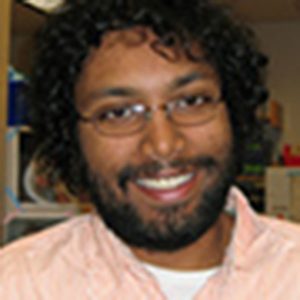
Samuel Leach

Sam is a 2nd year PhD student in Chemical and Biological Engineering at Northwestern University. He received his Bachelor of Science in Chemical and Biomolecular Engineering from the Georgia Institute of Technology. He currently researches utilizing the type III secretion system in Salmonella for efficient, large scale biomanufacturing. He is interested in next-generation biotechnology, scale-up engineering, and science diplomacy.

Julie Ming Liang

I am a graduate student in the Tullman-Ercek lab at Northwestern.

Lauren Gambill

I am a graduate student in the Systems, Synthetic, and Physical Biology program at Rice University. I am in the Chappell Lab and build RNA regulators.

Alec Nielsen

Sri Kosuri

Nigel Mouncey

Dr. Mouncey joined the DOE Joint Genome Institute in 2017 as the fourth Director in its 20-year history. After stints as a senior research scientist in molecular biology at Roche Vitamins, Inc. in New Jersey and DSM Nutritional Products in Switzerland, he joined Dow AgroSciences in Indianapolis in 2008 and served as Bioengineering and Bioprocessing R&D Director and Leader from 2011 onward. There, Mouncey directed a 70-member R&D team that supported the growth of a highly successful natural product insecticide that has since generated hundreds of millions of dollars of revenue and significant societal benefit, through isolating, optimizing, and scaling-up of new production strains for commercial manufacturing by fermentation. He also built an integrated and highly effective bioprocessing team comprising high-throughput screening, metabolic engineering, engineering biology, systems biology, enzymology, protein expression, fermentation and analytical capabilities. His team also developed production strains and fermentation processes for other molecules such as a new fungicide, propionic acid and long-chain alcohols, as well as supporting the discovery of new crop traits.

Danielle Tullman-Ercek

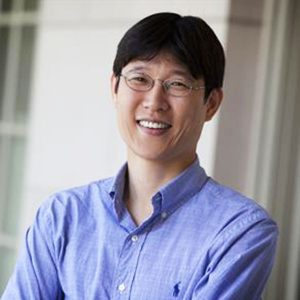
Tae Seok Moon

He has 24 years of research experience in chemistry, systems biology, and synthetic biology, including 5.5 years of industry experience (as of 2021). His research focus (2012-21; 15 grants; $7.3M external funding to him; $16M to the entire team) is understanding gene regulation, evolution, and metabolism, building sensors and genetic circuits, and engineering microbes to solve global problems, including climate crisis, waste valorization, plastic upcycling, sustainability, and health issues. He has published 52 papers, has filed 9 patents, and has given 51 invited and 118 contributed presentations. He has advised 26 PhD/Postdoctoral and 28 undergrad researchers. He is a Founder and Head of the SAB of Moonshot Bio. Several awards include a B&B Wang Award, an NSF CAREER award, an ONR YIP, a Sluder Fellowship (MIT), and the SNU President Prize. He is the Founding Chair of SynBYSS (Synthetic Biology Young Speaker Series) with more than 1000 global audiences.

Twitter handle: @Moon_Synth_Bio

LinkedIn Profile
June Medford

Jay Keasling

Karmella Haynes

Karmella Haynes

Yvonne Chen

Yvonne Chen

Dr. Yvonne Chen is an Associate Professor of Microbiology, Immunology, and Molecular Genetics at the University of California, Los Angeles. She is also a faculty, by courtesy, in the Department of Chemical and Biomolecular Engineering. The Chen Laboratory focuses on applying synthetic biology and biomolecular engineering techniques to the development of novel mammalian-cell systems. The Chen Lab’s work on engineering next-generation T-cell therapies for cancer has been recognized by the NIH Director’s Early Independence Award, the NSF CAREER Award, the Hellman Fellowship, the ACGT Young Investigator Award in Cell and Gene Therapy for Cancer, the Mark Foundation Emerging Leader Award, and the Cancer Research Institute Lloyd J. Old STAR Award. Prior to joining UCLA in 2013, Yvonne was a Junior Fellow in the Harvard Society of Fellows. She received postdoctoral training at the Center for Childhood Cancer Research within the Seattle Children’s Research Institute, and in the Department of Systems Biology at Harvard Medical School. Yvonne received her B.S. in Chemical Engineering from Stanford University and her Ph.D. in Chemical Engineering from the California Institute of Technology.

Matthew Chang

Adam Arkin

Pamela Silver

Pamela Silver

Natalie Kuldell

Dr. Natalie Kuldell leads BioBuilder, a nonprofit organization that inspires the next generation of innovators with authentic science and engineering. BioBuilder’s synthetic biology curriculum breeds excitement by helping students and teachers design and then build
biotechnologies that solve real problems throughout the US and around the world. A BioBuilder textbook was published by O’Reilly Media. In 2017, BioBuilder opened a community lab in Kendall Square’s LabCentral.

Dr. Kuldell studied Chemistry as an undergraduate at Cornell, completed her doctoral and post-doctoral work at Harvard Medical School, and taught at Wellesley College before joining the Department of Biological Engineering faculty at MIT in 2003. She is the 2020 recipient of the Margret and H.A. Rey Curiosity Award.

Cynthia Collins