AAAS Science & Technology Policy Fellowships
Scoville Peace Fellowship
The Christine Mirzayan Science & Technology Policy Graduate Fellowship Program
Youth for Biosecurity Fellowship
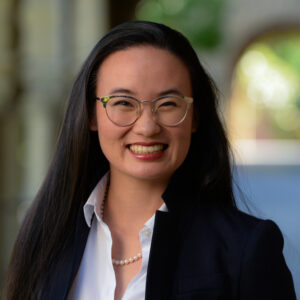
Callie R. Chappell
Dr. Callie Chappell (they/them) is an NSF Postdoctoral Fellow in Biology at Stanford University. Callie’s work focuses on the environmental and social implications of bioengineered organisms that live outside the lab, such as genetically modified microbes. Callie was a fellow with the Center for International Security and Cooperation (CISAC) at Stanford University, leading a project promoting community biology labs (“LABraries”) as sites for community-led biodesign innovation. Callie is also a professional artist and led an arts and bioengineering summer camp, BioJam.
Curriculum Module: Biosecurity & Bioethics Education Resource (B-BER)
Biosecurity and bioethics training can support the life sciences research community in securing and safeguarding biotechnology as it delivers powerful new tools, technologies, and products. However, these topics are not always well-integrated into researcher training. B-BER provides tools to support trainee exposure to biosecurity and bioethics concepts and suggestions for using them.
Response to NITRD NCO RFI on the Development of an Artificial Intelligence (AI) Action Plan
Publication Date: March 2025
EBRC’s response to OSTP’s Request for Information regarding the development of an Artificial Intelligence (AI) Action Plan to sustain and enhance the US competitive edge within this strategic technology. AI holds a great deal of promise for engineering biology, but it also potentially introduces new risks. Without guardrails and common sense oversight, AI may be appropriated to inform the creation of hazards that could endanger public health and national security. Further, USG must ensure developers and researchers have access to resources required to develop and deploy the technology. Our response recommends policy actions that promote the creation of a competitive and vibrant AI ecosystem that is safe and secure.
Response to RFI on NIST AISI’s Draft Document: Managing Misuse Risk for Dual-Use Foundation (AI) Models
Publication Date: March 2025
EBRC’s response to NIST’s Request for Comment regarding their draft document: “Managing Misuse Risk for Dual-Use Foundation Models.” Protecting technologies against potential misuse is critical for both scientific advancement and public safety. We support the updated document and recommend that NIST’s AI Safety Institute continues this work by collaborating with the scientific community to: 1) Better characterize risks specific to specialized chemical and biological design tools; and, 2) Develop targeted mitigation strategies that protect innovation while preventing misuse.
Strengthening a Safe and Secure Nucleic Acid Synthesis Ecosystem
Publication Date: January 2025
This report presents findings, best practices, and recommendations for quality, measurable nucleic acid synthesis screening and was developed by the Engineering Biology Research Consortium (EBRC) in cooperation with the National Institute of Standards and Technology. During 2024, EBRC brought 200 stakeholders together across government, academia, industry, and civil society in a series of workshops to consider key aspects of nucleic acid synthesis screening, including Sequence of Concern database development and conformity assessment. This report provides best practices for a range of stakeholders and offers recommendations to support the adoption of screening practices and improve screening outcomes. Cross-sector collaboration will continue to be necessary to tackle screening challenges and effectively implement U.S. policy. Further, strong international partnerships will be necessary to advance quality screening around the globe (learn more).
EBRC 2025 Annual Meeting
Meeting Agenda
Communications One-Pager
Registration is now closed.
Our 2025 Annual Meeting will be held May 1-2, 2025 at the University of Washington in Seattle, WA!
The EBRC Annual Meeting provides an opportunity for the engineering biology community to come together to engage on matters important to advancing engineering biology. In addition to inspiring research talks and poster presentations, EBRC’s meeting holds time to consider the larger engineering biology research ecosystem in which we all exist and work together to move the field forward. We invite you to join us to present and discuss your latest research, build relationships with your colleagues in academia, industry, and government, and advance the member-driven work of EBRC. Attendance at the Annual Meeting is open to all EBRC members, their lab members, employees of institutional members, and all SPA members. We also warmly welcome all those in the Seattle area with an interest in engineering biology to join us.
We are excited to announce that Dr. Kate Rubins, microbiologist and NASA Astronaut, will be delivering this year’s keynote address!
Registration:
Registration closed April 16, 2025. To confirm your spot and offset some of the meal costs, there will be a nominal fee ($150 for faculty & industry and $75 for students & postdocs). If this fee is prohibitive for you or your lab members, please email helix@ebrc.org.
Abstract submissions for are now closed. Abstract submission is separate from registration. Submissions from all attendees are welcome! We encourage you to submit your latest, ongoing work as a mechanism to engage in community dialogue. Abstracts for posters are due on April 16, 2025
IMPORTANT DATES:
March 9, 2025: Last day to submit talk abstracts
March 26, 2025: Notification of talk selection
April 1, 2025: Registration closes for those with EBRC-supported travel
April 4, 2025: Deadline for hotel and travel arrangements by EBRC
April 16, 2025: Registration closes*
April 16, 2025: Last day to submit poster abstracts
*registration may still be possible after this date but will incur additional costs
Annual Meeting Venue:
University of Washington
Seattle, WA
Meeting Hotel:
*Update* — Our block of rooms at Graduate by Hilton Seattle and Residence Inn Seattle University District is now fully booked. We suggest you reach out to these nearby hotels if you need accommodations: Watertown Hotel, University Inn, and College Inn Hotel.
EBRC has reserved a block of hotel rooms at the Residence Inn Seattle University District at $199.00 per night (includes breakfast and WiFi) and Graduate by Hilton Seattle at $219.00 per night (includes breakfast and WiFi). If your travel is not covered by EBRC, you can provide payment at check in. Please contact helix@ebrc.org with any questions rather than contacting the hotel directly.
Transportation:
Alder Hall is about a 15-minute (0.5 mile) walk from both the Graduate by Hilton Seattle and Residence Inn Seattle University District. Use the Alder Commons entrance located on NE 40th Street.
Travel Support:
We anticipate covering airfare and hotel expenses for:
- Individuals selected as speakers from academia, including students and postdocs;
- EBRC Academic Council members selected as Session Chairs; and
- Student and Postdoc Association Board members who present a poster or are selected as speakers.
Individuals who will receive travel support will be contacted by email to complete their flight bookings. The meeting will conclude at 3:00PM on Friday, May 2 and we encourage those receiving travel support to find an evening flight if at all possible. We will only cover Friday night hotel expenses with prior approval. Please contact helix@ebrc.org if you anticipate needing Friday night accommodations. Please also note that travel support does not include the confirmation/meal fee ($150 for faculty and $75 for students and postdocs). Email helix@ebrc.org if this fee is prohibitive. Please see EBRC’s full travel policy here.
We encourage you to make your travel plans early, as we will cap the level of airfare support provided by EBRC. Airfare must be booked by April 4 to be eligible for EBRC support.
Health and Safety:
We are committed to hosting a safe event. We will be closely watching CDC recommendations in addition to all relevant local and state guidelines leading up to the Meeting and make any changes necessary for health and safety.
Dress Code:
The EBRC Annual Meeting does not have a dress code. EBRC values diversity and individual expression — we encourage participants to come as they are and wish to present themselves to the world.
Global Forum 1.0 (2019)
The inaugural EBRC Global Forum for Engineering Biology (EBRC Global Forum 1.0) was held on September 9-10, 2019, in Santa Cruz, California. This international summit focused on national synthetic biology roadmaps and strategies, bringing together representatives from over 15 countries with active programs in synthetic biology. The two-day event featured plenary sessions to exchange information and review key international and national trends shaping engineering biology strategies and policies.

EBRC Global Forum 2.0 (2023)
The second EBRC Global Forum for Engineering Biology (EBRC Global Forum 2.0) took place in Singapore on February 20-21, 2023, in partnership with the Singapore Consortium for Synthetic Biology (SINERGY). This international summit gathered global leaders from nearly 50 institutions representing 21 countries to discuss national strategies around engineering biology, as well as opportunities and challenges for global and national collaboration.

EBRC Global Forum 3.0 (2025)
This is an invitation-only event.
MEETING OVERVIEW
Building on the success of the previous EBRC Global Forum events, the third Forum will be held in March 2025 at the J. Craig Venter Institute in La Jolla, California. This summit will continue the important work of bringing together global leaders to advance national engineering biology roadmaps and bioeconomy strategies.
Over the course of two days, participants will engage in dialogue on the latest developments, opportunities for collaboration, and the evolving challenges facing the field. As with previous Forums, the event will provide an invite-only, not-for-attribution environment, encouraging candid discussions among representatives from across the globe.
Key agenda topics will include:
- Updates on the current status of national engineering biology strategies and programs;
- Global trends in engineering biology and bioeconomy development;
- Collaborative initiatives aimed at advancing engineering biology on both national and international levels.
VENUE
The Forum will take place at the J. Craig Venter Institute in La Jolla, California. Known for its leadership in genomics and engineering biology, the Institute will be a fitting setting for these critical discussions. Additional details about accommodations, including discounted rates at nearby hotels, will be shared with attendees.
TRAVEL INFORMATION
Participants are expected to cover their own travel and accommodation costs. EBRC will work to secure discounted room blocks at nearby hotels, with further details forthcoming. Limited financial assistance may be available on a case-by-case basis for attendees requiring support. Stay tuned for more information on travel logistics and accommodation options.
Safety Considerations for Chemical and/or Biological AI Models
Publication Date: December 2024
An EBRC response to NIST RFI 89 FR 80886: Safety Considerations for Chemical or Biological AI Models.

Jonathan Klonowski
Jonathan is a policy postdoctoral researcher at the Engineering Biology Research Consortium focusing on biosecurity and simulating the bioeconomy. Earning is PhD from the University of Pittsburgh School of Medicine, Jonathan used an interdisciplinary approach to explore the complexities of developmental diseases employing biological and computational methods. Transitioning into policy, Jonathan now aims to leverage his expertise and leadership to drive evidence-based policy at the intersection of biotechnology, national security and society to ensure inclusive solutions for society’s most pressing challenges.
During graduate school, Jonathan led Allegheny Science Policy and Governance for five years, promoting the role of science in public policy. He organized over 15 Science Policy, Advocacy, Communication and Diplomacy (Sci-PACD) events, mentored 10 early-career scientists, and published several policy manuscripts that contributed to the engagement of scientists in policy. Jonathan Is also a member of the National Science Policy Network, where he launched and managed two grants amplifying the voices of minority communities in Sci-PACD.
In 2023, Jonathan consulted for the Special Competitive Studies Project — a think tank focused on U.S. competitiveness in the technology sector — utilizing his strengths as an adaptable analyst also capable of uniting stakeholders. There, he authored a public-private moonshot action plan to foster innovation in biotechnology by creating an open-source genetic library that encompasses global biodiversity. His work contributed to initiatives that aim to enhance national security and competitiveness by promoting collaboration across the Vannevar Bush Triangle.
Just released: Engineering Biology for Space Health
The Engineering Biology Research Consortium (EBRC) is happy to have released our newest technical research roadmap, Engineering Biology for Space Health: An Innovative Research Roadmap. The roadmap is available as an interactive website and PDF available at https://roadmap.ebrc.org.
This EBRC technical research roadmap, Engineering Biology for Space Health, provides a detailed evaluation of opportunities for engineering biology to improve human health and well-being during space exploration missions and help solve societal challenges here on Earth. Keeping humans alive on ever-longer and ever-further missions into space will require the sustainable production and access to food, new and more efficient and effective health and medicine capabilities, and enabling and ensuring resources to support life and control the local environment, particularly when those resources are limited.
Supported by NASA’s Translational Research Institute for Space Health (TRISH), the roadmap was written collaboratively by more than 100 contributors across various academic institutions, biotechnology companies, government laboratories, and other organizations. This roadmap is intended to guide technical research and development, investment, and programmatic decisions into engineering biology tools and technologies that will help overcome the challenges of extended space travel.
The technical roadmap focuses on novel, foundational engineering biology solutions for:
- Health & Medicine
- Food & Nutrition
- Environmental Control & Life Support
Engineering Biology for Space Health: An Innovative Research Roadmap
Publication Date: October 2024
Engineering Biology for Space Health provides a detailed evaluation of opportunities for engineering biology to improve human health and well-being during space exploration missions and help solve societal challenges here on Earth. Keeping humans alive in space will require the sustainable production and access to food, new and more efficient and effective health and medicine capabilities, and ensuring resources to support life and control the local environment, particularly when those resources are limited. This technical roadmap is intended to guide research and development, investment, and programmatic decisions that will help overcome the challenges of extended space travel.
Advancing Science & Technology Policy for the Next-Generation Bioeconomy
EBRC is thrilled to introduce the 2024 Journal of Science Policy & Governance (JSPG) Special Topics Issue focused on Advancing Science & Technology Policy for the Next-Generation Bioeconomy.
The 2024 Special Topics Issue highlights the potential of engineering biology and biotechnology to address societal challenges across all sectors – including health, agriculture, energy, manufacturing, and the environment – and enable a more circular, sustainable bioeconomy. This issue seeks to inspire innovative ideas that may provide leaders and decision-makers with fresh perspectives, in-depth analyses, and actionable policy recommendations. Contributors explore a wide range of topics, from governance and regulatory considerations for emerging biotechnology to global and regional strategies to grow the bioeconomy, bioliteracy, and workforce development.
We are particularly excited to demonstrate alignment with the key Pillars highlighted in the 2025 report, Charting the Future of Biotechnology: An Action Plan for American Security and Prosperity, recently released by the National Security Commission on Emerging Biotechnology (NSCEB), underscoring a comprehensive strategy to enhance and maintain robust US leadership in the global bioeconomy. Articles in this issue expand upon and provide timely insight that directly addresses the challenges and priorities outlined in the NSCEB report.
EBRC extends our gratitude to all those who submitted articles for consideration in this Special Topics Issue and to JSPG staff for their assistance in organizing webinars to help prospective authors strengthen their submissions. We are especially grateful for the JSPG reviewers and editors whose time, effort, and insights made this publication possible. We would like to congratulate all published authors and specifically highlight the awardees of the EBRC Showcase. These articles stood out for their relevance, implementation of policy recommendations and ideas, and effectiveness in bridging the gap between engineering biology and policy.
- “Governance Challenges for Direct to Consumer Genetically Engineered Organisms” by Casey Isabelle and Dalton R. George, Arizona State University;
- “Regional food biomanufacturing innovation hubs can catalyze bioeconomic growth and national security” by Erin Rees Clayton and Curt Chaffin, The Good Food Institute; and
- “Genetically Engineered Microbes for Bioremediation: Opportunities and Limitations in the Emerging Bioeconomy” by Avery M. Brewer and Dalton R. George, Arizona State University.
We would additionally like to thank the EBRC review panel, consisting of experts and leaders in engineering biology, biotechnology, and bioeconomy policy, who evaluated all accepted Special Topics Issue submissions for the EBRC Showcase award.
Read the Special Issue here!

Johnathan O’Neil
Johnathan is a postdoctoral scholar at the Engineering Biology Research Consortium (EBRC). He earned his Ph.D. in Chemical and Biomolecular Engineering from Georgia Tech, where his research centered on the biomechanics and fluid dynamics of semiaquatic insects’ locomotion with potential applications in robotics. His fieldwork included studying these insects in Georgia and the Peruvian Amazon. During graduate school, he actively engaged in outreach events in both Atlanta and Peru. Outside of research, Johnathan enjoys writing poetry and collecting vinyl records.