Julietta Sheng

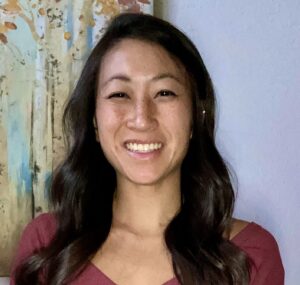
Julietta Sheng is a Program Manager at the Engineering Biology Research Consortium, focusing on Education and Community. Prior to EBRC, she was a Career Enhancement Core Scholar with the Innovation Center on Sex Differences in Medicine (ICON-X), a collaboration between Colorado State University and Massachusetts General Hospital – Boston. Through ICON-X, she partnered with bioengineers, clinicians, and academics to enhance evidence-based research, identify scientific challenges, and develop creative solutions.

Julietta recently earned her PhD in Biomedical Sciences – Neuroscience with Drs. Stuart Tobet and Robert J. Handa at Colorado State University with a focus on sex differences in the brain and body that lead to neuropsychiatric disorders.

Outside of work, Julietta likes to play kickball, read psychological thrillers, and go on long walks with her puppos.

Neil Dalvie

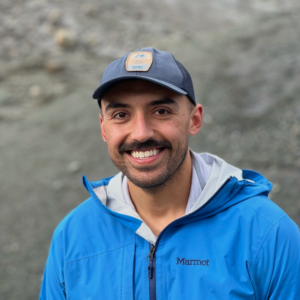
Neil Dalvie did his PhD in Chemical Engineering at MIT, studying therapeutic protein manufacturing. Now, he is a Schmidt Science Fellow in the Synthetic Biology Hive at Harvard Medical School. Neil researches large-scale bioprocessing for mineral processing and is interested in the ethics and regulation of environmental bioengineering.

Cameron Roots

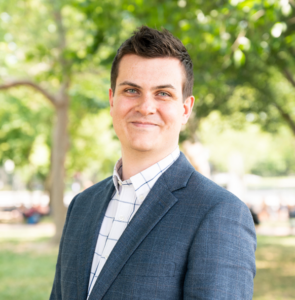
Cameron is a recent graduate and postdoctoral fellow in the Barrick Lab at the University of Texas at Austin. He completed his B.S. in biochemistry and in molecular, cellular, and developmental biology at the University of Washington. Afterwards, he completed a postbactorial study at the National Institutes of Health as an IRTA fellow. His current research is at the intersection of synthetic and evolutionary biology, exploring how engineered systems are prone to mutation and developing tools to help researchers keep theirs stable. His prior policy activities include institutional policy initiatives within the UT Austin Interdisciplinary Life Sciences programs; independent study and programming as a Graduate Archer Fellow; and as an intern on biomanufacturing, biosecurity, and AIxBio federal policy.

Efrain Rodriguez-Ocasio

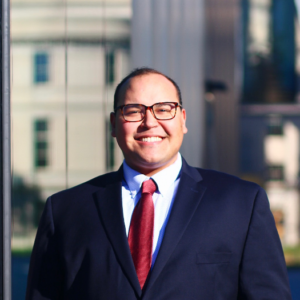
Efrain Rodriguez Ocasio is originally from Puerto Rico and graduated from the University of Puerto Rico-Mayagüez with a B.S. in Industrial Biotechnology. During his undergraduate studies, Efrain served as a trustee on the Governing Board of the University of Puerto Rico, which oversees the 11 campuses of Puerto Rico’s public University. He earned his Ph.D. in Chemical Engineering at Iowa State University, where he developed microbial platforms for plastic waste upcycling and earned the ISU Research Excellence Award. Efrain is currently a postdoctoral fellow at the Great Lakes Bioenergy Research Center and the University of Wisconsin-Madison. His research integrates metabolic and process modeling to identify new production targets for the decarbonization of the chemical industry and synthetic biology for industrial strain development.

Ross Klauer

Ross Klauer is a PhD candidate in Chemical and Biomolecular Engineering at the University of Delaware. He received his Bachelor of Science Degree in Chemical Engineering from Rose-Hulman Institute of Technology. Ross is co-advised by Dr. Mark Blenner and Dr. Kevin Solomon. Ross’ research focuses on elucidating the polyethylene deconstruction pathway in the digestive system of plastic-eating yellow mealworms. He is working to identify and engineer enzymes for polyethylene deconstruction. Outside of lab, Ross enjoys playing soccer and is a competitive cornhole player.

Engineering Biology Metrics and Technical Standards for the Global Bioeconomy

Publication Date: May 2024

Coordinated by Imperial College London, EBRC, the National Institute of Standards and Technology (NIST), and the National University of Singapore (NUS), with support from Schmidt Sciences, this report responds to the need for standards and metrics and the lack of clarity on which standards to prioritize to aid the safe and efficient commercialization of engineering biology. The report identifies 10 key focus areas, including data standards, common definitions, metrics to quantify and scale up biological processes, and non-technical areas vital for the growth of the bioeconomy, including public engagement and regulatory clarity.

From Intent to Impact: Enabling Transdisciplinary Research for Responsible Scientific Stewardship

Publication Date: March 2024 | Originally published in the Journal of Science Policy & Governance

Global challenges are complex and must be tackled in a holistic manner. Understanding and addressing them requires collaboration across disciplines, often uniting the humanities and social and natural sciences, to ask better questions and identify practical and revolutionary solutions. Universities can be excellent vehicles for transformational change as they educate the next generation of civically-motivated thinkers to create meaningful action and impact. Too often systemic, artificial barriers exist within these institutions that prevent meaningful transdisciplinary collaboration from succeeding. We recommend that universities identify grand challenges and foster a culture of cross-department collaboration with appropriate internal and external resources to enable broader impacts. Together, funders and institutional policymakers play a critical strategic role in fostering civic scientists and transdisciplinary researchers to solve multifaceted global problems.

Transforming trash: strategies to develop waste into a feedstock for a circular bioeconomy

Publication Date: February 2024 | Originally published in Biofuels, Bioproducts and Biorefining.

A strategy to develop agriculture and food production waste into biomanufacturing feedstocks that leverages existing, local waste streams; engineering biology; broad stakeholder collaboration; and federal coordination.

US-UK Engineering Biology Reception

The UK Science and Innovation Network is holding an in-person reception at 4:30pm ET on May 15 at Georgia Tech ahead of the EBRC Annual Meeting. Recognizing the critical need for international collaboration in harnessing engineering biology to address global challenges, and with clear overlapping areas of focus set out by both countries in the 2022 US Bioeconomy Executive Order and 2023 UK National Vision for Engineering Biology, this event aims to explore avenues to deepen the collaborative ties between both countries.

We invite all Annual Meeting participants to attend this event! Please register by May 6, 2024.

Register here

The reception will feature panel discussions on key challenges for engineering biology, with representation from the US and UK, and will conclude with informal networking to celebrate the power of cooperation in engineering biology. An agenda and additional programmatic information will be available soon.

Please reach out to Garrett Dunlap at garrett.dunlap@fcdo.gov.uk with any questions.

Addressing the Climate Crisis Through Engineering Biology

Publication Date: February 2024 | Originally published in npj Climate Action.

A companion piece to Engineering Biology for Climate & Sustainability: A Research Roadmap for a Cleaner Future, this publication features discussion of engineering biology research and development opportunities to impact climate change and long-term environmental sustainability, including why and how engineering biology and subsequent biotechnologies should be among the most prominent of approaches to overcoming the climate crisis. This publication also helps to contextualize the roadmap and advancement in engineering biology with broader policy, investment, and social considerations.

Enabling Quality, Measurable Synthetic DNA Sequence Screening

This project aims to improve DNA synthesis screening by enabling the development of better tools and mechanisms for screening performance evaluation.

Security Considerations at the Intersection of Engineering Biology and Artificial Intelligence

Publication Date: November 2023

This white paper describes three areas at the intersection of engineering biology and artificial intelligence that may yield significant security concerns: de novo biological design, closed-loop autonomous laboratories, and natural language Large Language Models. It describes each area, identifies potential security concerns, and offers ideas for the potential mitigation of those concerns, ultimately calling for an international forum to continually address this evolving issue.

NIST RFI on Implementation of US National Standards Strategy

Publication Date: November 2023

EBRC’s response to the request by NIST to support the Implementation of the United States Government National Standards Strategy for Critical and Emerging Technology (USG NSSCET). With a focus on engineering biology technologies, we provide critical considerations for engaging private sector stakeholders in transparent, equitable, and accessible standards development activities.

Building a Robust Bioeconomy Workforce: A Policy Approach to Bridging the Gap in Undergraduate Experiential Learning

Publication Date: October 2023 | Originally published in Journal of Science Policy & Governance

This publication addresses the importance of hands-on learning and training opportunities in engineering biology education and workforce development, with information and recommendations sourced from EBRC Industry and Academic members.

Introduction to Engineering Biology: A Conceptual Framework for Teaching Synthetic Biology

Publication Date: June 2023 | Originally published in ACS Synthetic Biology

This publication is a companion piece to our Introduction to Engineering Biology curriculum module that was created and released in 2022.

Potential Changes to the Policies for Oversight of DURC and the P3CO Policy Framework

Publication Date: October 2023

Potential Changes to the Policies for Oversight of Dual Use Research of Concern (DURC) and the Potential Pandemic Pathogen Care and Oversight (P3CO) Policy Framework: An EBRC Response to OSTP RFI 88 FR 60513.

Identifying Ambiguities, Gaps, Inefficiencies, and Uncertainties in the Coordinated Framework for the Regulation of Biotechnology

Publication Date: February 2023

This RFI requested relevant data and information, including case studies, that may assist in identifying any regulatory ambiguities, gaps, inefficiencies, or uncertainties in the Coordinated Framework for the Regulation of Biotechnology, particularly with regard to new and emerging biotechnology products.

National Biotechnology and Biomanufacturing Initiative: An EBRC Response to OSTP RFI 87FR77901

Publication Date: January 2023

This RFI sought public input on how advances in biotechnology and biomanufacturing can help us achieve goals that were previously out of reach and what steps can be taken to ensure we have the right research ecosystem, workforce, data, domestic biomanufacturing capacity, and other components to support a strong bioeconomy.

Space Health Roadmap In-person Workshop 1

This workshop is by invitation only, with a limited number of attendees. This active writing workshop will focus on drafting our technical research roadmap to advance engineering biology tools and technologies for human health and well-being in space and related application opportunities on Earth.

Registration for this workshop is now closed.

Detailed Agenda Coming Soon! The workshop will be held at the J. Craig Venter Institute in La Jolla, CA. Participants can expect the workshop to run from 8:00am-5:00pm on December 14, and 8:00am-3:00pm on December 15.

Workshop Objectives

  • Participants will identify and discuss opportunities for advancement in engineering biology to support the health and well-being of human travelers to space, including applications in food and nutrition, medicine, and environmental control.
  • Participants will directly contribute to the roadmap by drafting roadmap elements, including breakthrough capabilities, milestones, and discrete technical challenges.
  • Participants will have the opportunity to network and share ideas with fellow researchers across disciplines, opening the door to future collaborations and partnerships.

Travel Support and Meeting Hotel:
We anticipate covering travel expenses for academics, including students and postdocs. Please see EBRC’s full travel policy here.

Hotel information coming soon. Please indicate on the registration page if you anticipate needing hotel accommodations. If your travel is not covered by EBRC, you can provide payment at check-in. Please contact helix@ebrc.org with any questions.

For more information about the roadmap or workshop, please contact Emily (eaurand@ebrc.org)

Space Health Roadmap In-person Workshop 2

This workshop is by invitation only, with a limited number of attendees. This active writing workshop will focus on drafting our technical research roadmap to advance engineering biology tools and technologies for human health and well-being in space and related application opportunities on Earth.

Registration is now closed. 

For those eligible for travel support, please register by February 8; Registration closes February 16.

Detailed Agenda Coming Soon! Participants can expect the workshop to run from 8:00am-5:00pm on March 4, and 8:00am–3:00pm on March 5.

Workshop Objectives

  • Participants will identify and discuss opportunities for advancement in engineering biology to support the health and well-being of human travelers to space, including applications in food and nutrition, medicine, and environmental control.
  • Participants will directly contribute to the roadmap by drafting roadmap elements, including breakthrough capabilities, milestones, and discrete technical challenges.
  • Participants will have the opportunity to network and share ideas with fellow researchers across disciplines, opening the door to future collaborations and partnerships.

Travel Support:
We anticipate covering travel expenses for academics, including students and postdocs. Please see EBRC’s full travel policy here.

Meeting Hotel:

Hilton NASA Clear Lake
3000 NASA Pkwy
Houston, TX 77058

Please indicate on the registration page if you anticipate needing hotel accommodations; once the workshop location has been selected, we will follow up to confirm your hotel reservation needs. If your travel is not covered by EBRC, you can provide payment at check-in. Please contact helix@ebrc.org with any questions rather than contacting the hotel directly.

For more information about the roadmap or workshop, please contact Emily (eaurand@ebrc.org)

For information on EBRC’s travel policies, please contact helix@ebrc.org.