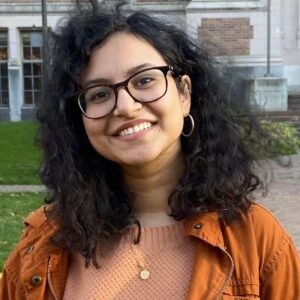
Ava Karanjia

Ava Karanjia is a current PhD student and NSF Graduate Research Fellow in Chemical Engineering at the University of Washington, where her research focuses on building transcriptional programs in bacteria. Ava is working on expanding CRISPRa technologies to improve methods of transcriptional signal conversion and transduction. She is also pursuing data science and astrobiology graduate certificates. Ava has undergraduate degrees in chemical engineering and microbiology from Arizona State University, where she worked on quorum sensing regulatory systems and other transcriptional activators. She has also worked at NASA Ames Research Center, where she screened and engineered non-traditional yeast candidates for in-situ microbial space technologies. Ava is a big proponent of science communication and has been actively involved in outreach efforts at the University of Washington and EBRC.

EBRC 2023 Annual Meeting

We are excited to announce that registration for the EBRC 2023 Annual Meeting at Northwestern University on June 5-6, 2023 is now open. Registration is open to all EBRC academic members and their lab members, all employees of Industry Member companies, our government colleagues, and members of EBRC’s Student & Postdoc Association. We are also pleased to welcome all faculty, researchers, and trainees at Northwestern’s Center for Synthetic Biology to register and attend.

Register Here

The EBRC Annual Meeting provides an opportunity for the engineering biology community to come together to engage on matters important to advancing engineering biology. In addition to inspiring research talks and poster presentations, EBRC’s meeting holds time to consider the larger engineering biology research ecosystem in which we all exist and work together to move the field forward. We invite you to join us to present and discuss your latest research, build relationships with your colleagues in academia, industry, and government, and advance the member-driven work of EBRC. View our draft agenda here. Note that we anticipate running until 5:00 PM on Tuesday, June 5.

Registration:
Please register here by May 3, 2023. To confirm your spot and offset some of the meal costs, there will be a nominal fee ($150 for faculty and $75 for students and postdocs). If this fee is prohibitive for you or your lab members, please email helix@ebrc.org.

Abstract submissions for posters are now being accepted. Abstract submission is separate from registration. Submissions from all attendees are welcome! We encourage you to submit your latest, ongoing work as a mechanism to engage in community dialogue.

  • Abstracts for posters are due on May 19, 2023

IMPORTANT DATES:
April 7: Last day to submit talk abstracts
April 21: Notification of talk selection
May 3: Registration closes*
May 5: Deadline for hotel and travel arrangements by EBRC
May 19: Last day to submit poster abstracts

*registration may still be possible after this date but will incur additional costs

Annual Meeting Venue:
Northwestern University
Norris Center
1999 Campus Dr
Evanston, IL 60208

Meeting Hotel:
EBRC has reserved a block of hotel rooms at the Hilton Garden Inn at 1818 Maple Ave, Evanston, IL 60201 at $179.00 per night (includes breakfast and WiFi). Please indicate on the registration page if you will need hotel accommodations. We will reserve the room in our block. If your travel is not covered by EBRC, you can provide payment at check in. Please contact helix@ebrc.org with any questions rather than contacting the hotel directly.

Travel Support:
We anticipate covering airfare and hotel expenses for:

  • Individuals selected as speakers from academia, including students and postdocs;
  • EBRC Academic Council members; and
  • Student and Postdoc Association Board members who present a poster or are selected as speakers.

The meeting will conclude at 5:00PM on Tuesday June 6 and we encourage those receiving travel support to find an evening flight out of Chicago O’Hare if at all possible. We will only cover Tuesday night hotel expenses with prior approval. Please contact helix@ebrc.org if you anticipate needing Tuesday night accommodations. Please also note that travel support does not include the confirmation/meal fee ($150 for faculty and $75 for students and postdocs). Email helix@ebrc.org if this fee is prohibitive. Please see EBRC’s full travel policy here.

We encourage you to make your travel plans early, as we will cap the level of airfare support provided by EBRC. Airfare must be booked by May 5 to be eligible for EBRC support.

Health and Safety:
We are committed to hosting a safe event. We will be closely watching CDC recommendations in addition to all relevant local and state guidelines leading up to the Meeting and make any changes necessary for health and safety.

2022 EBRC Bioeconomy Executive Order White Papers

A series of policy white papers on topics of importance to EBRC members and the engineering biology community that can provide guidance and recommendations to federal agencies tasked with responding to the Executive Order on Advancing Biotechnology and Biomanufacturing Innovation for a Sustainable, Safe, and Secure American Bioeconomy.

Standards and Metrics to Accelerate the Global Bioeconomy

Publication Date: December 2022

Common language, measurements, and widely adopted standards are critical for many activities within the bioeconomy. We identify challenges, next steps, and recommendations for establishing standards and metrics to promote a secure and robust bioeconomy.

Regulatory Clarity, Communication, and Nimbleness

Publication Date: December 2022

The United States is at the forefront of the biotechnology revolution, and its regulatory agencies are and will continue to be tasked with establishing and enforcing rules and regulations that ensure the commercialization of biotechnologies that are viable and economically-sound solutions and do not present unacceptable risk. Herein we articulate select areas of uncertainty and concern that have caused challenges in the development of biotechnologies.

Platform Vulnerabilities and Security in the Bioeconomy

Publication Date: December 2022

Platform technologies enable the research, development, and commercialization of biotechnologies, but may be vulnerable to exploitation. We identify platforms that support different segments of the bioeconomy and discuss their vulnerabilities, how those vulnerabilities might be exploited, and actions the U.S. Government can take to support a secure bioeconomy.

Biosafety & Biosecurity Innovation Initiative

Publication Date: December 2022

EBRC proposes a structure and function of a Biosafety & Biosecurity Innovation Initiative to reduce biological risks associated with a growing bioeconomy. We recommend that priorities and best practices for a safe and secure bioeconomy be identified through consistent communication between federal agencies and stakeholders across the bioeconomy enterprise.

Development of a Workforce to Support a Distributed, Equitable Bioeconomy

Publication Date: December 2022

The development of biotechnologies that will usher in a more sustainable and healthier future require a talented, trained workforce that reflects the diversity of America. The bioeconomy will rely on the distribution of opportunity geographically, demographically, and across the workforce spectrum.

Educating the Next-Generation Bioeconomy Workforce

Publication Date: December 2022

A robust and distributed bioeconomy requires a skilled, diverse workforce. We describe opportunities and recommendations for improving education and training of the next-generation of biotechnology leaders.

Revising Legacy Approaches to Biology Education

Publication Date: December 2022

To remain globally competitive and prepare our citizens for the jobs of the future, we must rethink how we teach biology. There is an important role for the federal government to improve the way educational programs are designed, the way companies manage their hiring processes, and the way current and future employees find training throughout their careers.

US Leadership in a Global Bioeconomy

Publication Date: December 2022

Herein, we describe four key focus areas where international best practices, norms, and/or standards are nascent or underdeveloped, and thus where there is real need and opportunity for US leadership: 1) Standards, Metrics, and Norms, 2) Regulations, 3) Biosecurity and Biosafety, and 4) Horizon Scanning.

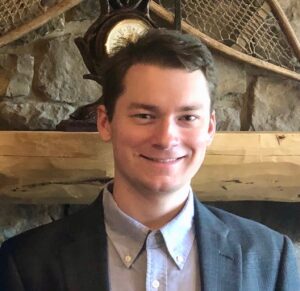
Wilson Sinclair

Wilson Sinclair is a Postdoctoral Scholar at EBRC working in the Security focus area. His primary interests are synthetic biology investment, biosecurity policy, building a robust bioeconomy, and microbiome engineering. He is passionate about breaking down barriers between research disciplines and building bridges between experts in engineering biology and social sciences across academia, industry, government, and advocacy to solve complex global problems.

Prior to joining EBRC, Wilson was a Science Policy Intern at the NIH Office of Science Policy where he supported short- and long-term development of programs relating to bioethics, data science, and clinical research policy. His graduate research utilized bioorthogonal chemistry to study host-pathogen interactions in tuberculosis for therapeutic discovery. Over nearly a decade at the bench, he has applied his broad skills as a chemical biologist to several projects across the fields of glycobiology, synthetic chemistry, cancer immunology, and epitranscriptomics.

Wilson holds a Ph.D. in Chemistry from Stanford University. He also has a B.A. from Haverford College majoring in Chemistry with a Biochemistry concentration and Spanish minor. He is a Chicago native and enjoys spending his free time trying new restaurants, solving puzzles, and exploring museums.

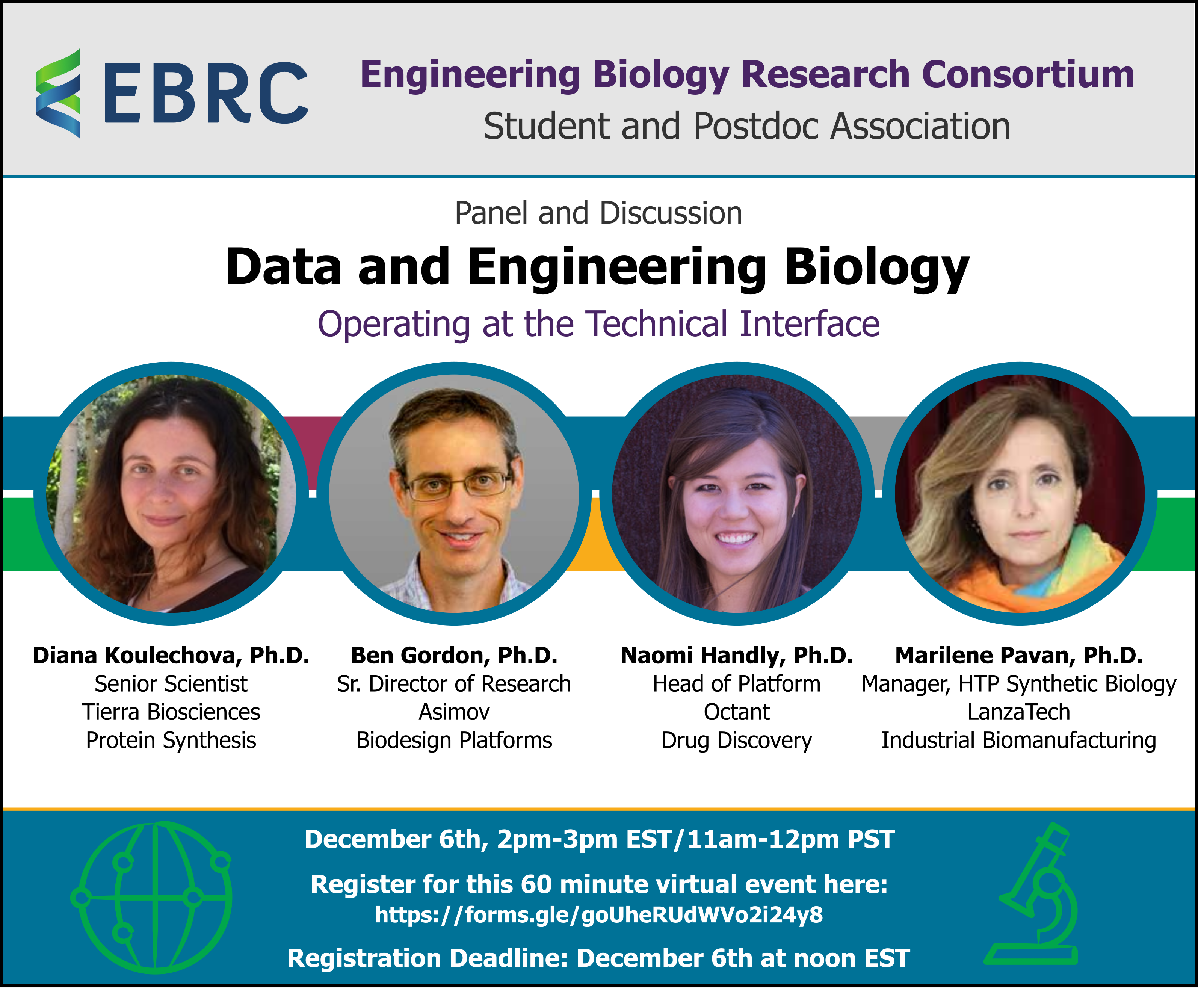
EBRC SPA Presents Data and Engineering Biology: Operating at the Technical Interface

The EBRC Student and Postdoc Association is hosting a Data and Engineering Biology: Operating at the Technical Interface panel event, where researchers can connect with professionals who operate and lead within ‘data-centric’ bioengineering companies.

Panelists will discuss 1) transitioning from their PhD to industry, 2) details about their current role, and 3) which data-specific skills are valued in their organization. The discussion will also cover how lab automation, data science, or DevOps platforms drive overall biology objectives at their companies. Join us virtually on December 6th, 2022 (2-3pm ET |11-12pm PT) on GatherTown by registering here.

Click here to view our flyer.

Please contact Eric South (esouth@bu.edu) if you have any questions.

Panelist Biographies

Diana Koulechova, Ph.D.
LinkedIn 
Diana is a Senior Scientist at Tierra Biosciences, where she works to improve and expand their cell-free protein synthesis platform, affecting their internal slogan of “Proteins for All.” Prior to joining Tierra, she developed processes and methods in biologics downstream development at the immunoncology company Agenus, and also prototyped a continuous processing system for biologics manufacturing at the pharmaceutical company Boehringer Ingelheim. She received her PhD in Molecular and Cell Biology from University of California, Berkeley and has been in a variety of biochemistry fields ranging from homing endonucleases, protein folding, and somatosensation in C. elegans.

Ben Gordon, Ph.D.
LinkedIn
Ben is a Senior Director of Research at Asimov Inc. and a Director at the MIT / Broad Synthetic Biology Foundry. He has extensive experience in both managing and leading teams in computer-aided synthetic biology. Ben received a Ph.D. in Computational Biophysical Chemistry from Caltech, where he conducted work on computational protein design and engineering. He later became a Postdoctoral Associate at the Whitehead Institute and then a Principal Scientist and Strategic Collaborations Manager at Agilent Technologies. Ben is also a Program Manager at BioMADE – a Bioindustrial Manufacturing Innovation Institute.

Naomi Handly, Ph.D.
LinkedIn
Naomi is a quantitative cell biologist by training. At Octant, she’s had several roles including recruiting, establishing the OA program, building Octant HQ, demonstrating Octant’s multiplexed platform technology, building cell engineering, and more. Naomi received her PhD from the University of California, San Diego under Roy Wollman quantifying how cells communicate with one another to determine their position in relation to a wound. She’s passionate about bringing science to the public through effective scientific communication and meaningful technological advances.

Marilene Pavan, Ph.D.
LinkedIn
Marilene is a High-Throughput Synthetic Biology Manager at LanzaTech Inc., a carbon recycling technology company, specialized in converting waste carbon oxides into biofuels and chemicals. She is a Biologist with 15+ years of experience in the fields of synthetic biology, metabolic engineering, and biomanufacturing, with previous experience working for chemical industries like Braskem S/A and leading biotech companies as Monsanto S/A, She moved to the US in 2016 to work as Research Fellow at Boston University, later joining Lanzatech in 2019. Her expertise also includes partnerships (prospection and management); people management and mentorship; fundraising; business development; grant, patent, and scientific article writing; project evaluation and management; budget management; scientific consulting; and conference planning and speaking. She holds a master’s degree in Molecular Biology and is also specialized in Strategic Management of Technological Innovation. She is currently a Ph.D. Candidate in the Bioenergy Program of the University of Campinas, UNICAMP – Brazil.
Caroline Ajo-Franklin

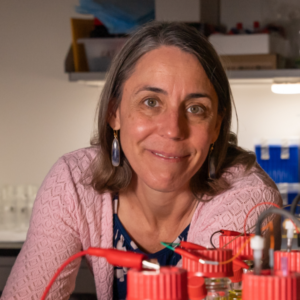
Caroline Ajo-Franklin earned a B.S. in chemistry from Emory University in Atlanta, GA in 1997 and a Ph.D. in chemistry from Stanford University in Palo Alto, CA in 2004. She trained as Postdoctoral Fellow with Prof. Pam Silver in the Department of Systems Biology at Harvard Medical School in Cambridge, MA from 2005-2007. From 2007-2019, she was a Staff Scientist within the Molecular Foundry at Lawrence Berkeley National Laboratory in Berkeley, CA. In 2019, she joined the faculty of Rice University in Houston, TX as a Professor of BioSciences with joint appointments in Bioengineering and Chemical and Biomolecular Engineering. Her strongly interdisciplinary, highly collaborative research program focuses on exploring the interface between living organisms and non-living materials and engineering this interface for applications in energy, environment, and biomedicine. Prof. Ajo-Franklin was named as a recipient of the Women@ the Lab award in 2018 and as Cancer Prevention and Research Institute of Texas (CPRIT) Scholar in 2019. She is on the Editorial Board of ACS Synthetic Biology and is an Editor at mSystems.

Check out “Life Lab”, a podcast featuring EBRC members!

“Life Lab” is a podcast series aimed at kids ages 9-12 and their families. Created in collaboration with Tumble Science Podcast for Kids, “Life Lab” is five episodes about engineering biology to solve some of the world’s biggest challenges, featuring EBRC members and leaders in the engineering biology community. Listen here!

EBRC Global Forum 2.0

This is an invitation-only event.

Registration has closed. 

VENUE

The Forum will be held at the Hotel Fort Canning. Our hosts in Singapore have procured an excellent reduced rate at the hotel for Forum attendees (details have been shared through email with those who have RSVPed yes to the Forum). Bookings at the reduced rate must be made by January 6, 2023. We recognize the tight timeline for the reduced rates. There are also other hotels nearby if you prefer to stay elsewhere, though we will not be able to provide reduced rates or transportation from other hotels. For your consideration, here are some other options for hotel booking (rates shown are as of 12/22/22, per night, flexible option with cancellation, no breakfast, and exclude taxes and fees):

  • Hotel Fort Canning at the non-reduced rate (SGD 340)
  • Citadines Connect City Centre Singapore (SGD 240); 6 min. walk/5 min. drive from Hotel Fort Canning
  • 30 Bencoolen (277 SGD); 10 min. walk/5 min. drive from Hotel Fort Canning
    Many others in the area!


MEETING OVERVIEW

The second EBRC Global Forum for Engineering Biology: Review of Synthetic Biology/Bioeconomy National Strategies (EBRC Global Forum 2.0) will be held on the 20th and 21st of February 2023 in Singapore in partnership with the Singapore Consortium for Synthetic Biology (SINERGY). The Forum will bring together a group of global leaders for an international summit focused on national synthetic biology roadmaps and bioeconomy strategies. Our goal is to facilitate presentations and discussions among leading representatives in the field in a relaxed, not-for-attribution forum.

The two-day agenda will include:

  • information exchanges and updates about the current status of national strategies and programs, funding, future directions, and challenges for each country represented at the EBRC Global Forum 2.0;
  • discussions focused on the common elements, opportunities, and challenges for collaborative activities, and initiatives that will advance synthetic biology/engineering biology globally and nationally; and
  • consideration to establish a virtual and ongoing Global Forum for Engineering Biology and, perhaps, task forces for specific topics such as safety and security; standards and measurement; and climate crisis/sustainability.


TRAVEL INFORMATION

Participants are expected to cover their own travel and accommodation expenses. We will facilitate room blocks and/or make recommendations for accommodation, but we will not be covering the costs. We have some limited ability, on a case-by-case basis, to fund travel for those who could not otherwise participate without travel funding assistance..


Just released: Engineering Biology for Climate & Sustainability: A Research Roadmap for a Cleaner Future

The Engineering Biology Research Consortium (EBRC) is happy to have released our newest technical research roadmap, Engineering Biology for Climate & Sustainability: A Research Roadmap for a Cleaner Future. The roadmap is available as an interactive website and PDF available at https://roadmap.ebrc.org.

This publication highlights innovative solutions and opportunities in engineering biology to support global efforts to tackle the climate crisis, enable sustainable products and solutions, and grow the circular bioeconomy. The technical roadmap addresses the current state of biotechnology for climate change mitigation and adaptation and ecosystem resilience, and lays out goals and short-, medium-, and long-term milestones for the development of engineering biology tools and technologies for a sustainable future.

Supported by funding from the National Science Foundation, the roadmap was written collaboratively by more than 90 contributors across 56 academic institutions, biotechnology companies, government laboratories, and other organizations. The depth and breadth of this expertise is reflected in the diverse landscape of technologies, processes, and products presented in the roadmap for leveraging engineering biology to address our imminent climate crisis while advancing the bioeconomy. As the U.S. seeks to establish and maintain leadership in the global bioeconomy through the Biden Administration’s Executive Order on Advancing Biotechnology and Biomanufacturing Innovation, and through the CHIPS and Science Act of 2022, this roadmap provides a vision of how that dedication and leadership can ultimately benefit all Americans and our global community.

The technical roadmap focuses on novel, foundational engineering biology capabilities for the:

  • Biosequestration of Greenhouse Gases
  • Mitigation of Environmental Pollution
  • Conservation of Ecosystems and Biodiversity

And engineering biology for climate-friendly, sustainable products and solutions for:

  • Food & Agriculture
  • Transportation & Energy
  • Materials Production & Industrial Processes

The roadmap features case studies that explore the social and nontechnical dimensions associated with some of the roadmap’s potential climate solutions. These case studies were selected to support and encourage the incorporation of ethical, economic, political, and security considerations into the design and pursuit of technical research. The questions and considerations illuminated by these case studies highlight the need for technical and nontechnical stakeholders to work together to secure a sustainable future. The roadmap also contains a contextual glossary of terms and concepts.

View Engineering Biology for Climate & Sustainability here!

Check out the latest episode of “Life Lab” – a podcast collaboration between EBRC and Tumble Science Podcast for Kids!

“Life Lab” is a podcast series collaboration between EBRC and Tumble Science Podcast for Kids about engineering biology to solve some of the world’s biggest challenges. Supported with funding from the National Science Foundation. Listen to Episode 1 – ”More Cheese, Please” – here.