Read EBRC’s response to the National Defense Education Program’s RFI
Read EBRC’s response to the DoD’s Request for Information (RFI) on Biotechnology Education and Workforce Development. (August 2020)
Read EBRC’s response to the DoD’s Request for Information (RFI) on Biotechnology Education and Workforce Development. (August 2020)
Max Z. Levine, Byungcheol So, Alissa C. Mullin, Rob Fanter, Kayla Dillard, Katharine R. Watts, Michael R. La Frano, and Javin P. Oza. ACS Synthetic Biology.
Maren Wehrs, Alexander de Beaumont-Felt, Alexi Goranov, Patrick Harrigan, Stefan de Kok, Sarah Lieder, Jim Vallandingham & Kristina Tyner. Journal of Industrial Microbiology & Biotechnology.
Layne C. Williams, Nicole E. Gregorio, Byungcheol So, Wesley Y. Kao, Alan L. Kiste, Pratish A. Patel, Katharine R. Watts and Javin P. Oza. Frontiers in Bioengineering and Biotechnology.
Ayaan Hossain, Eriberto Lopez, Sean M. Halper, Daniel P. Cetnar, Alexander C. Reis, Devin Strickland, Eric Klavins & Howard M. Salis. Nature Biotechnology.
EBRC and UC Berkeley are seeking postdoctoral scholars interested in science policy. Postdocs will leverage their previous training to work with EBRC programs and to conduct an individual research project in one of EBRC’s focus areas. Applications are accepted on an ongoing basis with positions open in the last summer / early fall 2020.
Dear Colleagues,
Over the past months, EBRC has been considering ways to improve communication with the membership and find ways to have meaningful engagements in the absence of in person interactions. Along with this, we’ve been considering ways to make it easier to engage in conversations with colleagues in EBRC, especially within our four focus areas.
Trello: We will discontinue using Trello w/ the membership. Those of you on current boards will be removed in the coming days. Please note that some previously sent calendar invites may contain links that may be inactive.
Slack: All EBRC members are invited to join our Slack workspace. Colleagues from industry and government can join Slack at this link using your institutional email address. Individual members are automatically invited. If the email address you primarily use is not listed or you have any other issues, please contact helix@ebrc.org.
Key elements of the EBRC Slack workspace:
Google: We will continue to use G Suite (Drive, Docs, Sheets) as we have been.
Email Newsletter: We’re starting a regular monthly newsletter.
Trello: We currently use Trello extensively with the EBRC staff, but it’s seen mixed use with the working groups and committees. The EBRC Slack workspace is intended to replace Trello’s functionality as a platform for discussion, some working group announcements, and links to pertinent documents.
G Suite: EBRC pays for G Suite services (at ebrc.org) and we use it extensively. We plan to keep using it with the working groups and committees and moving some of the positive aspects of Trello to it. For example, dynamic meeting agendas can be captured in a Google Doc vs. Trello card. These documents will be linked in Slack. See next.
Slack: Engagement across the membership, and with the EBRC staff, is important. We would like to try to enable more dialog across the membership on relevant topics. We tried to use Trello cards for this, but it hasn’t worked as robustly as we’d like. With an increasing number of labs / companies using Slack, we will use this platform for discussions in each of the four program areas, and could use it for discussion with (for example) the EBRC Council.
Email Newsletter: We will be putting out a monthly newsletter, starting mid-June. The newsletter will provide useful updates and announcements from EBRC and will supplement information provided through other ways. We realize that some companies won’t be able to use various technology solutions (e.g., Slack or Google), and this will always be accessible.
We look forward to continued engagement and dialogue with you.
Best,
Doug
A free, online course on the basics of synthetic biology with a focus on programming genetic circuits.

Eric recently received his PhD in Infectious Diseases and Immunity at the University of California, Berkeley. In graduate school, he studied isoprenoid metabolism in the bacterial pathogen Listeria monocytogenes. Outside of the lab, he was an active member of the Science Policy Group at Berkeley and was involved with science advocacy at the local, state, and federal levels, most notably by working with Assemblymember Bill Quirk to propose California Assembly Bill 1178, which aimed to increase labeling standards for over-the-counter probiotic supplements. In his spare time, he enjoys windsurfing at the Berkeley marina. He will primarily be working with the EBRC Roadmapping Working Group.
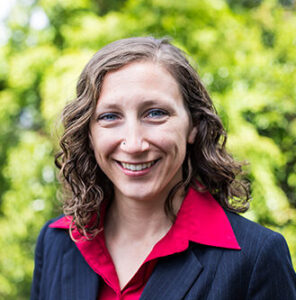
Becky Mackelprang is the Director for Security Programs at the Engineering Biology Research Consortium. She leads EBRC’s Security Focus Area, bringing stakeholders across academia, industry, and government together to integrate security awareness into the policy and practice of engineering biology. Becky leads the development of commentary and recommendations on issues such as screening by synthetic DNA providers and the security implications at the intersection of artificial intelligence and engineering biology. She has implemented strategies to incorporate security into researcher education and training. Becky is committed to supporting an engineering biology research and development ecosystem that maximizes societal benefit while using a multi-faceted approach to support safe, secure, and productive innovation. Previously, Becky was an EBRC Science Policy Postdoctoral Scholar, an AAAS Mass Media Fellow, a science communication postdoctoral researcher at UC Berkeley, and received her Ph.D. in Plant Biology from UC Berkeley.
Advanced Biofuels and Bioproducts Process Development Unit (ABPDU) at Lawrence Berkeley National Laboratory
Emeryville, California
Company size: 20
Est. number of positions: 1
Opportunity for remote/virtual internship in 2023: No, in-person only
Check out the World Economic Forum blog post by Natalie Curach, Paul Freement, Sang Yup Lee, and Doug Friedman: How scientists are turning living cells into the tiny factories of the future.
I am characterizing peptide interactions with a virulence-associated bacterial sensor (two-component system) from Salmonella Typhimurium, with the goal of identifying therapeutically-relevant antimicrobial peptides. As part of this work, I generate peptide libraries and then use fluorescence-activated cell sorting (FACS) and Illumina next-generation sequencing (NGS) to perform high-throughput screening for peptide activity. I analyze the data obtained from these screens using custom Python scripts (using pandas, scipy, BioPython, and regular expressions).
I am also interested in the biosecurity aspects of synthetic biology and currently (as of August 2019) serve as the EBRC Student and Postdoc Association (SPA) liaison to the EBRC Biosecurity Working Group.
… and subscribe to EBRC’s YouTube channel to watch more than 170 videos about synthetic biology!

This initiative aims to build on existing resources to produce valuable teaching materials for course instructors and assistants. EBRC is supporting work to create and build up-to-date, agile and adaptable curriculum modules for teaching engineering biology – including dynamic classwork, lab protocols, data analysis and homework, reading and recitation, and quiz and exam materials.
The Education Working Group aims to develop and update Kindergarten through High School education standards and curricula for the teaching of concepts of engineering/synthetic biology. The Working Group is currently investigating existing standards and building relationships with educators to advance this initiative.
In development – more coming soon.
If you would like to engage with EBRC on this initiative, please contact education@ebrc.org
Purple Orange Ventures, an impact seed fund from Berlin, has just launched an Entrepreneurial Scientist & Engineer Fellowship Program in partnership with The Good Food Institute, New Harvest and Proveg to help accelerate the animal-free foodtech movement in Europe, UK, Israel, and Singapore. The program provides 120K EUR of equity-free grant funding and coaching for 12 months to support the initial research necessary for starting a truly impactful company in the space. The full program description is available at https://www.purpleorange.com/fellowship.
EBRC SPA member Kathryn Brink authors a Nature Communities blog post about increasing engagement in STEM through outreach, providing a first-person perspective about bringing engineering biology to underserved communities.
The Meyer lab performs research targeted at re-engineering bacteria to synthesize bio-inspired materials with improved properties. This approach has the potential to replace traditional chemical approaches that require extreme environmental conditions, expensive equipment, and the generation of hazardous waste. As a first step we have targeted bacterial production of patterned artificial nacre, a biomineralized material lining seashells that combines high mechanical strength with high fracture toughness. Combination of our biological materials-producing systems with our newly developed 3D bacterial printers will allow the rapid and straight-forward production of spatially structured biomaterials.