Formulation & Drug Delivery US 2023

Join leaders, experts and researchers at West Coast’s scientific Hub – San Diego, delivering breakthrough research, technologies & connecting global pharma, biotech and academia for high-level discussions on the latest innovations in formulation, drug delivery & inhaled science

Spatial Biology Europe 2023

Explore spatial research: from the application of spatial technologies in biology through to topical updates from spatial genomics, transcriptomics, metabolomics and spatial bioinformatics.

Expand your knowledge and discuss future priorities in:
– Spatial Multi Omics Techniques & Approaches
– Applications of Spatial Research & Technologies in Biology
– Spatial Biology in Pharma & Translational Drug Research
– Spatial Bioinformatics, Data Analysis and Interpretation

Benefits to attending include:
– Learn from Applications on Therapeutic Areas – Case Studies on Cardiovascular Development, Oncology, Neurobiology
– Explore the latest Spatial Technologies and Overcome Challenges in the Adoption of Translational Drug Research
– Gain insights into Spatial Multi-Omics applications for thr Tumor micro-environment
& much more!

View the agenda here: https://www.oxfordglobal.co.uk/spatial-biology-europe/agenda/download-agenda/?utm_source=ebrc&utm_medium=eventlisting&utm_campaign=omics&utm_content=sanaeu2023

NextGen Omics 2023

NextGen Omics 2023 features 4 outstanding programmes, bringing together Europe’s most successful omics research experts under one roof. The series provides an excellent networking platform which consists of key discussion topics in: Next Generation Sequencing & Clinical Diagnostics, Single Cell & Spatial Analysis, Synthetic Biology in Discovery & Therapeutics and Digital PCR & Liquid Biopsies.

Expand your knowledge and discuss future priorities at:
– NGS & Clinical Diagnostic Congress – https://www.oxfordglobal.co.uk/nextgen-omics-series-uk/ngs-clinical-diagnostics/
– Single Cell & Spatial Analysis Congress – https://www.oxfordglobal.co.uk/nextgen-omics-series-uk/single-cell/
– Synthetic Biology in Drug Discovery & Therapeutics Congress – https://www.oxfordglobal.co.uk/nextgen-omics-series-uk/synthetic-biology/
– Digital PCR & Liquid Biopsies Congress – https://www.oxfordglobal.co.uk/nextgen-omics-series-uk/digital-pcr/

The event also features the NextGen Omics Young Scientist Awards including the best poster presentation award and are intended to honour an outstanding individual performance for a scientific work by a PhD student, PostDoc or early career scientist. – https://www.oxfordglobal.co.uk/nextgen-omics-series-uk/young-scientist/

View the full agenda here: https://www.oxfordglobal.co.uk/nextgen-omics-series-uk/agenda/download-agenda/?utm_source=ebrc&utm_medium=eventlisting&utm_campaign=omics&utm_content=ngsuk2023

Geoff Baldwin

Geoff Baldwin is Professor of Synthetic & Molecular Biology at Imperial College London, he is Co-Director of the Imperial College Centre for Synthetic Biology and Director of the EPSRC Centre for Doctoral Training in BioDesign Engineering. Research work in the Baldwin lab focuses on the development of synthetic biology approaches to facilitate the engineering of new biological systems for real-world applications. To this end he has developed foundational tools that transform our ability to rapidly prototype new biological designs, like DNA-BOT, automated DNA assembly based on the BASIC method. These fundamental developments are being applied across a broad range of projects that address gene circuit design; RNA feedback control and in vivo directed evolution for the generation of new protein specificity and functionality. Recently he has been developing new AI based approaches to enhance our ability to engineer new biological systems with human interpretable outcomes and only sparse sampling of the design space.

Mart Loog

Mart Loog is a professor of molecular systems biology. Mart received Ph.D. in medicinal biochemistry from Uppsala University, Sweden in 2002, followed by postdoctoral training at the University of California, San Francisco. In 2006 Mart established his laboratory at the newly established Institute of Technology. He has received several international fellowships and awards including The Wellcome Trust Senior International Fellowship and a startup research grant from European Molecular Biology Organization (EMBO) and Howard Hughes Medical Institute (HHMI). In 2012 he received Estonian National Science Prize in chemistry and molecular biology. In 2015 he was awarded the European Research Council (ERC) Consolidator Grant and became a principal coordinator of H2020 an Horizon Europe projects SynBioTEC (2016), GasFermTEC (2018), and DigiBio (2023) to establish the multidisciplinary Estonian Centre for Bioengineering. Mart’s research directions include regulation of the eukaryotic cell cycle, enzymology of cyclin-dependent kinases, multisite phosphorylation processing, and synthetic biology of signaling circuit design. He is leading a laboratory of 20 people and undergraduate and master’s programs in bioengineering.

Vikramaditya Yadav

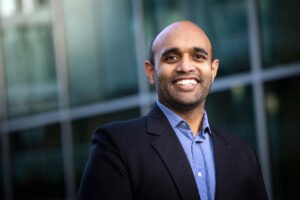
Dr. Vikramaditya G. Yadav is an Associate Professor at the University of British Columbia (UBC), where he directs Canada’s premier program in Sustainable Process Engineering. He has made notable contributions to research, education, commercialization and regulation of synthetic biology and environmental biotechnology. Dr. Yadav also founded Metabolik Technologies Inc., which was acquired by Allonnia, a Bill Gates-backed company, and is currently the Chief Executive Officer of Tersa Earth Innovations, a mining biotechnology company. He is also the Chief Technology Officer of React Zero Carbon, a venture catalyst and capital fund for net zero solutions, and Hilo Bio, a performance biomaterials company. He was recognized as one of Canada’s Top 40 Under 40 in 2021 and received UBC’s highest teaching accolade, the Killam Prize, in 2023.

Keith Tyo

Keith E.J. Tyo is associate professor of Chemical and Biological Engineering and (by courtesy) Microbiology and Immunology at Northwestern University and founding member of the Center for Synthetic Biology. Keith received his undergraduate degree from West Virginia University, PhD from Massachusetts Institute of Technology and was a NIH National Research Service Award Postdoctoral Fellow at Chalmers University, Sweden.

Keith’s research interests are at the intersection of Synthetic Biology, Sustainability, and Global Health. His group is focused on understanding and engineering microbial metabolism to make fuels and chemicals from renewable and waste carbon sources. His group uses genetics, metabolomics, and computational tools to guide these efforts. His second focus is on engineering protein-based biosensors that enable low-cost, point-of-care detection of important clinical biomarkers in impoverished, rural settings. His work has been published in Science and Nature Biotechnology, and has been received the NSF CAREER award.

Milan Mrksich

Robert Ziman

Robert is a research software engineer with a decade of experience supporting bioinformatics and computational biology projects in both academia and industry. He was a bioinformatics programmer at The Centre for Applied Genomics in Toronto, a bioinformatics associate at Genentech in South San Francisco, and a research associate in the Cohen Lab for Aging, Systems, and Statistics at the University of Sherbrooke in Quebec. He co-founded and co-hosted the Longevity Biotech Show podcast and has been observing the longevity biotech scene since the early 2000s. Robert holds a B.A.Sc. in Engineering Science from the University of Toronto.

Cătălin Voiniciuc

Cătălin Voiniciuc is an Associate Professor of Plant Synthetic Biology and focuses on bioengineering cell surfaces, biopolymers and smaller molecules for agricultural, bioenergy, and biomedical needs. After plant biology MSc and PhD degrees in Canada and Germany, he began applying Synthetic Biology for research on complex carbohydrates, particularly the matrix polysaccharides of the plant cell wall. Since founding the Designer Glycans group (2019; relocated to Florida in 2022), he has been developing novel synthetic biology approaches that leverage liquid handling robots, artificial intelligence (AI), and directed evolution to discover and improve enzymes.

Precision Oncology Europe 2023

Hear from and meet with the leading figures in precision oncology to explore how companies are innovating in precision medicine, digital pathology and molecular testing to accelerate timelines and reduce risk in drug development, with in-depth consideration of the latest multiplexed and cytometry tools impacting biomarker research & validation

NextGen Omics 2023

NextGen Omics 2023 features 4 outstanding programmes, bringing together Europe’s most successful omics research experts under one roof. The series provides an excellent networking platform which consists of key discussion topics in: Next Generation Sequencing & Clinical Diagnostics, Single Cell & Spatial Analysis, Synthetic Biology in Discovery & Therapeutics and Digital PCR & Liquid Biopsies

Sheela Vemu

Associate Professor at Biology, Waubonsee Community College, IL. I am a Bio QUEST curriculum consortium fellow, contributor to the development of the Scientific Teaching Course from the National Institute of Scientific Teaching (NIST) and Editorial Board member for CBE-Life Sciences Education (LSE) journal.My doctoral training is in Pharmacology and Molecular biology. Recently, my scholarship has shifted to science education. I enjoy working with all students, especially freshman/sophomores from diverse backgrounds in biology education research projects in the aspects of effective study strategies and metacognition. I am passionate about implementing Course -Based Undergraduate Experiences (CUREs) with the lens of a quantitative data literacy to foster inclusion in a community college classroom. I continue to use project based assignments and data interpretation modules with scientific contributions of scientists who are members of historically excluded groups. Teaching is the way I connect with people, especially young people. I learn so much from them in trying to figure out how to help them learn.I enjoyed co-leading the first ASCN Inclusive STEM Teaching Project ASCN Learning community in 2021. In my workings with various groups, I learned the skills of building learning communities to foster shared common goals and attitudes while promoting an equitable participation of all members. It gave me a platform to bring the voices of the community college landscape with STEM practitioners from other institution types. The opportunities to be informed by the lived perspectives from different stakeholders, led me to ponder about the aspects of implementing and scaling change. I see myself as a change agent at the grassroots level.

Kaitlin Dailey

I am a Research Instructor at the University of Nebraska Medical Center’s Eppley Institute for Cancer Research, hosted by the labs of Dr. Michael (Tony) Hollingsworth (cancer biology, immunology) and Dr. Ken Bayles (bacterial genetics, microbiology). During my doctoral studies, I became fascinated with the many advantages oncolytic bacteria have over traditional therapeutics. As a result, I pursued specific training in genetic engineering and anaerobic bacteria. I performed ground-breaking studies, accomplishing the first CRISPR-mediated modification of Clostridium novyi-NT and established methodologies that have added to the field of biologic therapeutics. I chose post-doctorate studies at UNMC to further my training in immunology, cancer models, bacterial genetics, and microbiology. My long-term career goal is to establish a diverse and equitable academic research lab focused on genetically engineering single celled organisms for pharmaceutical and biofuel development. Additionally, I ascribe to the teacher/scholar model and intend to use my expertise to generate graduate and undergraduate courses as well as to mentor students in a laboratory setting – while fostering inclusive environments in both circumstances.

Biomarker Analysis Europe 2023

Hear from and meet with the leading figures in biomarker analysis to explore how companies are innovating in biomarker analysis to accelerate timelines and reduce risk in drug development, with in-depth consideration of the latest multiplexed and cytometry tools impacting biomarker research & validation.

Key Speakers:

Mario Richter – AbbVie Deutschland GmbH & Co. KG

Eike Staub – Merck

Siôn Lewis – UCB BioPharma

Li Chin Wong – Prevail Therapeutics

Priyank Patel – Boehringer Ingelheim

Polina Goihberg – Pfizer

Devin Camenares

My career dedication to biotechnology education and the growth of the bioeconomy is best exemplified by my involvement with iGEM – over a decade with roles spanning volunteer, team mentor, judge, and After-iGEM committee member. After earning my PhD in Molecular Biology from Stony Brook University in 2013, I taught biology and mentored teams at both Kingsborough Community College in Brooklyn (New York City) and at Alma College, in rural-mid Michigan. Currently I am involved in growing the bioeconomy from a different vantage point as a Synthetic Biologist at the University of Dayton Research Institute. However, I am also continuing educational outreach and community building through the Great Lakes SynBio Association. GLSB is a nonprofit I co-founded that is dedicated to the growth of the bioeconomy in the Midwestern US. I was recently selected as a ‘Next Generation Leader’ at the ‘Spirit of Asilomar and Future of Biotechnology’ summit. I’ve seen firsthand both the awesome power biotechnology has to motivate students, as well as the waning participation and excellence the US has in iGEM first, and eventually the field writ large.

Apart from time in the lab or meetings (at UDRI or beyond), you can find me spending time with my wife and two daughters (9yo and 8mo). I am also an avid chess and tennis player, a member of the Society of Catholic Scientists, and an ardent Mets fan.

11th International Conference on Sustainable Development

European Center of Sustainable Development in collaboration with Canadian Institute of Technology will organize the 11th ICSD 2023 International Conference on Sustainable Development, with particular focus on Environmental, Economic and Socio-Cultural Sustainability.

The Conference theme : Creating a unified foundation for the Sustainable Development: Research, Practice and Education.

The 11th ICSD 2023 will be an excellent opportunity to share your ideas and research findings relevant to the Sustainability Science, through the European network of academics.

Papers will be published in Open Access EJSD Journal (Web of Science) and Proceedings..

This ambition will proceed in a multidisciplinary way across the various fields and perspectives, through which we can address the fundamental and related questions of Sustainable Development.

Formulation & Delivery US 2023

Join leaders, experts and researchers at West Coast’s scientific Hub – San Diego, delivering breakthrough research, technologies & connecting global pharma, biotech and academia for high-level discussions on the latest innovations in formulation, drug delivery & inhaled science.

Formulation & Delivery US 2023 features 2 outstanding programmes, bringing together key opinion leaders under one roof. The events provide a unique networking platform which consists of vital discussion topics in: Formulation & Drug Delivery and Inhalation & Respiratory Drug Delivery.

Speakers Include:
Arvinder Dhalla (Vice President, Clinical Development, Rani Therapeutics)
Charlie (Xiaolin) Tang (Director in Formulation Development, Regeneron)
Gian Luca Araldi (Founder and Chief Executive Officer, Avanti Biosciences)
Grace Yu (President & Chief Executive Officer, Trilogy Therapeutics)
Stephen Pham (Vice President, Product Development, Avalyn Pharma)
Theresa Scheuble (Head of Enterprise Design & Innovation, Johnson & Johnson)
Jorge Marchand

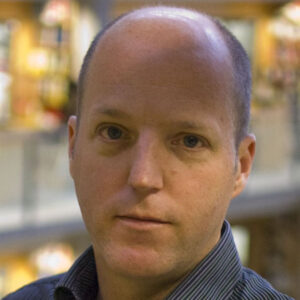
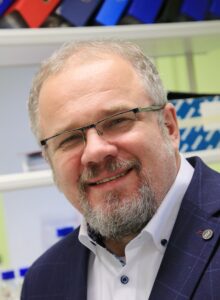
Dr. Jorge Marchand is an Assistant Professor at the University of Washington in the Department of Chemical Engineering. He did his PhD work at the University of California, Berkeley in the research group of Michelle Chang, where he worked on the discovery of biosynthetic pathways for making terminal alkyne amino acids. His postdoctoral work was done at Harvard Medical School with the George Church group. Here, he focused on engineering translation and developing new sequencing technologies to study tRNA. He now runs an independent research group that aims to utilize fundamental approaches in synthetic biology, chemical biology, biosynthesis, and biomolecular engineering for reprogramming life at the nucleic acid level.

Immuno US 2023

Discuss the latest strategies to harness the immune system for the development of innovative therapeutics