Biomarkers US 2023
Gain a US perspective on the latest technologies and novel biomarkers driving forward translational research and precision medicine
Gain a US perspective on the latest technologies and novel biomarkers driving forward translational research and precision medicine
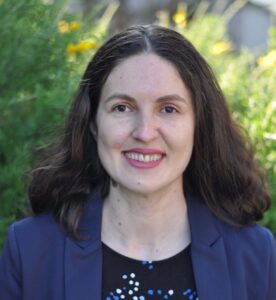
Dr. Ania-Ariadna Baetica is an Assistant Professor in the Department of Mechanical Engineering and Mechanics at Drexel University. She received her BA degree from Princeton University in 2012 and her PhD from California Institute of Technology in 2018. Following her degrees, she was a postdoctoral scholar at the University of California San Francisco.
Dr. Baetica’s group leverages control theory along with systems biology, synthetic biology, and computational science to solve biotechnological and medical challenges. Her group designs robust and modular synthetic biological circuits by incorporating layered feedback mechanisms.
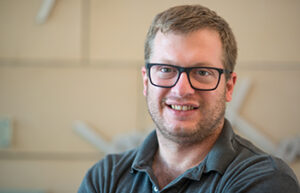
My lab studies how genomes encode organisms’ phenotypes. To do this, we use techniques from genetics, molecular systems biology, and synthetic biology. In the area of synthetic biology, we have developed new approaches for building synthetic chromosomes from natural DNA.
Join RNA leaders, experts and distinguished scientists in Europe, delivering breakthrough research, technologies & connecting global pharma, biotech and academia for high-level discussions on the latest innovations within the formulation and delivery of RNA-based therapeutics.
Join oligo leaders, experts and distinguished scientists in Europe, delivering breakthrough research, technologies & connecting global pharma, biotech and academia for high-level discussions on the latest innovations within the oligonucleotides chemistry & therapeutics development.
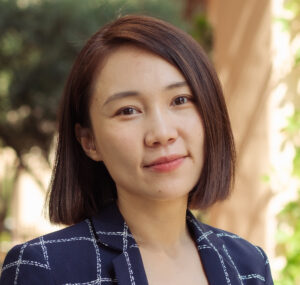
I’m a new faculty at Texas A&M studying synthetic biology and control theory. Before moving to Texas, I completed four years of postdoctoral training in the Richard Murray Group at Caltech. I received my Ph.D. in Chemical and Biomolecular Engineering from Cornell University in 2018, advised by Julius B. Lucks.
Gene Therapy Development & Manufacturing 2023 delivers in-depth discussion on optimised process strategies and technologies for the successful technical development and manufacture of advanced gene therapy products.
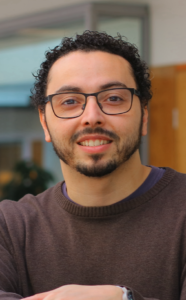
I am a Research Assistant Professor at the Department of Electrical and Computer Engineering (ECE) and the director of the Oliveira Lab (www.oliveiralab.me), a recently created research group at Boston University (BU). In addition, I am the Senior Manager of the DAMP lab (www.damplab.org) at BU.
The Oliveira lab investigates the emergence of microbial community complexity and their underlying interactions in varying environmental contexts and studies microbial community design principles and metrics to help build novel collective behaviors. We hope that breakthroughs in computational and synthetic biology methods will accelerate our knowledge of the links between genetic sequences and intercellular communication to study and engineer the spatiotemporal behavior of biological networks. Among my key collaborators: i) Prof. Chris Voigt (MIT) for improving the predictive DNA design automation tool named Cello (Genetic Circuit Design Automation with Cello 2.0. Nature Protocols).
In my early career, I have published more than 30 articles in journals, conference proceedings, and book chapters, acted as the guest Editor for JoVE, and as a reviewer for Nat. Comm., ACS Synth. Biol., Synth. Biol. J., among others. In addition, I have directly supervised and co-supervised 7 research staff, 7 graduate students (none of whom received their Ph.D. with me), 3 master’s students, and over 14 undergraduates. I was one of the recipients of the Sao Paulo Foundation’s Best Innovative Biotech Product Award in 2019. Based on that, I co-founded a commercial synthetic biology, automation-based company named Doroth (www.doroth.com.br) in Brazil.
Currently, with the support from a $1.4M NSF grant, BU’s Professor Douglas Densmore (co-PI), Prof. Andrews (PI) from UMass Amherst, and my team (technical lead support) are teaming up on an ambitious effort to create microscopic, programmable “living devices” which can detect and neutralize specific toxic contaminants found in drinking water.
Bringing together leading omics experts from around the world and comprised of three outstanding programmes, delegates can expect to benefit from critical discussions in the future of Next Generation Sequencing, Multi-omic Single Cell & Spatial Analyses and Genome editing in Drug Discovery and Therapeutic Development.
The 2023 event again brings together a panel of prominent leaders and scientists, sharing new case studies, innovative data and industry outlook.
Below are some of the confirmed speakers of NextGen Omics US 2023.
Timothy Dahlem, Director of Systems Biology at Recursion Pharmaceuticals
Kamel Khalili, Laura H. Carnell Professor and Chair Lewis Katz School of Medicine at Temple University
Kalina Hristova, Professor of Materials Science and Engineering Institute for NanoBioTechnology at John Hopkins University
Guo-Cheng Yuan, Professor of Computational Biology at Icahn School of Medicine at Mount Sinai
Tirtha Chakraborty, Chief Scientific Officer at Vor Biopharma
Sandra Smieszek, Head of Genetics at Vanda Pharmaceuticals

The main research interest of Dr. Ahmed is to focus on industrially important metabolites production in microbes through the application of system metabolic engineering and synthetic biology. Previously, Dr. Ahmed developed industrially competitive microbial strains that were capable of producing industrially important secondary metabolites, for instance, β-amyrin, squalene, etc., and these strains are highly efficient for commercialization. Moreover, Dr. Ahmed expanded his research interest toward other industrially important metabolites, i.e., fragrance, flavor, and drugs, that might be in the category of alkaloids, sesquiterpenoids, monoterpenoids, diterpenoids, triterpenoids, and tetraterpenoids. These metabolites are normally used in pharmaceuticals, nutraceuticals, and cosmeceuticals industries as raw materials for the production of medicines, foods, and cosmetics.
An innovative 2 day meeting brings together a panel of over 150 prominent leaders and scientists, exploring Sustainable Chemistry, aiming to innovate processes to improve product performance whilst delivering environmental benefits.
Discuss the latest advancements in innovative approaches to sustainable drug development and manufacturing process.
Engage in scientific discussions paving the way towards sustainable chemical synthesis, analytical chemistry and chemical process development.
Dive into the latest technologies driving down pharma sector emissions by implementing “green-by-design” in early drug development phase pipeline projects.
Gain a comprehensive understanding of the peptides and oligonucleotides sustainability landscape; key sessions include application and technology areas.
Join a series of workshops, roundtables, and panel discussions to collaborate with your peers. 2023 sessions include: Greener Peptides, Green Chemical Synthesis, Chemistry in Water, Green Medicinal Chemistry and Green Manufacturing
Engage with esteemed pharmaceutical & biotech representatives as well as thought-leaders from academic & research institutions onsite and benefit from attending over 60 presentations. We will be welcoming onsite over 300 delegates for two days of cutting-edge scientific sessions and case studies bringing the latest biologics developments to the forefront of research
A two-day event packed with leading speakers, research and cutting-edge presentations on the latest advancements in cancer immunotherapy, with dedicated sessions on different therapeutic modalities as well as case studies on innovative preclinical and translational tools.
Biomarkers 2023, designed to provide forward-looking insights into the latest trends and tools impacting biomarker research, it brings together leading experts from global pharmaceutical organisations, innovative biotech companies and internationally renowned academic institutions working across multiple therapeutic areas and stages of drug development.
It includes over 90 cutting-edge presentations and discussion sessions, 8+ hours of valuable networking sessions and an exhibition hall showcasing 50+ vendor companies.
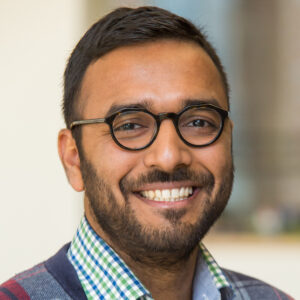
Yogesh Goyal is an Assistant Professor of Cell & Developmental Biology at the Feinberg School of Medicine, Northwestern University. Yogesh received his B.Tech. with Honors in Chemical Engineering from the Indian Institute of Technology Gandhinagar, and his Ph.D. in Chemical and Biological Engineering focusing on quantitative developmental biology from Princeton University. Yogesh pursued postdoctoral work in single-cell systems and synthetic biology in Bioengineering at the University of Pennsylvania. Yogesh’s major honors include Burroughs Wellcome Fund CASI Award, Schmidt Science Fellowship, STAT Wunderkind, and the Jane Coffin Childs Fellowship. Yogesh’s group combines theory, computation, and single-cell resolved experiments to track and control cellular plasticity and fate choices in developing tissues and cancer.
We are pleased to announce our new conference on synthetic biology. This conference will present how technologies from synthetic biology are delivering innovations across clinical health applications and leading towards improved global health.
The meeting will bring together researchers working on synthetic biology, biotechnology, genomics and medical sciences, along with industry members from pharma and biotech companies, and investors and funders in this growing research area. It will address how the technologies coming out of synthetic biology impact both advanced healthcare in developed countries (e.g. personalised medicines, T-cell therapies) and global wide-impact, such as very low-cost diagnostics and self-replicating living therapies. In addition, the conference aims to provide a reflection on where resources and work are succeeding and where more effort needs to be placed to ensure equitable global outcomes.
We aim to organise this meeting as a hybrid conference – with on-site or virtual attendance. If you would like to be part of these discussions – consider submitting an abstract by 17 January 2023 and register by 14 February (in-person) or 6 March (virtual) 2023.
To promote more inclusive scientific discussions with international colleagues at our conferences, virtual delegates based in Lower and Middle-Income Countries can register for free.
Reminder to EBRC Council members in industry, government, and academia, to register and book your travel for the EBRC 2022 Council Meeting at J. Craig Venter Institute, in La Jolla, CA on November 7-8, 2022.
Travel Support and Meeting Hotel:
We anticipate covering airfare and hotel expenses for EBRC Academic Council Members. Please see EBRC’s full travel policy here.
EBRC has reserved a block of hotel rooms at the Embassy Suites by Hilton San Diego La Jolla at 4550 La Jolla Village Dr, San Diego, CA 92122 at $189.00 per night. Please indicate on the registration page if you will need hotel accommodations. We will reserve the room in our block. If your travel is not covered by EBRC, you can provide payment at check in. Please contact helix@ebrc.org with any questions rather than contacting the hotel directly.
Health and Safety:
We are committed to hosting a safe event. We will be closely watching CDC recommendations in addition to all relevant local and state guidelines leading up to the Meeting and make any changes necessary for health and safety. Proof of vaccination will be required for attendance. A rapid antigen testing strategy may also be deployed depending on conditions. Meals will be provided outside.
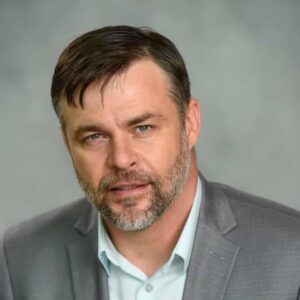
I am a Scientist and Head of the Laboratory of Antibody Discovery & Accelerated Protein Therapeutics (ADAPT) at the Houston Methodist Research Institute (HMRI). My work encompasses a broad range of engineering biology, from the design of simple genetic “parts” and circuits to protein engineering and industrial biomanufacturing. I use a foundation in synthetic biology to domesticate non-model organisms and then use these tools and chasses to engineer proteins or biosynthetic pathways with therapeutic and industrial potential. I use a holistic approach to protein engineering by employing concepts in directed evolution, rational design, and artificial intelligence to create biological countermeasures, diagnostics, and vaccine candidates. Over the last few years, my group has been involved in the genomic surveillance and characterization of SARS-COV-2, B-cell repertoire mining for neutralization and protection assays, and the engineering of enzymes for use in mRNA vaccine manufacturing.
I also spent the last four years as a DoD scientist. In that time, I designed and built the Army’s Biological Foundry co-located at the University of Texas at Austin. This work increased DoD capability in the field of synthetic biology for early-stage research efforts. From 2019 to 2021, I also served as the government CTO of the Bioindustrial Manufacturing Innovation Institute– BioMADE. As the technical architect of the institute, I led the creation of a public-private partnership to develop innovations at scale for biological production of non-medical products. Prior to that, I led an in-house R&D effort in the private sector.