Christopher Mason

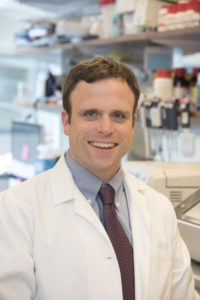
Dr. Christopher Mason is an Associate Professor of Genomics, Physiology, and Biophysics at Weill Cornell Medicine and the Director of the WorldQuant Initiative for Quantitative Prediction. He also holds affiliate appointments at the Tri-I Program on Computational Biology and Medicine (Cornell, Memorial Sloan Kettering Cancer Center and Rockefeller University), Harvard Medical School, and Yale Law School.
The Mason laboratory develops and deploys new biochemical and computational methods in functional genomics to elucidate the genetic basis of human disease and physiology. We create and deploy novel techniques in next-generation sequencing and algorithms for: tumor evolution, genome evolution, DNA and RNA modifications, and genome/epigenome engineering. We also work closely with NIST/FDA to build international standards for these methods (SEQC2, IMMSA, and Epigenomics QC groups), to ensure clinical-quality genome measurements and editing. We also work with NASA to build integrated molecular portraits of genomes, epigenomes, transcriptomes, and metagenomes for astronauts, which help establish the molecular foundations and genetic defenses for enabling long-term human spaceflight.
Dr. Mason has won the NIH’s Transformative R01 Award, the NASA Group Achievement Award, the Pershing Square Sohn Cancer Research Alliance Young Investigator award, the Hirschl-Weill-Caulier Career Scientist Award, the Vallee Scholar Award, the CDC Honor Award for Standardization of Clinical Testing, and the WorldQuant Foundation Scholar Award. He was named as one of the “Brilliant Ten” Scientists by Popular Science, featured as a TEDMED speaker, and called “The Genius of Genetics” by 92Y. He has >230 peer-reviewed papers and scholarly works that have been featured on the covers of Nature, Science, Cell, Nature Biotechnology, Nature Microbiology, and Neuron, as well as legal briefs cited by the U.S. District Court and U.S. Supreme Court.

Cinnamon Bloss

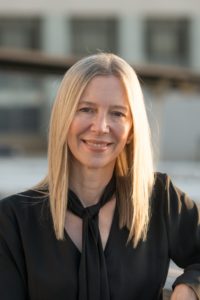
Cinnamon Bloss, Ph.D. is Associate Professor in the Herbert Wertheim School of Public Health and Longevity Science and Director of the Center for Empathy and Technology at the University of California San Diego. Dr. Bloss is jointly appointed in the Department of Psychiatry and the Division of Biomedical Informatics in the School of Medicine. Dr. Bloss researches social and behavioral phenomena related to emerging technologies, with a particular focus on genetic and genomic research, precision health, and big data. Her research is funded by the National Institutes of Health, the Defense Advanced Research Projects Agency, and philanthropic donations. Dr. Bloss serves as a member of the Novel and Exceptional Technology and Research Advisory Committee, a federal advisory committee that provides recommendations to the NIH Director and a public forum for the discussion of the scientific, safety, and ethical issues associated with emerging biotechnologies. Dr. Bloss has given invited talks at the National Academy of Sciences, Engineering, and Medicine, the National Press Club, the National Institutes of Health, and has presented invited testimony before a Food and Drug Administration Advisory Panel to inform consumer genomics policy. Dr. Bloss was recognized by the Western Societies of Medicine with the Carmel Prize for Research Excellence and has received numerous teaching awards at the University of California San Diego.

Jenny Mortimer

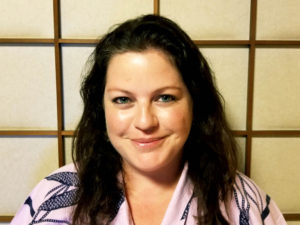
Jenny Mortimer is a Professor of Plant Synthetic Biology at the University of Adelaide, in the School of Agriculture, Food and Wine, and the Waite Research Institute, an Affiliate Staff Scientist at Lawrence Berkeley National Laboratory (LBNL) USA, and the Director of Plant Systems Biology at the Joint BioEnergy Institute, USA.

After completion of her PhD at Cambridge University, UK, she completed postdoctoral training in the UK (also at Cambridge University), a fellowship at RIKEN, Japan, and then a move to LBNL as a Research Scientist. She relocated to Adelaide in 2021.

Her team’s research focuses on understanding and manipulating plant cell metabolism, with a focus on complex glycosylation. The goal is to develop crops which contribute to a sustainable and renewable bioeconomy. In Adelaide, her new group is using synbio to develop new crops (such as duckweed) for food and novel materials production in controlled growth environments – including for Space settlement. Other projects include engineering glycans to deliver plants with increased (a)biotic stress tolerance. In the US, her group works to reengineer the plant cell wall for the sustainable production of fuels and biochemicals from biomass. Her lab is also developing new synbio and bioinformatics tools for bioenergy crops, and investigating the role of plant cell walls in recruiting and retaining the rhizosphere microbiome, She was selected as a World Economic Forum Young Scientist (2016/17), where she contributed to the WEF Code of Ethics for Researchers (widgets.weforum.org/coe), and she is a Handling editor for Plant Cell Physiology. Twitter @Jenny_Mortimer1, and more about her research here: mortimerlab.org .

Widianti Sugianto

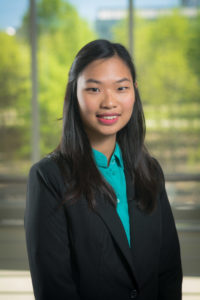
My name is Widianti, an aspiring synthetic biologist and a chemical engineering graduate student at University of Washington. My research focuses on harnessing synthetic biology as a tool for biocatalysis and bioproduction application. Outside lab, I love spending time cooking and travelling for food.

Dr. DEBASHIS DUTTA

Having earned my B.Tech in Food Technology from Jadavpur University, Kolkata, I got the opportunity to join the School of Biochemical Engineering, Indian Institute of Technology (Banaras Hindu University) Varanasi, as M.Tech graduate and later got Ph.D under the supervision of Prof. Mira Debnath Das. I earned Ph.D (Biochemical Engineering) on an exceptionally well researched project on “Bioprocess strategy development on production and characterization of antifungal protein from Aspergillus giganteus”.

Anna Osterlind Jones

Anna Osterlind Jones is Head of Government Affairs at Zymergen, where she leads the company’s engagement with the Administration and Congress. She rejoined the company in 2021, having previously worked at Zymergen from 2015 to 2018 as the then-startup grew from 40 to nearly 500 employees. Prior to her current position, Anna was with the United States Department of Agriculture, most recently as Chief of Staff to the Under Secretary for Trade and Foreign Agricultural Affairs. At USDA, she also served as Chief of Staff to the Administrator of the Agricultural Marketing Service, where she helped launch the domestic hemp industry among other initiatives, and in USDA’s Office of Congressional Relations.

Anna started her career on Capitol Hill working for a Senator from her home state of Missouri. She holds a B.A. in Economics from the University of Missouri.

Sharon Steele

Sharon joined Zymergen in March 2021. She currently works remotely from Virginia. Sharon has worked as a Government Engagement/Contracting senior legal advisor for over 15 years, with various large government contractors. During the last several years Sharon has maintained a legal practice servicing large and small government contractors. Sharon enjoys yoga, bike riding and spending time with her family which includes two kitties.

Tayyaba Zainab

I have completed my PhD in Molecular Genetics from King’s College London, UK, I came back to Pakistan to join University Institute of Biochemistry and Biotechnology, PMAS-Arid Agriculture University Rawalpindi, Pakistan. I established my research group in 2016 and became the first person in our Institution to work on CRISPR based genome editing. Currently leading my team in establishing the National Center of Industrial Biotechnology at our Institution to further strengthen my work in Metabolic Engineering/Synthetic Biology.

Synthetic Biology Young Speaker Series (SynBYSS) nominations open!

Synthetic Biology Young Speaker Series (SynBYSS) nominations are open!

This virtual seminar series will feature presentations by early career professionals. If you or someone you know is interested in speaking, please submit a nomination using the information below. Nominations will be accepted on a rolling basis.

Eligibility: Must be an untenured professor working in synthetic biology OR someone planning on applying for a faculty job soon.

When: Official start date and actual days/times TBD but September 2021 or earlier

Nomination: Please submit your CV or resume to (tsmoon@wustl.edu). Self-nominations are welcome, as well as nominating others in your lab. All nominations will be subject to review by a selection committee.

We look forward to receiving your nomination for this exciting seminar series!

Please contact Tae Seok Moon (tsmoon@wustl.edu) with any questions.

2019 Roadmap Assessment Workshop – Data Science

Please join us at a virtual workshop to assess the Data Science: Data Integration, Modeling, and Automation technical theme of Engineering Biology.

Friday, June 11, 2021
12:00pm – 3:00pm Eastern | 9:00am – 12:00pm Pacific

AgendaRegister Here

This workshop will draw upon our survey results to assess technical progress in the context of the research milestones predicted in Engineering Biology, the 2019 EBRC technical research roadmap. This information will shape a narrative of the most pressing needs and challenges still facing engineering biology over the next decade.

The workshop will inventory the degree of completion for each milestone, discuss technical and nontechnical barriers inhibiting progress, highlight new directions and avenues of research, and review social science dimensions associated with the development of technical goals. This will come in the form of a published report that will be adapted for public viewing.

These virtual writing workshops for each technical theme (3 hours each) are focused on drafting and revising the assessment. They are organized as followed:

  • Introduction of the assessment, including the purpose, timing, and impact;
  • Brainstorming, informed by the results of our surveys, of the degree of completion for each research milestone, technical and nontechnical barriers inhibiting progress, and social science dimensions associated with the development of technical goals. We’ll also discuss new avenues and directions of research unanticipated by the roadmap;
  • Drafting and revising summaries of each of the above components.

The report will be invaluable to policymakers and funders to understand the continued challenges faced by our researchers; to researchers to learn the critical research gaps preventing engineering biology progression; and for our EBRC community to assess the utility of our roadmaps.

Hosted by Adam Arkin (UC Berkeley) and Nathan Hillson (LBNL)


2019 Roadmap Assessment Workshop – Host Engineering

Please join us at a virtual workshop to assess the Host Engineering: Host and Consortia Engineering technical theme of Engineering Biology.

Thursday, June 10, 2021
11:00am – 2:00pm Eastern | 8:00am – 11:00am Pacific

AgendaRegister Here

This workshop will draw upon our survey results to assess technical progress in the context of the research milestones predicted in Engineering Biology, the 2019 EBRC technical research roadmap. This information will shape a narrative of the most pressing needs and challenges still facing engineering biology over the next decade.

The workshop will inventory the degree of completion for each milestone, discuss technical and nontechnical barriers inhibiting progress, highlight new directions and avenues of research, and review social science dimensions associated with the development of technical goals. This will come in the form of a published report that will be adapted for public viewing.

These virtual writing workshops for each technical theme (3 hours each) are focused on drafting and revising the assessment. They are organized as followed:

  • Introduction of the assessment, including the purpose, timing, and impact;
  • Brainstorming, informed by the results of our surveys, of the degree of completion for each research milestone, technical and nontechnical barriers inhibiting progress, and social science dimensions associated with the development of technical goals. We’ll also discuss new avenues and directions of research unanticipated by the roadmap;
  • Drafting and revising summaries of each of the above components.

The report will be invaluable to policymakers and funders to understand the continued challenges faced by our researchers; to researchers to learn the critical research gaps preventing engineering biology progression; and for our EBRC community to assess the utility of our roadmaps.

Hosted by James Carothers (UW) and Ute Galm (Zymergen)

2019 Roadmap Assessment Workshop – Engineering DNA

Please join us at a virtual workshop to assess the Engineering DNA: Gene Editing, Synthesis, and Assembly technical theme of Engineering Biology.

Thursday, June 3, 2021
2:00pm – 5:00pm Eastern | 11:00am – 2:00pm Pacific
Agenda

Registration for this event is now closed. For more information, please contact helix@ebrc.org.

This workshop will draw upon our survey results to assess technical progress in the context of the research milestones predicted in Engineering Biology, the 2019 EBRC technical research roadmap. This information will shape a narrative of the most pressing needs and challenges still facing engineering biology over the next decade.

The workshop will inventory the degree of completion for each milestone, discuss technical and nontechnical barriers inhibiting progress, highlight new directions and avenues of research, and review social science dimensions associated with the development of technical goals. This will come in the form of a published report that will be adapted for public viewing.

These virtual writing workshops for each technical theme (3 hours each) are focused on drafting and revising the assessment. They are organized as followed:

  • Introduction of the assessment, including the purpose, timing, and impact;
  • Brainstorming, informed by the results of our surveys, of the degree of completion for each research milestone, technical and nontechnical barriers inhibiting progress, and social science dimensions associated with the development of technical goals. We’ll also discuss new avenues and directions of research unanticipated by the roadmap;
  • Drafting and revising summaries of each of the above components.

The report will be invaluable to policymakers and funders to understand the continued challenges faced by our researchers; to researchers to learn the critical research gaps preventing engineering biology progression; and for our EBRC community to assess the utility of our roadmaps.

Hosted by Rebecca Nugent (Twist Bioscience) and Howard Salis (Penn State)

2019 Roadmap Assessment Workshop – Biomolecular Engineering

Please join us at a virtual workshop to assess the Biomolecular Engineering: Biomolecule, Pathway, and Circuit Engineering technical theme of Engineering Biology.

Tuesday, June 8, 2021
11:00am – 2:00pm Eastern | 8:00am – 11:00pm Pacific

Agenda

Registration for this event is now closed. For more information, please contact helix@ebrc.org.

This workshop will draw upon our survey results to assess technical progress in the context of the research milestones predicted in Engineering Biology, the 2019 EBRC technical research roadmap. This information will shape a narrative of the most pressing needs and challenges still facing engineering biology over the next decade.

The workshop will inventory the degree of completion for each milestone, discuss technical and nontechnical barriers inhibiting progress, highlight new directions and avenues of research, and review social science dimensions associated with the development of technical goals. This will come in the form of a published report that will be adapted for public viewing.

These virtual writing workshops for each technical theme (3 hours each) are focused on drafting and revising the assessment. They are organized as followed:

  • Introduction of the assessment, including the purpose, timing, and impact;
  • Brainstorming, informed by the results of our surveys, of the degree of completion for each research milestone, technical and nontechnical barriers inhibiting progress, and social science dimensions associated with the development of technical goals. We’ll also discuss new avenues and directions of research unanticipated by the roadmap;
  • Drafting and revising summaries of each of the above components.

The report will be invaluable to policymakers and funders to understand the continued challenges faced by our researchers; to researchers to learn the critical research gaps preventing engineering biology progression; and for our EBRC community to assess the utility of our roadmaps.

Hosted by Chang Liu (UC Irvine) and Jesse Zalatan (UW)

Sebastian Castillo-Hair

I am a postdoc in the Seelig Lab at UW. I’m using massively parallel reporter assays and deep learning methods to engineer synthetic biological systems in human cells. I obtained my PhD in Bioengineering at Rice University, where I worked in optogenetics and B. subtilis synthetic biology. As an undergrad, I studied Mechatronics Engineering at Universidad Nacional de Ingenieria in Lima, Peru, where I am from.

Alexandra “Lex” Patterson

Lex is currently a 3rd year bioengineering Ph.D. student at Georgia tech researching cell-free diagnostics. In the past, she has worked to establish large scale educational outreach events to encourage students to pursue careers in engineering. In her free time, she enjoys playing tennis and pickleball.

Sifang Chen

Sifang is interested in applications of engineering biology toward sustainability and has just recently made the transition from the lab to science policy. Prior to joining EBRC, she worked on DNA computing and DNA data storage as a postdoctoral researcher at the University of Washington. Previously, she was an intern and visiting researcher at Microsoft Research, where she built chemical-based wearables and low-cost pollution sensors. Sifang received her Ph.D. in Physics from the University of Washington in 2019 researching DNA-based programmable materials. She is thrilled to have the opportunity to learn about science policy and work with a wide-ranging group of experts and stakeholders. She will be primarily working in the Roadmapping focus area and looking at how biotechnology could contribute to creating equitable climate solutions.

EBRC Announces Dr. India Hook-Barnard as the next Executive Director

Dear Colleagues:

With the growth of EBRC and its latest establishment of the BioMADE Manufacturing Innovation Institute, I am incredibly pleased to (re)introduce Dr. India Hook-Barnard as the next Executive Director of EBRC.

India has been a Senior Advisor with EBRC for the last several months and will now be taking over the day-to-day direction and operations of the Consortium. She has deep experience working across industry, government and academia to establish cross-sectoral programs in areas highly relevant to engineering biology. As part of this transition, she’s looking forward to connecting with EBRC’s members and government sponsors to discuss your priorities and our joint opportunities to advance engineering biology goals. I look forward to working with her to grow EBRC’s impact and grow the impact of our field. 

Prior to joining EBRC, India was Senior Advisor to the Beyond 2020: A Vision and Pathway for NIH Working Group, and Senior Vice President for Patient Outcomes and Experience at the National Marrow Donor Program. Before that, she served as the inaugural Executive Director of the California Initiative to Advance Precision Medicine and as the Director of Research Strategy at the University of California, San Francisco. Earlier in her career, India worked at the National Academies of Sciences, Engineering, and Medicine focusing on issues of emerging science and technology, including synthetic biology, precision medicine, biosecurity and biodefense. She earned her PhD in Microbiology—Medicine from the University of Missouri, and continued to study the regulation of gene expression in bacteria and phage during her postdoctoral fellowship at the NIH. India brings a wealth of experience to EBRC and we’re happy to have her join the team.

Reporting through the president to the board, India will oversee all EBRC staff and programs, develop and lead new initiatives, and be your primary EBRC point of contact. India is taking this role at a key time for EBRC: we now have a significant number of ongoing programs and will be up to 10 team members by summer. I will remain actively involved as president by participating in strategic initiatives and key projects. 

Thank you for your engagement with EBRC and I look forward to continuing our work together. 

Best,
Doug

EBRC Announces Dr. India Hook-Barnard as the next Executive Director

Dear Colleagues:

With the growth of EBRC and its latest establishment of the BioMADE Manufacturing Innovation Institute, I am incredibly pleased to (re)introduce Dr. India Hook-Barnard as the next Executive Director of EBRC.

India has been a Senior Advisor with EBRC for the last several months and will now be taking over the day-to-day direction and operations of the Consortium. She has deep experience working across industry, government and academia to establish cross-sectoral programs in areas highly relevant to engineering biology. As part of this transition, she’s looking forward to connecting with EBRC’s members and government sponsors to discuss your priorities and our joint opportunities to advance engineering biology goals. I look forward to working with her to grow EBRC’s impact and grow the impact of our field.

Prior to joining EBRC, India was Senior Advisor to the Beyond 2020: A Vision and Pathway for NIH Working Group, and Senior Vice President for Patient Outcomes and Experience at the National Marrow Donor Program. Before that, she served as the inaugural Executive Director of the California Initiative to Advance Precision Medicine and as the Director of Research Strategy at the University of California, San Francisco. Earlier in her career, India worked at the National Academies of Sciences, Engineering, and Medicine focusing on issues of emerging science and technology, including synthetic biology, precision medicine, biosecurity and biodefense. She earned her PhD in Microbiology—Medicine from the University of Missouri, and continued to study the regulation of gene expression in bacteria and phage during her postdoctoral fellowship at the NIH. India brings a wealth of experience to EBRC and we’re happy to have her join the team.

Reporting through the president to the board, India will oversee all EBRC staff and programs, develop and lead new initiatives, and be your primary EBRC point of contact. India is taking this role at a key time for EBRC: we now have a significant number of ongoing programs and will be up to 10 team members by summer. I will remain actively involved as president by participating in strategic initiatives and key projects.

Thank you for your engagement with EBRC and I look forward to continuing our work together.

Best,
Doug

India Hook-Barnard

Dr. India Hook-Barnard is Chief Executive Officer of the Engineering Biology Research Consortium (EBRC). Her primary interests are in the areas of synthetic biology, precision medicine, responsible innovation, and biosecurity. India enjoys building multidisciplinary collaborations and developing a vision and strategy to address complex challenges. She works with experts and leaders from across academia, industry, and government sectors to identify and shape scientific opportunities, technical feasibility, and policy issues. Her goal is to advance and accelerate engineering biology solutions across all application areas, drive innovation, and grow the bioeconomy for all.

Prior to joining EBRC, India was Senior Advisor to the Beyond 2020: A Vision and Pathway for NIH Working Group, and Senior Vice President for Patient Outcomes and Experience at the National Marrow Donor Program. She was the Director of Research Strategy and Associate Director, Precision Medicine at the University of California, San Francisco; she helped launch and was the Executive Director for the California Initiative to Advance Precision Medicine. Earlier in her career, India worked at the National Academies of Sciences, Engineering, and Medicine (NASEM), focusing on areas of emerging science and technology, including policy issues of data governance, regulation, bioethics, biodefense, and workforce development. At NASEM, she directed standing committees, workshops, and six consensus reports, including Toward Precision Medicine: Building a Knowledge Network for Biomedical Research and a New Taxonomy of Disease (2011).

As a postdoctoral research fellow at the National Institutes of Health, India studied the regulation of gene expression in bacteria and phage. She earned her PhD in Microbiology-Medicine from the Department of Molecular Microbiology and Immunology at the University of Missouri.

John Dileo

John Dileo manages the Biotechnology and Life Sciences Department at the MITRE Corporation in McLean, Virginia. He holds a Ph.D. in Molecular Genetics & Biochemistry from the University of Pittsburgh and has specialized in experimental and theoretical research in molecular, systems, and synthetic biology, while also providing support and oversight to numerous large Government research and development programs in those fields of study. At MITRE, his department has groups that focus on biosafety, security and quality; countering weapons of mass destruction; medical countermeasures development; and human performance optimization.