The genotype-phenotype landscape of an allosteric protein

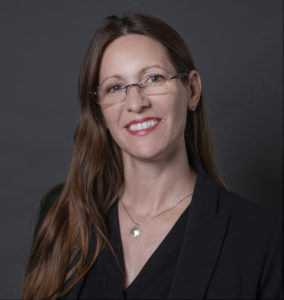
Drew S. Tack, Peter D. Tonner, Abe Pressman, Nathanael D. Olson, Sasha F. Levy, Eugenia F. Romantseva, Nina Alperovich, Olga Vasilyeva, and David Ross. Molecular Systems Biology

https://doi.org/10.15252/msb.202010179

Genetic requirements for cell division in a genomically minimal cell

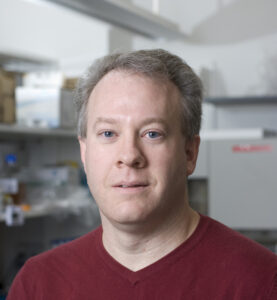
James F. Pelletier, Lijie Sun, Kim S. Wise, Nacyra Assad-Garcia, Bogumil J.Karas, Thomas J.Deerinck, Mark H.Ellisman, Andreas Mershin, Neil Gershenfeld, Ray-Yuan Chuang, John I.Glass, Elizabeth A. Strychalski. Cell

https://doi.org/10.1016/j.cell.2021.03.008

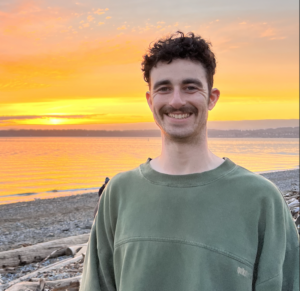
Ryan Cardiff

Ryan is a Molecular Engineering PhD student at the University of Washington in the Carothers and Zalatan labs. His research focuses on developing improved tools to precisely regulate gene expression in microbial and cell-free systems. Ryan fills his time outside of the lab on long runs, concerts, board games, or cooking. 

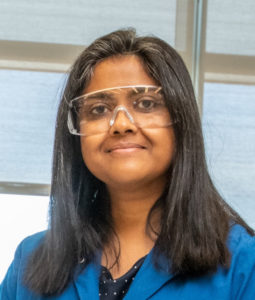
Aindrila Mukhopadhyay

Dr. Mukhopadhyay is a Senior Scientist in the Biological Systems and Engineering Division at the Lawrence Berkeley National Laboratory (LBNL) in Berkeley, CA. She received a master’s in chemistry from the Indian Institute of Technology in, Mumbai, India in 1996 and a PhD in Organic Chemistry from the University of Chicago, Chicago, IL in 2002. She did her postdoctoral research at UC Berkeley and LBNL. Currently, she is the principal investigator of her team that is part of several large interdisciplinary projects, mainly focused on engineered and environmental microbial systems. She is the Vice President of the Biofuels and Bioproducts Division at the Department of Energy funded, Joint BioEnergy Institute (JBEI) and is also the Director of its Host Engineering group. As part of JBEI her group develops tools to examine and engineer a variety of microbial platforms including Pseudomonas putida, Corynebacterium glutamicum, Escherichia coli, Rhodosporidium toruloides, Saccharomyces cerevisiae, and other microbial strains. She uses a range of functional genomics, metabolic modeling, and systems biology approaches. Her group specifically focuses on developing robust strains that show high tolerance and productivity during biofuel and chemical production, and the optimization required to achieve scalability.

[VIRTUAL] EBRC 2021 Annual Meeting

The EBRC Annual Meeting is an opportunity for the EBRC community to come together to engage on matters important to advancing our field, present and discuss your latest research, and continue to build relationships with your colleagues throughout academia, industry, and government. This virtual meeting will feature sessions on research, EBRC’s work in our focus areas, and a panel discussion on diversity, equity, and inclusion.

The meeting will be held virtually over three days: April 23 and 26-27, 2021. VIEW THE FULL AGENDA HERE.

  • Friday, Apr 23 (3:00-6:00pm ET) will kick off with a presentation and discussion of EBRC’s new Diversity, Equity & Inclusion Action Plan, followed by a poster session/social mixer in EBRC’s Gather Town.
  • Monday, Apr 26 (11:00am-2:00pm ET) will include updates on EBRC’s efforts across the focus areas and membership, followed by oral presentations and posters or a keynote address.
  • Tuesday, Apr 27 (11:00am-2:00pm ET) will continue the oral presentations and end where we started, with a panel on Diversity, Equity & Inclusion.
  • Following the meeting, EBRC will host a short seminar series to further spotlight research advancing the field. Seminars will be held at 3:00 pm ET May 4; 2:00 pm ET May 13; and 4:00 pm ET May 21.

Registration is now open to all EBRC members and affiliates (including EBRC Student & Postdoc Association members). The deadline to register is April 21.

Zoom and Gather Town will be used to hold this virtual event.


William Bentley

WILLIAM E. BENTLEY is the Robert E. Fischell Distinguished Chair in Engineering and was the founding Chair of the Fischell Department of Bioengineering. At Maryland since 1989, Dr. Bentley has focused his research on the development of molecular tools that facilitate the expression of biologically active proteins, having authored over 300 related archival publications. Recent interests in synthetic biology and biofabrication exploit the components of bacterial quorum sensing and redox for opening ‘communication’ between electronic devices and biological systems. He has mentored over 40 PhDs and 21 postdocs. He is co-PI of Maryland’s Center of Excellence in Regulatory Science and Innovation (CERSI), a comprehensive joint initiative with the FDA and Maryland’s Baltimore campus. He is also co-PI of the National Capital Consortium for Pediatric Device Innovation, joint with Children’s National Medical Center. Dr. Bentley is a Fellow of the ACS, AAAS, and AIMBE and is an elected member of the American Academy of Microbiology.

Malice Analysis at Rice University

Biology is easier than ever to engineer. This reality requires researchers to take proactive steps to consider the security implications of their work. The Engineering Biology Research Consortium (EBRC) is holding an interactive workshop to help you identify potentially malicious applications of your work, mitigation options, and what to do if you identify something and don’t know how to proceed. The workshop is targeted to graduate students and postdocs, but we welcome others in engineering biology to attend. This technically-focused workshop will include plenary presentations and discussion and small group analysis of participants’ research. Participants that complete all aspects of the workshop will receive a certificate of completion which can be noted on your CV.

Wednesday, April 28, 2021

10:00AM – 1:30PM Pacific Time, 1:00 – 4:30 Eastern Time

Register Here

Malice Analysis: Rice University is being hosted by Rice faculty to better build and support a local security community in the Houston area. However, all are welcome to register. Contact Helix@ebrc.org, if you’re interested in hosting a virtual Malice Analysis workshop for your institution.

This workshop is supported by the U.S. Department of Homeland Security under Grant Award Number, 2017‐ST‐108‐FRG002.

Claudia Vickers

Claudia is Director of CSIRO’s Synthetic Biology Future Science Platform (SynBioFSP), a highly collaborative R&D program aimed at expanding Australia’s synthetic biology capability and developing national synthetic biology-based industry. The SynBioFSP works across disciplinary boundaries, exploring both synthetic biology innovation and the social, legal, ethical and institutional issues surrounding bringing this innovation to impact. Her personal research focuses on sustainable alternatives to petrochemicals and other industrial/agricultural products using bio-based solutions. She applies synthetic biology to engineer living cells, re-programming them for production of useful biochemicals or to act as sense/response systems for environmental monitoring and remediation. Her current work is primarily in microbes, but she has a background in plant molecular biology, abiotic stress, and applied plant engineering. She played a leading role in establishing synthetic biology as a field in Australia; she was founding President of Synthetic Biology Australia and co-authored Australia’s national synthetic biology roadmap (delivered by the Australian Council of Learned Academies). She is on the Executive of the International Society for Isoprenoids (TERPNET) and serves on editorial boards for eight international journals. She represents Australia at international strategy and policy fora (US, Asia-Pacific, OECD, World Economic Forum) and sits on the Scientific Advisory Boards for several international synthetic biology institutes and for Food Standards Australia New Zealand (FSANZ). She co-chairs the World Economic Forum Synthetic Biology Future Council. She is experienced in working across disciplinary boundaries and with industry partners.

Professor Vickers holds a PhD from The University of Queensland and is an Adjunct Professor at Queensland University of Technology and Griffith University.

Malice Analysis at University of California, Berkeley

Biology is easier than ever to engineer. This reality requires researchers to take proactive steps to consider the security implications of their work. The Engineering Biology Research Consortium (EBRC) is holding an interactive workshop to help you identify potentially malicious applications of your work, mitigation options, and what to do if you identify something and don’t know how to proceed. The workshop is targeted to graduate students and postdocs, but we welcome others in engineering biology to attend. This technically-focused workshop will include plenary presentations and discussion and small group analysis of participants’ research. Participants that complete all aspects of the workshop will receive a certificate of completion which can be noted on your CV.

Thursday April 29, 2021

9:00AM – 12:30PM Pacific Time, 12:00 – 3:30PM Eastern Time

Register Here

Malice Analysis: UC Berkeley is being hosted by UC Berkeley faculty to better build and support a local security community in the San Francisco Bay Area. However, all are welcome to register. Contact Helix@ebrc.org, if you’re interested in hosting a virtual Malice Analysis workshop for your institution.

This workshop is supported by the U.S. Department of Homeland Security under Grant Award Number, 2017‐ST‐108‐FRG002.

Malice Analysis at Massachusetts Institute of Technology

Biology is easier than ever to engineer. This reality requires researchers to take proactive steps to consider the security implications of their work. The Engineering Biology Research Consortium (EBRC) is holding an interactive workshop to help you identify potentially malicious applications of your work, mitigation options, and what to do if you identify something and don’t know how to proceed. The workshop is targeted to graduate students and postdocs, but we welcome others in engineering biology to attend. This technically-focused workshop will include plenary presentations and discussion and small group analysis of participants’ research. Participants that complete all aspects of the workshop will receive a certificate of completion which can be noted on your CV.

Wednesday May 5, 2021

10:00AM – 1:30PM Pacific Time, 1:00 – 4:30PM Eastern Time

Register Here

Malice Analysis: MIT is being hosted by MIT faculty to better build and support a local security community in the Boston area. However, all are welcome to register. Contact Helix@ebrc.org, if you’re interested in hosting a virtual Malice Analysis workshop for your institution.

This workshop is supported by the U.S. Department of Homeland Security under Grant Award Number, 2017‐ST‐108‐FRG002.

Kate Galloway

Kate E Galloway is an assistant professor at MIT in the department of Chemical Engineering. Katie Galloway earned her BS in Chemical Engineering from UC Berkeley, PhD in Chemical Engineering at Caltech, and did her postdoc at USC Stem Cell before starting at MIT in the summer of 2019. As a chemical engineer working in molecular systems biology, her research focuses on elucidating the fundamental principles of integrating synthetic circuitry to drive cellular behaviors. Her lab focuses on developing integrated gene circuits and elucidating the systems-level principles that govern complex cellular behaviors. Her team leverages synthetic biology to transform how we understand cellular transitions and engineer cellular therapies. Her research has been featured in Science, Cell Stem Cell, Cell Systems, and Development. She has won multiple fellowships and awards including the NIH F32 and Caltech’s Everhart Award.

Kaitlyn Duvall

As a Project and Research Associate at EBRC, Kaitlyn Duvall supports a variety of organizational initiatives to advance the frontiers of engineering biology and better inform policy-making decisions related to climate, engineering biology, and the bioeconomy. Her work involves stakeholder engagement, project administration, and the provision of technical and editorial support. Prior to joining EBRC, she served as Climate & Sustainability Staff at the City of Reno, where she played a pivotal role in advancing city-wide climate and sustainability initiatives. In addition to her professional experience, Kaitlyn holds a M.S. in Environmental Sciences and Policy from Johns Hopkins University and a B.S. in Environmental Science from the University of Nevada, Reno.

Albert Hinman

Albert recently finished his PhD at Stanford University in the Department of Genetics studying meiotic DNA double-strand break formation in Dr. Anne Villeneuve’s laboratory. In his time at Stanford, he was heavily involved with diversity and inclusion advocacy by being the President of the Stanford Society for the Advancement of Chicanos/Hispanics & Native Americans in Science (SACNAS) Chapter and Coleader of the Stanford Science Policy Group. He is excited to join EBRC and is very interested in understanding how scientific funding, researcher incentives, and the bioeconomy can be developed for greater societal impact within engineering biology. Albert can be found on Slack (@Albert Hinman) and reached via email awh@ebrc.org.

Elizabeth Vitalis

Beth is the Director of the 4S (Safety, Security, Sustainability, and Social Responsibility) program at BioMADE. In this role she is working with BioMADE members to build mechanisms and partnerships to help ensure the social values are embraced and integrated into all Biomanufacturing pursuits as we grow the Bioeconomy. Prior to BioMADE, she led a proactive Biosecurity program for Inscripta’s digital genome engineering platform while engaging the broader community to collaboratively advance security, responsibility, and education in bioengineering. Her contributions spanning two decades at Lawrence Livermore National Laboratory advanced a range of collaborative biodefense and global security efforts including multi-institute projects to promote biorisk detection and response. Over the years, she has enjoyed teaching community college, university, and graduate-level biology courses as well as forging community science education partnerships and events. Beth earned a BA in Chemistry from Concordia College in Minnesota and a PhD in Biomedical Sciences from the University of California, San Francisco.

Albert Hinman

Albert recently finished his PhD at Stanford University in the Department of Genetics studying meiotic DNA double-strand break formation in Dr. Anne Villeneuve’s laboratory. In his time at Stanford, he was heavily involved with diversity and inclusion advocacy by being the President of the Stanford Society for the Advancement of Chicanos/Hispanics & Native Americans in Science (SACNAS) Chapter and Coleader of the Stanford Science Policy Group. He is excited to join EBRC and is very interested in understanding how scientific funding, researcher incentives, and the bioeconomy can be developed for greater societal impact within engineering biology.

Ross Jones

Ross is a postdoctoral fellow in Peter Zandstra’s Lab at the University of British Columbia, where he works on manufacturing CAR-T cell production from pluripotent stem cells. He earned his PhD in Biological Engineering from MIT, where he worked under Ron Weiss and Domitilla Del Vecchio to study and mitigate context dependence in mammalian synthetic gene networks. Ross earned his BS in Bioengineering at the University of Washington, where he worked with Hannele Ruohola-Baker and Narendra Singh. As a SPA board member for the last few years, Ross has been leading many outreach efforts targeting undergraduate students and has developed workshops and panels to support the professional development of current and future SPA members.

Anna Crumbley

Anna M. Crumbley is an NRC Postdoctoral Research Associate in the BioTechnology Division of the U.S. Army Combat Capabilities Development Command Chemical Biological Center (CCDC CBC). She is working to develop efficient scale up processes for synthetically modified microbes generating bio-based materials. Annie received her doctorate from Rice University, in Houston, TX, and her bachelor’s from The University of Alabama, in Tuscaloosa, AL, both in Chemical and Biological/Biomolecular Engineering.

Xinran Lian

Xinran is a Ph.D. candidate at the University of working under the supervision of Rama Ranganathan and Andrew Ferguson. She works on integrating deep-learning generative models and high-throughput assays to design novel proteins. Outside of research, she is an amateur artist and birder.

Thomas Plocek

Focused on using synthetic biology to manufacture fragrance and flavor ingredients. Managed the project to make the first musk ingredient (Ambrettolide HC Supreme) made from sugar on a commercial basis starting with an intermediate produced in a 135,000 liter fermenter.

Philip Ferro