Aaron Schaller

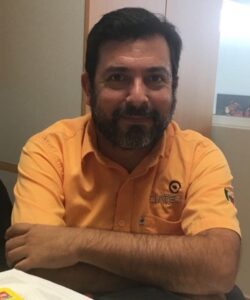
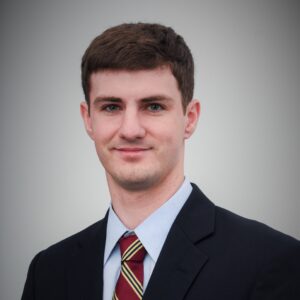
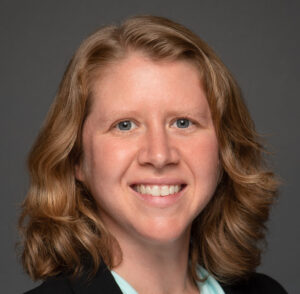
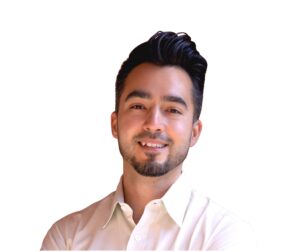
Aaron Schaller is a molecular biologist and entrepreneur with 10 years of experience in microbiology, molecular and cell biology, and immunology/virology. In May 2020 he co-founded MeliBio, Inc., a food company harnessing synthetic biology and medicinal plant science to produce the world’s first real honey without bees. Before starting MeliBio, Aaron completed his PhD at the University of California, Berkeley studying innate immunity in response to viral infection as an NSF graduate fellow. A combined passion for food, environmentalism, microbiology, and entrepreneurship led Aaron to co-found MeliBio, where he currently serves as CTO. Aaron believes that the future of planetary and human health lies in our ability to move away from animal-based food supplies towards more sustainable and logical options, and that microbiology can take us there.
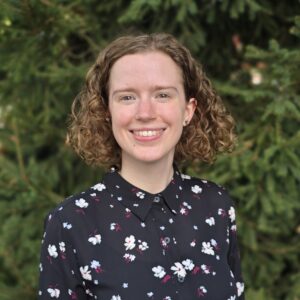
Ryuichi Hirota

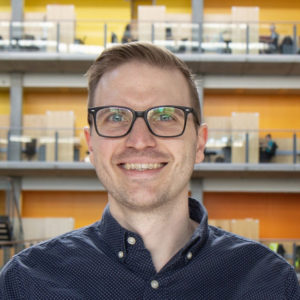
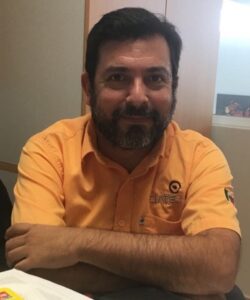
I am interested in the biosafety measure for the safer use of genetically modified bacteria. By controlling bacterial growth and survival using the engineered metabolic pathway for phosphorus, we developed novel biocontainment strategy which is robust, economical, and easy to apply.

Abhilash Patel

3D Cell Culture Online

Our 3D Cell Culture congress incorporates key trends and innovative technologies to accelerate the adoption of 3D models in preclinical research via advanced development, validation and application strategies.

Oligonucleotide Chemistry & Therapeutics Symposium

An intensive 1-day meeting that delves into the latest in oligonucleotides chemistry, process & analytical development, therapeutics, antisense therapy & a meeting place for experts working within cutting-edge oligo research & therapeutic development.

Luis Figueroa

Degree in Biology from the Universidad Veracruzana, Mexico. Master’s degree in Bioethics from the Anahuac University, Mexico. Doctorate in Sciences from the Scientific Research Center of Yucatán A.C., Mérida, Yucatán. Mexico. Postdoctoral fellow at the Donald Danforth Plant Science Center. St.Louis Missouri, United States.
Currently:
-Titular Type A Researcher at the Center for Research and Assistance in Technology and Design of the State of Jalisco A.C. (CIATEJ), Zapopan Headquarters. Department of Industrial Biotechnology, Zapopan, Jalisco, Mexico. Distinction by the National System of Researchers (SNI I).
-General Coordinator of the “National Network of Synthetic Biology of Mexico”.
-Coordinator of the research sub-line “Synthetic Biology” within the Department of Industrial Biotechnology of the Center for Research and Assistance in Technology and Design of the State of Jalisco A.C. (CIATEJ). In the working group, state-of-the-art sequencing (Oxford Nanopore Technologies) is performed in yeast and bioinformatic analysis of omics data (genome, transcriptome, metagenome). Design of transformation systems through synthesis and Gibson assembly. We use CRISPR-Cas9, dCas9 and Cas13, in order to edit or regulate genes to check functionality in cell lines of animals, bacteria, yeast, marine organisms and plants.

Meagan Olsen

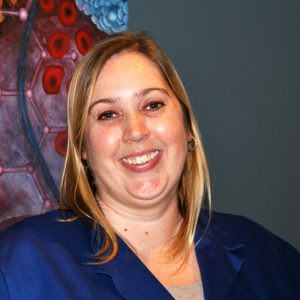
Meagan is a PhD candidate in the Jewett and Karim Labs at Northwestern University. Her research focuses on improving cell-free protein synthesis systems in order to rapidly develop and manufacture medical therapeutics. She completed her B.S. in chemical engineering at the University of Arkansas. Outside of the lab, Meagan enjoys cooking, reading, quilting, and hiking.

Luis Figueroa-Yáñez

Degree in Biology from the Universidad Veracruzana, Mexico. Master’s degree in Bioethics from the Anahuac University, Mexico. Doctorate in Sciences from the Scientific Research Center of Yucatán A.C., Mérida, Yucatán. Mexico. Postdoctoral fellow at the Donald Danforth Plant Science Center. St.Louis Missouri, United States.
Currently:
-Titular Type A Researcher at the Center for Research and Assistance in Technology and Design of the State of Jalisco A.C. (CIATEJ), Zapopan Headquarters. Department of Industrial Biotechnology, Zapopan, Jalisco, Mexico. Distinction by the National System of Researchers (SNI I).
-General Coordinator of the “National Network of Synthetic Biology of Mexico”.
-Coordinator of the research sub-line “Synthetic Biology” within the Department of Industrial Biotechnology of the Center for Research and Assistance in Technology and Design of the State of Jalisco A.C. (CIATEJ). In the working group, state-of-the-art sequencing (Oxford Nanopore Technologies) is performed in yeast and bioinformatic analysis of omics data (genome, transcriptome, metagenome). Design of transformation systems through synthesis and Gibson assembly. We use CRISPR-Cas9, dCas9 and Cas13, in order to edit or regulate genes to check functionality in cell lines of animals, bacteria, yeast, marine organisms and plants.

Maxime Boneza

I am currently a third year PhD Candidate in the Biochemistry Molecular Biology and Biophysics (BMBB) program at the University of Minnesota Twin-Cities. Before I joined the BMBB program, I graduated from Southwestern University, in Georgetown Texas, with a Bachelor of Science in Chemistry in 2016. I then spent 3 years as a Lab Technician for Eco-Services in Houston Texas, which is a subsidiary of PQ Corporation specializing in sulfuric acid manufacturing.

Michaela Jones

Michaela is a postdoctoral researcher in Otto Cordero’s Lab at MIT working to expand the metabolic function of non-model ocean microbes. Prior to starting her postdoc, she completed her graduate work with Aditya Kunjapur at University of Delaware where she developed a new pathway for biosynthesis of non-standard amino acids and engineered a bacterial strain that was dependent on a non-standard amino acid for growth that can persist in soil microenvironments to build towards safely deployable synthetic microbes. As an EBRC board member, she serves as EMUMS chair to help provide academic mentorship to undergraduate and Master’s students interested in engineering biology.

Sanjeeva K Murali

Sanjeeva is a PhD student in Mansell lab at Iowa state university. His research work focuses on developing novel prebiotic-probiotic pairs for gut microbiome engineer. Prior to this, he completed his masters from IIT Guwahati, where he focused on constructing metabolic pathway to convert dairy waste to D-Lactic acid. Currently, he serves as a member of the EBRC SPA Board and works as the liaison to the Policy and International Engagement group. In addition, he also worked as a downstream process engineer for monoclonal antibody purification at Dr. Reddy Laboratories in India. Outside research, he enjoys watching cricket, playing badminton, running etc. 

Edward Kalkreuter

Edward is a postdoctoral fellow in the Ben Shen lab at UF Scripps. His research focuses on developing and utilizing synthetic biology approaches for natural product discovery and biosynthetic engineering, with an emphasis on biosynthetic gene cluster regulation. Prior to his postdoctoral position, he obtained his Ph.D. in the Gavin Williams lab at North Carolina State University where he engineered polyketide synthases and constructed transcription factor-based biosensors.

Slide 2: Space Health Roadmap

EBRC’s newest roadmap: Engineering Biology for Space Health

Slide 3: Metrics and Standards Report

Engineering Biology Metrics and Technical Standards for the Global Bioeconomy

Slide 4: Global Bioeconomy

EBRC Partners in NSF-Funded Initiative to Accelerate Global Bioeconomy

David Riglar

David has been a Wellcome Trust/Royal Society Sir Henry Dale Fellow in the Department of Infectious Disease at Imperial College London since 2019. His lab uses a combination of synthetic biology, imaging and sequencing based approaches to better understand the function of the gut and its microbiota during health and disease. Using this knowledge they are developing innovative technologies, such as living engineered probiotics, to probe and control the mammalian gut environment.

Prior to starting his lab, David undertook his postdoc in Pamela Silver’s laboratory at Harvard Medical School and the Wyss Institute for Biologically Inspired Engineering. As a Human Frontier Science Long-term Fellow and NHMRC/ RG Menzies Fellow, David’s work focussed on using synthetic biology approaches to engineer bacteria as tools to probe the mammalian gut environment.

In 2013, David completed his PhD with Jake Baum and Alan Cowman at the Walter and Eliza Hall Institute (University of Melbourne) in Melbourne, Australia. His PhD research investigated how the parasites responsible for human malaria disease infect red blood cells using cutting-edge imaging platforms.

David holds a Bachelor of Science (Honours) from the University of Melbourne.

Yue Han

Yue is a Ph.D. candidate at the Styczynski lab at Georgia Institute of Technology. Her research is focused on developing computational models for metabolic pathways toward effective strain design. Yue completed her undergraduate studies at Carnegie Mellon University in Chemical Engineering. In her free time, she enjoys watching movies and exploring the city.

Megan McSweeney

Megan is a postdoctoral scholar in the Jewett Lab at Stanford University. She earned her BS in chemical engineering from the University of Rhode Island—with minors in chemistry, mathematics, and music performance—and her PhD in chemical and biomolecular engineering from Georgia Tech. Her PhD work focused on using cell-free expression systems to engineer diagnostic platforms for point-of-care biosensing applications. As an EBRC SPA member, Megan serves as a liaison to the education working group and co-chair for EMUMS.

Bryn Adams

Bryn L. Adams received her Ph.D. in Interdisciplinary Biology from the University of North Carolina at Charlotte in 2009 which focused on the development of microbial based methane-oxidizing biomaterials to mitigate early methane emissions from open landfills. After receiving her doctorate, she joined a collaborative research project, as a National Academy of Sciences postdoctoral fellow, between Edgewood Chemical Biological Center (ECBC) and the Institute of Bioscience and Biotechnology Research at the University of Maryland at College Park focused on the development of non-specific threat agent detection using simple biological sensing and signal transduction pathways. Dr. Adams first joined the US Army Research Laboratory in 2011 as an Oak Ridge Associated Universities postdoctoral fellow where she conducted research into the development of synthetic molecular recognition agents for biosensing and biomaterials and then became a federal scientist at the US Army Research Laboratory in 2014 and the team leader of the Synbio Tools and Chassis Team in 2018. Her research efforts currently focus on developing synthetic biology tools for non-model host bacteria and leveraging synthetic biology to wholly integrate microbes into biohybrid systems. She has published over 15 peer-reviewed manuscripts on a wide range of bacterial biotechnology topics across several disciplines.

Sarah Carter

Dr. Carter is the Principal at Science Policy Consulting LLC where she focuses on societal and policy implications of emerging biotechnologies, including issues of responsible innovation, biosafety, and biosecurity. She is currently focused on the advanced biotechnologies industry, synthetic biology and DNA sequence screening, and international norms for biosecurity. In recent years, she has worked with several U.S. government agencies as well as industry, academia, and non-profit institutions. Previously, she worked in the Policy Center of the J. Craig Venter Institute and at the White House Office of Science and Technology Policy (OSTP). She is a former AAAS S&T Policy Fellow and a former Mirzayan S&T Fellow of the National Academies. She earned her Ph.D. from the University of California, San Francisco and her bachelor’s degree from Duke University.