Xinran Lian

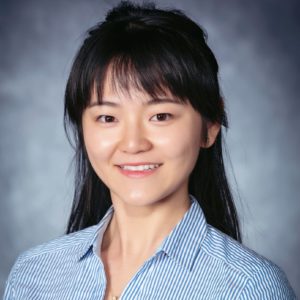
Xinran is a Ph.D. candidate at the University of working under the supervision of Rama Ranganathan and Andrew Ferguson. She works on integrating deep-learning generative models and high-throughput assays to design novel proteins. Outside of research, she is an amateur artist and birder.

Thomas Plocek

Focused on using synthetic biology to manufacture fragrance and flavor ingredients. Managed the project to make the first musk ingredient (Ambrettolide HC Supreme) made from sugar on a commercial basis starting with an intermediate produced in a 135,000 liter fermenter.

Philip Ferro

EBRC Statement of Ethics in Engineering Biology Research

Engineering biology draws on advances in biology, chemistry, computer science, and engineering to understand, design, and construct biological systems and organisms. As with other science and engineering disciplines, engineering biology can impact society in powerful ways; therefore, the ethical, environmental, social, political, security, and safety-related issues arising from associated technologies require thoughtful and ongoing consideration. The Engineering Biology Research Consortium (EBRC) asserts that understanding such issues is a necessary part of research and must be considered from the outset of any project design, continuing through deployment and management of new technologies and/or products.

The EBRC further asserts that practitioners of engineering biology shall

i) seek to create products or processes that benefit people, society, or the environment;

ii) consider and weigh the benefits of research against potential harms;

iii) incorporate equity and justice in the selection and implementation
of engineering biology education, research, development, policy, and commercialization;

iv) seek to openly distribute the results of early-stage research and development;

v) protect the rights of individuals associated with engineering biology, including the freedom of
inquiry of researchers and the free and informed consent of research participants; and

vi) support open communication between engineering biology researchers and the stakeholders who might be
affected by research, development, and the deployment of new technologies.

Scientists and engineers in the engineering biology community must conduct research in a manner that is consistent with these principles in order to remain in good-standing in the community. They must also be cognizant of and communicate possible negative consequences and misuses of engineering biology research. Appropriate safeguards, informed by safety and security best practices, shall be implemented to prevent undesirable outcomes such as the development of biological or chemical weapons, environmental damage resulting from the inadvertent release of certain engineered organisms into the environment, and the use of engineering biology to perpetuate social inequalities.

The EBRC resolves to bring these principles and issues to the awareness of our community along with governmental and non-governmental organizations in the United States and around the world. We support bioethics education and training for researchers and encourage collaboration among scientists, humanists, and engineers to proactively address equity, justice, and environmental risks and benefits. We will advance the principles described here through transparent, democratic self-governance, support for appropriate public and State oversight and review, and the development, publication, and adoption of research best practices.
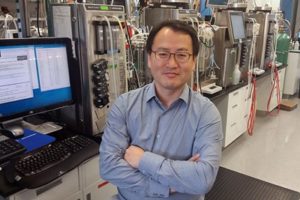
Seongkyu Yoon

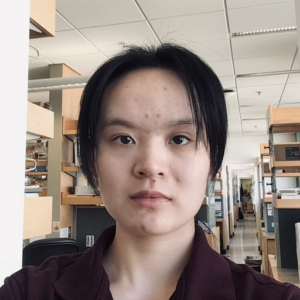
Seongkyu Yoon is Professor in the Francis College of Engineering at the University of Massachusetts (UMass), Lowell. Currently Dr. Yoon is working as a co-director of Massachusetts Biomanufacturing Center, is the UMass site director of the National Science Foundation Industry–University Cooperative Research Centers Program Research Center (NSF-IUCRC), the Advanced Mammalian Biomanufacturing Innovation Center (AMBIC), and the UMass lead for ManufacturingUSA in Biomanufacturing (NIIMBL). His research interests include process system engineering, synthetic and systems biotechnology, regulatory sciences, and biomanufacturing innovation. He is leading a systems and synthetic biology research group while conducting research in systems and synthetic biotechnology, life science informatics, and regulatory sciences with goals to develop an innovative biomanufacturing platform of protein-cell-gene biotherapeutics. Dr. Yoon received his PhD in chemical engineering from McMaster University, Canada, and his MBA from Babson College.

LanzaTech

Skokie, Illinois

Company size: 315 worldwide

Anticipated number of internship positions: 4

Opportunity for remote/virtual internship in 2023: On-site internships strongly preferred, but opportunity for remote computational internships

www.lanzatech.com

S Venkata Mohan

Dr. S. Venkata Mohan is working as a Scientist in CSIR-Indian Institute of Chemical Technology (CSIR-IICT), Hyderabad since 1998. He has done his B.Tech (Civil Engineering), M.Tech (Environmental Engineering) and Doctoral research in engineering discipline from Sri Venkateswara University, Tirupati. He was Visiting Professor at Kyoto University (2005), Alexander von Humboldt (AvH) Fellow at Technical University of Munich, Germany (2001-02) and Kyung Hee International Fellow, South Korea (2018). Dr Mohan research majorly intended to understand and respond to the human-induced environmental change in the framework of sustainability in the interface of environment and bioengineering. He specifically explored the potential of negatively valued waste as viable feedstock for harnessing clean energy and biomaterials by developing novel and sustainable technologies through nexus approach. His main research interests are in the areas of Advanced Waste Remediation, Aciodogenesis, Microbial Electrogenesis, Photosynthesis, CO2 biosequestration, Circular Bioeconomy, Self-regenerative systems and Biorefinery. He also undertook various research projects associated with societal relevance and industrial/consultancy projects in the area of environment and management. He has successfully demonstrated the production of Low carbon (Bio)Hydrogen with simultaneous waste remediation at pilot scale and established a first of its kind waste biorefinery platform. Dr Mohan authored more than 350 research articles, 60 chapters for books, edited 4 books and has 9 patents. His publications have more than 18,900 citations with an h-index of 75 (Google Scholar). He has guided 27 PhDs, 2 M.Phils and more than 100 M.Tech/B.Tech/M.Sc students.

Dr Mohan is recipient of the coveted ‘Shanti Swarup Bhatnagar (SSB) Prize’ for the year 2014 in Engineering Sciences from the Government of India. He also received several awards and honors, which include, ‘DBT-Tata Innovation Fellow 2018’ by Department

Renee Wegrzyn

Renee is a Vice President of Business Development at Ginkgo Bioworks. Prior to Ginkgo, she was Program Manager in the Biological Technologies Office (BTO) of the Defense Advanced Research Projects Agency (DARPA), where she leveraged the tools of synthetic biology and gene editing to enhance biosecurity, support the domestic bioeconomy, and outpace infectious disease. Her DARPA portfolio included the Living Foundries: 1000 Molecules, Safe Genes, Preemptive Expression of Protective Alleles and Response Elements (PREPARE), and Detect it with Gene Editing (DIGET) programs. Prior to joining DARPA as a PM, Renee led teams in private industry in the areas of biosecurity, gene therapies, emerging infectious disease, neuromodulation, synthetic biology, and diagnostics. Renee holds a PhD and BS in Applied Biology from the Georgia Institute of Technology, was a Fellow in the Center for Health Security Emerging Leaders in Biosecurity Initiative (ELBI), and completed her postdoctoral training as an Alexander von Humboldt Fellow in Heidelberg, Germany.

EBRC SPA Government and Science Policy Virtual Career Panel and Networking Session

EBRC SPA Government and Science Policy Virtual Career Panel and Networking Session

Date: Thursday, October 15, 2020
Time: 1:00pm – 2:00pm EDT/ 10:00am – 11:am PDT

Register Here

The EBRC Student and Postdoc Association (SPA) is hosting a virtual Government and Science Policy career panel and networking session to provide graduate students and postdocs with insights into government and policy careers, with an emphasis on how to enter this space from a science PhD background. This event will consist of a 30 min moderated Q&A panel followed by an optional 30 min networking session. Participants will indicate whether they would like to attend the networking session portion of the event and rank their networking session panelist preference on the registration form. The networking session will be capped on a first-come, first-serve basis, with priority given to existing Student and Postdoc Association members. If you are interested in joining the EBRC SPA, please find the application form here.  If you elect to participate in the networking session, you will be notified in the days leading up to the event regarding which panelist’s networking session you will be attending (space permitting).


Virtual Workshops – Technical Roadmap For Materials Science + Engineering Biology

EBRC – with support from the Division of Materials Research at NSF – invites you to contribute to a 20-year technical research roadmap for the convergence of materials science and engineering biology.

The roadmap is currently in the final drafting stage and we need experts to help continue to define and describe an ambitious future for basic research and development at the intersection of materials science and synthetic/engineering biology. At a time like this, we believe that it is more important than ever for scientists to help guide policymakers and funding agencies in how to best support scientific research, and technical roadmaps are a highly-impactful way to do that.


Registration is by invitation only, but anyone interested in attending should email eaurand@ebrc.org for more information.

Friday, October 16 | 11:00am – 2:00pm Eastern / 8:00am – 11:00am Pacific (Registration deadline: October 9)

Registration has closed – please contact eaurand@ebrc.org for more information


Tuesday, October 20 | 2:00pm – 5:00pm Eastern / 11:00am – 2:00pm Pacific (Registration deadline: October 13)

Registration has closed – please contact eaurand@ebrc.org for more information


Monday, October 26 | 12:00pm – 3:00pm Eastern / 9:00am – 12:00pm Pacific (Registration deadline: October 19)

Registration has closed – please contact eaurand@ebrc.org for more information


These virtual writing workshops (3 hours each) are focused on drafting and revising the roadmap. Workshops are organized as follows:

  • Introduction of workshop participants and the current status of the roadmap;
  • Drafting and revising of the roadmap’s technical themes (with a focus on processing, properties, and performance of materials from engineering biology). This includes describing the current state-of-the-art science and engineering and envisioning aggressive milestones for technical achievements that will contribute to the next generation of bio-inspired, bio-enabled, and living materials; and,
  • Brainstorming ambitious and inspiring applications of these new materials and technologies and the technical achievements that will contribute to their realization.

A detailed agenda, participant instructions, and Zoom videoconferencing links will be emailed to registrants prior to each workshop.


Peter Chung

Peter J. Chung is an incoming Assistant Professor of Physics and Astronomy at the University of Southern California, beginning January 2021.

He was previously a Kadanoff-Rice Postdoctoral Fellow at the University of Chicago studying proteins involved in Parkinson’s disease. He received his PhD in physics at the University of California, Santa Barbara and undergraduate degrees in physics and materials engineering at the University of California, Berkeley.

Ying Wang

I am a postdoctoral scholar working in the Northen Group at Berkeley Lab. I received my Ph.D. from the University of California, Santa Barbara in 2019. I am broadly interested in addressing soil health and sustainable agriculture under global change.

Tetsuhiro Harimoto

I received my BS in pharmacology and toxicology from the University of Toronto. Prior to graduate school, I worked at Morgan Stanley as an equity research associate. I joined my current lab in 2016 with the support from the Honjo fellowship (2016-2020) and NIH NCI F99/K00 award (2020-).

EBRC Fall 2020 Retreat

EBRC’s council retreat is by invitation only.

REGISTRATION

Virtual Online Event

REGISTER

MEETING OVERVIEW

You must register to attend the EBRC Fall 2020 Council Retreat.

The agenda will be distributed and posted online here when ready. Please use the timeline below for planning purposes.
Thursday, October 8, 2020:  8:00 AM – 2:00 PM PDT
Friday, October 9, 2020:       8:00 AM – Noon PDT

Nathan Johns

I am originally from Michigan where I earned a B.S. in Microbiology from Michigan State University. Shortly after I worked with Harris Wang and George Church at Harvard University’s Wyss Institute. I did my PhD research in Systems Biology at Columbia University with Harris Wang. My research was focused on developing high-throughput methods for characterizing regulatory sequences in diverse bacterial species. In 2019 I began postdoctoral research with Michael Fischbach at Stanford University where I am developing genetic tools for human commensal bacterial species.

SPA update from the July 2020 EBRC newsletter

In February, the SPA welcomed thirteen mentor-mentee pairs to the EBRC Mentorship Program, the largest cohort yet. The Mentorship Program creates one-on-one partnerships between graduate students and postdocs and professional EBRC members from industry, nonprofits, and government.

During the virtual EBRC Annual Meeting in early April, the SPA hosted an entrepreneurship-focused panel about the Small Business Innovation Research (SBIR) program. The panel featured representatives from NSF, Fannin Innovation Studio, and Lynntech, Inc.

On April 30, the SPA organized an informal virtual Industry Panel and Networking Session with representatives from EBRC member companies LanzaTech, Tierra Biosciences, BASF, and Twist Biosciences. The event included a panel discussion and networking with the panelists about their careers in the biotechnology industry.

The SPA is working on growing it’s interactive members. We encourage graduate students and postdocs to apply for SPA membership here.

Emily Fulk

I am a PhD student in the Systems, Synthetic and Physical Biology program at Rice University, where I develop synthetic biology tools to understand how microbes in soils and marine sediments interact with their environments. I’m jazzed about the potential for synthetic biology to provide new options for low-carbon energy, biodegradable materials, and sustainable agriculture as well as a better understanding of Earth processes. I hope to continue in these fields throughout my career.

While at Rice, I founded a graduate student group dedicated to promoting sustainable practices on campus and have been active in pursuing science communication and science policy experiences. Prior to graduate school, I graduated with a BS in chemical engineering from Northwestern and spent a year working at the National Renewable Energy Lab.

My non-science alter ego specializes in educational explosions at the Houston Museum of Natural Science (where I volunteer as a docent), climbing rocks, and eating lots of snacks.

EBRC Malice Analysis (Virtual) Workshop: September 23, 2020

Register Here

Biology is easier than ever to engineer. While almost all synthetic biologists will use the tools of engineering biology / synthetic biology to understand the world around us and make it a better place, we need to recognize that malicious actors can also use these tools to generate harmful organisms or products. This reality requires researchers to take proactive steps to consider the security implications of their work. The EBRC is holding an interactive virtual workshop to train graduate students and postdocs to assess their own work for potentially malicious utility. We’ll discuss what to do if you identify a potential security issue in your own research or that of your colleagues.

EBRC Malice Analysis (Virtual) Workshop: September 21, 2020

Register Here

Biology is easier than ever to engineer. While almost all synthetic biologists will use the tools of engineering biology / synthetic biology to understand the world around us and make it a better place, we need to recognize that malicious actors can also use these tools to generate harmful organisms or products. This reality requires researchers to take proactive steps to consider the security implications of their work. The EBRC is holding an interactive virtual workshop to train graduate students and postdocs to assess their own work for potentially malicious utility. We’ll discuss what to do if you identify a potential security issue in your own research or that of your colleagues.

EBRC Malice Analysis (Virtual) Workshop: September 18, 2020

Register Here

Biology is easier than ever to engineer. While almost all synthetic biologists will use the tools of engineering biology / synthetic biology to understand the world around us and make it a better place, we need to recognize that malicious actors can also use these tools to generate harmful organisms or products. This reality requires researchers to take proactive steps to consider the security implications of their work. The EBRC is holding an interactive virtual workshop to train graduate students and postdocs to assess their own work for potentially malicious utility. We’ll discuss what to do if you identify a potential security issue in your own research or that of your colleagues.