Internship at National Academies of Science, Engineering, and Medicine

Posted: 06/22/2026

About the Company/Organization:

National Academies of Science, Engineering, and Medicine
Type: Nonprofit/NGO
Size:
https://www.nationalacademies.org/

The National Academies provide independent, trustworthy advice and facilitate solutions to complex challenges by mobilizing expertise, practice, and knowledge in science, engineering, and medicine. We envision a nation and world that rely on scientific evidence to make decisions that benefit humanity. At the core of our work is an unwavering commitment to objectivity, scientific rigor, and truth.


Internship Project/Opportunity

Location: Washington DC
Anticipated internship dates: 2/1/27-7/31/27
Target intern experience level: Graduate Students, Postdocs
https://biotechfellows.nationalacademies.org/

Biotechnology Regulatory Fellowships are six-month, full-time (37.5 hours per week), hands-on professional development fellowships structured to engage Fellows in developing the evidence basis needed to meet future regulatory challenges presented by novel products of biotechnology. The Fellowships, which take place in Washington, D.C., are conducted and administered under the auspices of the Committee on Science, Technology, and Law (CSTL) of the National Academies of Sciences, Engineering, and Medicine.

Fellows will identify new regulatory frameworks for the anticipated cutting-edge products expected to emerge over the next several decades and thereby expand agency options for thoughtful, effective regulation.

Fellows will participate in a series of seminars led by subject-matter experts, conduct horizon-scanning activities to identify potential products of biotechnology that lack existing or conflicting regulatory risk assessment pathways, and identify foci for capstone projects that will be undertaken by pairs of fellows.


For capstone projects, Fellows will:

  • Have opportunities to work with mentors currently or formerly employed at the U.S. Department of Agriculture, the U.S. Environmental Protection Agency, or the U.S. Food and Drug Administration;
    Work with a paired member of their cohort with varied background/expertise (ideally, individuals with scientific, engineering, and/or medical experience will be paired with individuals with legal, policy, and/or regulatory experience);
  • Brainstorm early solutions to project ideas collectively across the cohort to encourage creative thinking and build relationships amongst the multidisciplinary cohort;
  • Establish where/how to communicate final project results to provide greatest value to agencies; and
  • Present capstone projects to the Biotechnology Regulatory Fellowship Advisory Committee, mentors, and agency staff at the end of the fellowship session.
  • They may also have the option to select projects curated and requested by agencies.

As part of the Fellowship, Fellows will have the opportunity to participate in topic-specific activities such as attending informational events inside and outside the National Academies (e.g. workshops and convenings, Congressional hearings, seminars at think tanks, etc.) and relevant industry conferences.

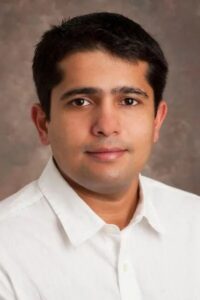
ABHYUDAI SINGH

Prof. Abhyudai Singh earned his bachelor’s degree in mechanical engineering from the Indian Institute of Technology in Kanpur, India. He received master’s degrees in both mechanical and electrical & computer engineering from Michigan State University and a master’s degree in ecology, evolution, and marine biology from the University of California, Santa Barbara (UCSB). After earning his doctoral degree in electrical & computer engineering in 2008, also from UCSB, he completed postdoctoral work in UC San Diego’s Department of Chemistry and Biochemistry. Since 2021, he is a Full Professor in the Departments of Electrical & Computer Engineering, Biomedical Engineering, and Mathematical Sciences at the University of Delaware. His research interests are in modeling and inference of biomedical systems with applications to systems biology, synthetic biology, virology, medicine, and neuroscience.

Stephanie Schroeder

Stephanie Schroeder is the coordinator for the Build-a-Cell research initiative housed at the University of Minnesota. She coordinates a network of researchers focused on the goal of synthesizing cells for real world applications (targeted therapeutic medicine, biofuels for renewable energy, understanding the origin of life). Trained as a marine biologist, she specializes in science education & engagement. She received her BS from the University of Wisconsin—Milwaukee and her PhD from the University of Oregon. While investigating owl limpet territorial behavior, she realized her love of integrating research, education, and equity in STEM. She lives in Minneapolis and explores the city with her spouse and dog. They hike when it’s not too cold and she knits when the temperature dips into the single digits.

Internship at American Institute of Physics

Posted: 06/14/2026

About the Company/Organization:

American Institute of Physics
Type: Nonprofit/NGO
Size:
https://aip.org

The American Institute of Physics (AIP) advances, promotes, and serves the physical sciences for the benefit of humanity. As both a federation of physical science societies and an institute, AIP offers programs, products, and services that empower physical scientists to continue to change our world and advance the frontiers of knowledge.

AIP Member Societies cover a broad range of fields in the physical sciences and collectively represent more than 120,000 scientists, engineers, educators and students in the global physical sciences community. They include the Acoustical Society of America (ASA), the American Association of Physicists in Medicine (AAPM), the American Association of Physics Teachers (AAPT), the American Astronomical Society (AAS), ACA: The Structural Science Society, the American Meteorological Society (AMS), the American Physical Society (APS), AVS: Science & Technology of Materials, Interfaces, and Processing, Optica, and the Society of Rheology (SoR).

In 2020, the AIP Foundation was launched to directly support AIP programs that preserve and celebrate the history of physics, foster support for future generations of physicists, and create a more equitable and accessible field for all.

AIP Publishing is a wholly owned not-for-profit subsidiary of the American Institute of Physics.


Internship Project/Opportunity

Location: Remote
Anticipated internship dates: Fall 2026
Target intern experience level: Undergraduate Students, Graduate Students
https://www.aip.org/aip/awards/aip-civic-science-fellow-discovery-innovation-in-the-physical-sciences

About the job
AIP seeks a Civic Science Fellow to co-develop an initiative to explore how scientific communities identify, support, and advance ideas with the potential to transform the physical sciences. Supported through funding from the John Templeton Foundation and the Civic Science Fellows program, this 18-month fellowship offers a unique opportunity to engage scientists, scientific societies, funders, entrepreneurs, historians, policymakers, and other stakeholders in better understanding how discovery in the physical sciences happens and how institutions can better support it.

The Fellow will be affiliated with AIP’s research team and participate in the national Civic Science Fellows cohort organized by the Rita Allen Foundation.


About the Fellowship

Scientific breakthroughs are largely recognized in hindsight. Yet scientific communities, funding organizations, and research institutions continually make decisions about which ideas, people, and opportunities to support with the goal of facilitating new discoveries.

This fellowship will support exploration of how the physical sciences enterprise recognizes promising opportunities for discovery and how institutions can make better decisions about supporting transformative research in a world of finite resources.

Working with AIP’s federation of scientific societies and a broad network of stakeholders, the Fellow will help investigate questions such as:

  • How do scientific communities identify and nurture promising new ideas?
  • What conditions enable transformative discoveries to emerge?
  • How do scientific societies shape pathways for scientific innovation?
  • What can the physical sciences community learn from philanthropic, entrepreneurial, and private-sector approaches to supporting discovery?
  • How can institutions better recognize and support high-potential ideas and investigators?
  • The project will be co-designed by the Fellow and staff on AIP’s research team. Potential activities may include interviews, workshops, stakeholder convenings, landscape analyses, historical and contemporary case studies, and the development of practical frameworks or reports.

The Fellow will have opportunities to engage leaders from scientific societies, philanthropic organizations, industry research laboratories, FFRDCs, universities, government agencies, and other communities that advance scientific discovery.


Who Should Apply

We welcome applicants from a wide range of backgrounds and experiences.

Potential fields include:

  • Science policy
  • Science and technology studies
  • History of science
  • Sociology of science
  • Innovation studies
  • Entrepreneurship and innovation ecosystems
  • We are particularly interested in candidates who enjoy working across disciplines and sectors, connecting diverse forms of expertise, and exploring how scientific discovery and innovation occur.


Qualifications

Successful candidates will typically demonstrate:

  • Excellent written and verbal communication skills.
  • Experience conducting research, analysis, synthesis, evaluation, or related work.
  • Ability to engage effectively with diverse stakeholders and communities.
  • Experience organizing conversations, workshops, interviews, collaborations, or other forms of collective inquiry.
  • Interest in science, innovation, research culture, philanthropy, or science policy.
  • Ability to work independently and manage complex projects.
  • There are no specific degree requirements for this fellowship. We welcome applicants from academic, nonprofit, philanthropic, policy, and industry backgrounds.


Fellowship Structure

The fellowship term is 18 months, beginning in September 2026.

The Fellow will devote approximately 75 percent of their time to the fellowship project with AIP’s research team and 25 percent of their time to participation in the Civic Science Fellows cohort, including learning activities, peer coaching, virtual convenings, and other professional development opportunities.

Over the course of the fellowship, the Fellow will develop at least one substantial work product that contributes learning both to AIP and to the broader civic science community. This may take the form of a report, framework, convening series, toolkit, pilot initiative, public resource, or other contribution developed through the fellowship.


Benefits

  • Fellowship stipend: $7,000 per month, for 18 months, with an additional stipend of $600 a month for benefits.
  • Initial allowance of $3,000, which can be used for expenses in support of the fellowship.
  • Support for approved travel and fellowship-related activities.
  • Participation in the national Civic Science Fellows learning network.
  • Mentorship from AIP staff and access to leaders across scientific societies, philanthropy, science policy, and research communities.

The fellowship may be completed remotely, although candidates located in the Washington, DC region will have opportunities for in-person engagement with AIP staff and partners, including access to the Niels Bohr Library & Archives (NBLA), one of the world’s leading collections documenting the history of modern physics, astronomy, and geophysics.


How to Apply

Applicants should submit the following two documents together as a single PDF in an email attachment to Judith Mulvey jmulvey@aip.org . For best consideration, applications should be submitted by July 9th, but applications will continue to be accepted until the fellow is selected.

A cover letter describing their interest in the fellowship, relevant experience, and what they hope to learn or contribute through the opportunity.

A resume or curriculum vitae, which includes full contact information (name, full address, email address, and phone number).


About AIP

AIP advances, promotes, and serves the physical sciences for the benefit of humanity. Through its federation of scientific societies, research programs, history initiatives, and public policy activities, AIP helps strengthen the physical sciences enterprise and support positive change across the scientific ecosystem.


About the Civic Science Fellows Program

The Civic Science Fellows program is building a network of leaders committed to ensuring that all people shape and benefit from science, technology, and innovation. Fellows and host organizations work together to develop new approaches that connect science, communities, and public decision-making while contributing to a growing national community of learning and practice.

Contact: Judith Mulvey Email

Georgia Life Sciences Summit

The Georgia Life Sciences Summit brings together leaders from across biotechnology, medical technology, research, manufacturing, and investment to showcase Georgia’s emergence as a national leader in life sciences innovation. As the industry’s premier convening in the state, the Summit highlights Georgia’s growing strengths in biotech, medtech, advanced therapeutics, and translational research while positioning the state as the scale-up manufacturing hub of the Southeast. Through high-impact programming and networking, the Summit explores how Georgia is advancing discovery, accelerating commercialization, and building the infrastructure, workforce, and ecosystem needed to lead the future of life sciences manufacturing and innovation.

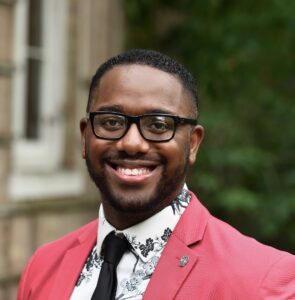
Rodney Eric Williams

Rodney Eric Williams is a Science Policy Postdoctoral Fellow at the Engineering Biology Research Consortium (EBRC). Prior to EBRC he briefly served as a Postdoctoral Research Fellow in the Department of Molecular Microbiology and Immunology at the Johns Hopkins Bloomberg School of Public Health. He completed his PhD in Neuroscience at the Johns Hopkins University School of Medicine with Dr. Diane E. Griffin. His research focused on investigating the cellular and molecular mechanisms that drive neurological dysfunction during mosquito-borne viral infections to identify potential therapeutic targets.

Outside of the lab at Hopkins, Rodney served as president of the Johns Hopkins Medicine Graduate Student Association, as a Johns Hopkins Science Policy Fellow, and as a Graduate Policy Advisor to the Office of the Provost. He also served as a Howard Garrison Advocacy Fellow with the Federation of American Societies for Experimental Biology (FASEB).

When he is not working, Rodney loves to explore the outdoors, go for walks around the water, and attend the symphony.

EBRC 2026 Annual Meeting

Agenda

Program Book


Our 2026 Annual Meeting will be held June 2-3, 2026 at North Carolina State University in Raleigh, NC!

The EBRC Annual Meeting provides an opportunity for the engineering biology community to come together to engage on matters important to advancing engineering biology. In addition to inspiring research talks and poster presentations, EBRC’s meeting holds time to consider the larger engineering biology research ecosystem in which we all exist and work together to move the field forward. We invite you to join us to present and discuss your latest research, build relationships with your colleagues in academia, industry, and government, and advance the member-driven work of EBRC. Attendance at the Annual Meeting is open to all EBRC members, their lab members, employees of institutional members, and all SPA members. We also warmly welcome all those in the Research Triangle with an interest in engineering biology to join us. Thank you to our hosts at the Genetic Engineering and Society (GES) Center at North Carolina State University!

This year, we are excited to celebrate EBRC’s 10-year anniversary! Additional activities, sessions, and social mixers will also be held throughout the Research Triangle on June 1, 2026, the day before the meeting; look forward to more information about these industry- and SPA-dedicated events coming soon!

New session! Before the main meeting kicks off, please join us for “Advancing the Bioeconomy Industry Ecosystem” on June 1 from 3:30-7:30pm ET to continue to celebrate EBRC’s 10 Year Anniversary. The event will bring together representatives from government and venture capital alongside EBRC’s academic and research community. The session will explore how promising ideas in engineering biology move from the lab into the real world across the broader industry ecosystem, featuring a keynote style talk, moderated panel discussion, 3-minute flash talks, and close with a social mixer. Space is limited, so sign up here (separate link from normal registration)! (If you’re interested in giving a flash talk, please indicate so on the form.)

Registration:
The deadline to register has passed. To confirm your spot and offset some of the meal costs, there will be a nominal fee. If this fee is prohibitive for you or your lab members, please email helix@ebrc.org.

Abstract submissions for talks and posters are now open. Abstract submission is separate from registration. Submissions from all attendees are welcome! We encourage you to submit your latest, ongoing work as a mechanism to engage in community dialogue. Abstracts for talks are due March 30, 2026 and abstracts for posters are due on May 11, 2026.

IMPORTANT DATES:
March 30, 2026: Last day to submit talk abstracts
April 20, 2026: Notification of talk selection
April 29, 2026: Registration closes for those with EBRC-supported travel
May 1, 2026: Deadline for hotel and travel arrangements by EBRC
May 14, 2026: Registration closes
May 11, 2026: Last day to submit poster abstracts

Annual Meeting Venue:
Talley Student Union
North Carolina State University
Raleigh, NC

Meeting Hotel:
*Update* — Our block of rooms at the Residence Inn Raleigh Downtown (616 S. Salisbury Street, Raleigh, NC 27601) is now fully booked. We suggest you reach out to these nearby hotels if you need accommodations: Raleigh Marriott City Center, Sheraton Raleigh Hotel, Homewood Suites by Hilton Raleigh Downtown, and Tempo by Hilton Raleigh Downtown.

Transportation:
More information coming soon!

Travel Support:
We anticipate covering airfare and hotel expenses for:

  • Individuals selected as speakers from academia, including students and postdocs;
  • EBRC Academic Council members selected as Session Chairs; and
  • Student and Postdoc Association Board members who present a poster or are selected as speakers.

Individuals who will receive travel support will be contacted by email to complete their flight bookings. The meeting will conclude at 5:00PM on Wednesday, June 3 and we encourage those receiving travel support to find an evening flight if at all possible. Please contact helix@ebrc.org if you anticipate needing Sunday and/or Wednesday night accommodations. Please also note that travel support does not include the confirmation/meal fee. Email helix@ebrc.org if this fee is prohibitive. Please see EBRC’s full travel policy here.

We encourage you to make your travel plans early, as we will cap the level of airfare support provided by EBRC. Airfare must be booked by May 1 to be eligible for EBRC support.

Health and Safety:
We are committed to hosting a safe event. We will be closely watching CDC recommendations in addition to all relevant local and state guidelines leading up to the Meeting and make any changes necessary for health and safety.

Dress Code:
The EBRC Annual Meeting does not have a dress code. EBRC values diversity and individual expression — we encourage participants to come as they are and wish to present themselves to the world.