John Glass

John Glass

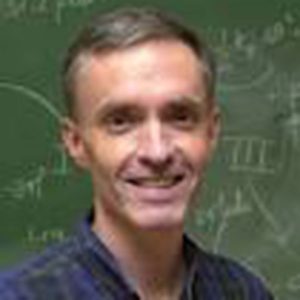
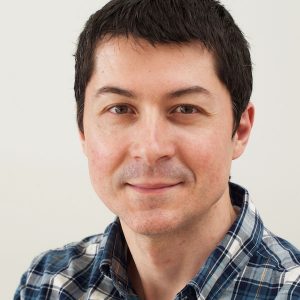
Dr. John Glass is a Professor and leader of the J. Craig Venter Institute (JCVI) Synthetic Biology and Bioenergy Group. His expertise is in molecular biology, microbial pathogenesis, RNA virology, and microbial genomics. Glass is part of the Venter Institute team that created the first bacterial cell with a chemically synthesized genome and a bacterial cell with a synthetic genome encoding only the essential gene set needed for life. In reaching this milestone the Venter Institute scientists developed the fundamental techniques of the new field of synthetic genomics including genome transplantation and genome assembly. Glass was also leader of the JCVI project that rapidly made synthetic influenza virus vaccine strains in collaboration with Novartis Vaccines and Diagnostics, Inc. and Synthetic Genomics, Inc. At the JCVI he has also led the bacterial outer membrane vesicle based vaccine, genome transplantation, and Mycoplasma genitalium minimal genome projects, and projects studying other mycoplasma and ureaplasma species. Glass and his Venter Institute colleagues are now using synthetic biology and synthetic genomics approaches developed at the JCVI to create cells and organelles with redesigned genomes to make microbes that can produce biofuels, pharmaceuticals, and industrially valuable molecules. Glass is an adjunct faculty member of the University of Maryland at College Park Cellular and Molecular Biology Program, one of the founding members of the Build-A-Cell program to create synthetic cells, and member of the Global Viral Network Scientific Leadership Board.

Prior to joining the JCVI, Glass spent five years in the Infectious Diseases Research Division of the pharmaceutical company Eli Lilly. There he was a member of the hepatitis C virology group and a microbial genomics group (1998-2003). There Glass was part of the Lilly and Vertex Pharmaceuticals Inc. team that developed Incivek, one of the first drugs to cure hepatitis C virus.
Glass earned his undergraduate (Biology) and graduate degrees (Genetics) from the University of North Carolina at Chapel Hill. His Ph.D. work was on RNA virus genetics in the laboratory of Gail Wertz. He was on the faculty and did postdoctoral fellowships in the Microbiology Department of the University of Alabama at Birmingham in polio virology with Casey Morrow and mycoplasma pathogenesis with Gail Cassell (1990-1998). On sabbatical leave in Ellson Chen’s lab at Applied Biosystems, Inc. (1995-1997) he sequenced the genome of Ureaplasma parvum and began his study of bacterial genomics.
Emma Frow

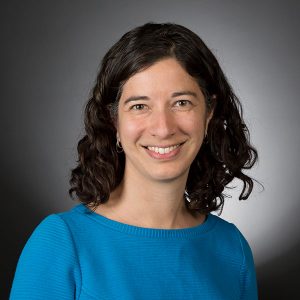
Emma’s research and teaching activities focus on the governance of emerging biotechnologies, especially synthetic biology and biological engineering. She started her research life as a bioscientist, completing a PhD in biochemistry at the University of Cambridge, and then re-trained in the field of science & technology studies (STS) at the University of Edinburgh and Harvard’s Kennedy School of Government. Her current faculty position at Arizona State University is a joint appointment between the School for the Future of Innovation in Society and the School of Biological & Health Systems Engineering, which allows her to straddle the worlds of science policy and bioengineering. Emma has been studying the field of synthetic biology for a decade now, working on a variety of social scientific and interdisciplinary projects in Europe and the US. She has specific research interests in the relationship between engineering and biology, and in the standards and infrastructures (physical, digital, social) being designed to support the development of this field. She sees standards and infrastructures as tools of governance, and is interested in identifying the values, design choices and visions of the future that get built into new infrastructures for biotechnology.

Andrew Ellington

The Ellington lab works on using synthetic biology to augment organismal chemistry, generating expanded genetic alphabets and genetic codes. In addition, we attempt to developing orthogonal control systems for a variety of organisms that allow us to readily lay in new instruction sets that can operate on top of normal metabolism. Between these innovations, it has proven possible to develop and produce novel biomaterials, with the ultimate goal of being able to direct the evolution of materials properties.

Mary Dunlop

Mary Dunlop is an Associate Professor of Biomedical Engineering at Boston University with additional appointments in Molecular Biology, Cell Biology & Biochemistry and Bioinformatics. She graduated from Princeton University with a B.S.E. in Mechanical and Aerospace Engineering and a minor in Computer Science. She then received her Ph.D. from the California Institute of Technology, where she studied synthetic biology with a focus on dynamics and feedback in gene regulation. As a postdoctoral scholar, she conducted research on biofuel production at the Department of Energy’s Joint BioEnergy Institute. Her lab engineers novel synthetic feedback control systems and also studies naturally occurring examples of feedback in gene regulation. In recognition of her outstanding research and service contributions, she has received many honors including a Department of Energy Early Career Award, a National Science Foundation CAREER Award, and the ACS Synthetic Biology Young Investigator Award.

Maitreya Dunham

The Dunham lab uses synthetic biology, evolution, and genomics to understand how genome variation works in yeast and humans. In service of this goal, we also build tools, both physical devices for continuous culture and DNA gadgets for yeast genetics.

Douglas Densmore

Douglas Densmore

Lydia Contreras

Dr. Lydia M. Contreras is an Associate Professor (and Laurence E. McMakin, Jr. Centennial Fellow) of Chemical Engineering at the University of Texas-Austin; she is also a member of the Institute of Cell and Molecular Biology. She teaches Introduction to Chemical Engineering Computing, Thermodynamics, Introduction to Chemical Engineering Analysis, and Fundamental and Applications of Cellular Regulation. Dr. Contreras obtained a B.S.E. in Chemical Engineering from Princeton University, where she graduated Cum Laude. She completed her PhD in Chemical Engineering from Cornell University, focusing on engineering bacterial cells for improved production of therapeutic proteins. As a postdoctoral associate at the Wadsworth Center (New York State Department of Health), she focused on understanding mechanisms of infection in pathogenic bacteria. She began her career at the University of Texas-Austin in 2011, where she leads a research team focused on RNA biochemistry to study gene regulation mechanisms associated with stress-responses for applications in health and biotechnology. She has received several academic, teaching and service awards including: Biotechnology and Bioengineering Daniel I.C. Wang Award, Department of Thrust Reduction Agency (DTRA) Young Investigator, Airforce Office of Scientific Research Young Investigator, NSF CAREER, Health and Environmental Institute (HEI) Walter E. Rosenblith New Investigator, Norman Hackerman Advanced Research Program (NHARP) Early Career, Society of Hispanic Professional Engineers (SHPE) Young Investigator Award, and an Innovative Early-Career Frontiers of Engineering Educator. She lives in Austin, Tx with her husband Chris and is a proud mom to boy-girl twins.

James Collins

Yvonne Chen

Yvonne Chen

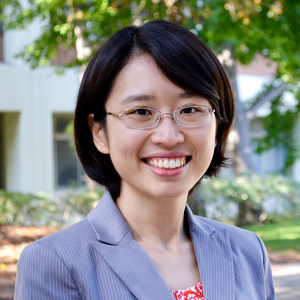
Dr. Yvonne Chen is an Associate Professor of Microbiology, Immunology, and Molecular Genetics at the University of California, Los Angeles. She is also a faculty, by courtesy, in the Department of Chemical and Biomolecular Engineering. The Chen Laboratory focuses on applying synthetic biology and biomolecular engineering techniques to the development of novel mammalian-cell systems. The Chen Lab’s work on engineering next-generation T-cell therapies for cancer has been recognized by the NIH Director’s Early Independence Award, the NSF CAREER Award, the Hellman Fellowship, the ACGT Young Investigator Award in Cell and Gene Therapy for Cancer, the Mark Foundation Emerging Leader Award, and the Cancer Research Institute Lloyd J. Old STAR Award. Prior to joining UCLA in 2013, Yvonne was a Junior Fellow in the Harvard Society of Fellows. She received postdoctoral training at the Center for Childhood Cancer Research within the Seattle Children’s Research Institute, and in the Department of Systems Biology at Harvard Medical School. Yvonne received her B.S. in Chemical Engineering from Stanford University and her Ph.D. in Chemical Engineering from the California Institute of Technology.

Matthew Chang

Michelle Chang

James Carothers

The Carothers Research Group at the University of Washington creates design-driven approaches for synthetic biology that integrate quantitative RNA aptamer device design, dynamic control system modeling, and CRISPR-Cas network engineering to investigate questions about biological design and develop technologies for bio-based chemical synthesis. Previously, Carothers was a postdoctoral fellow with pioneering synthetic biologist Jay D. Keasling at UC Berkeley. Carothers earned a Ph.D. at Harvard University with Nobel Prize winner Jack W. Szostak. He has a B.S. in Molecular Biophysics and Biochemistry from Yale. His work has been recognized by the UW Presidential Innovation Award and the Alfred P. Sloan Research Fellowship, and supported by the NSF, DOE and private industry.  He has been awarded the UW College of Engineering Junior Faculty Award and is a Dan Evans Career Development Professor.

Adam Arkin

Virginia Ursin

Richard Johnson

Richard Johnson

Rick Johnson focuses on integrating policy and law with science, engineering, Big Data, and biomedicine to drive research and innovation and to enable problem-oriented solutions to global challenges. His current interests include: (1) synthetic biology, the engineering of biology, and the industrialization of biology; (2) the bioeconomy and next-generation production economy; (3) neuroscience and brain health, especially Alzheimer’s; and (4) policy issues for convergence, international S&T, and Big Data. Rick is the CEO and founder of Global Helix LLC, a thought leadership and innovative strategic positioning firm. After 30 years, Rick retired as Senior Partner at Arnold & Porter LLP in Washington, D.C., where he represented many of the leading research universities, foundations, and innovative multinational companies about enabling basic research, international collaborations, innovation strategies, and public-private partnerships through innovative approaches to law and policy. Johnson is a member of the Board on Life Sciences at the National Academy of Sciences (NAS) and the NAS Synthetic Biology Leadership Forum, and serves as Chairman of the NAS Bioeconomy initiative. He is a member of several other NAS initiatives: biomedical innovation and precision medicine; convergence and next-generation infrastructures; synthetic biology and the industrialization of biology; the BRAIN initiative; and the intersection of science and security issues. He also serves as the Chairman of the BIAC Technology & Innovation Committee at the OECD, and he recently was named one of the 14 global members of the new OECD Global Advisory Council for Science, Technology, and Innovation. In addition, Rick is the Chairman of Brown’s Biology & Medicine Council and is a member of the boards for EBRC, the Stanford BioFab and BioBricks Foundation, and the iGEM Foundation for global education. For many years, Rick served on the MIT Corporation Committee, and numerous university-industry boards. In addition to receiving his Juris Doctor degree from the Yale Law School where he was Editor of the Yale Law Journal, he received his M.S. from the Massachusetts Institute of Technology where he was a National Science Foundation National Fellow and MIT distinguished young scholar, and his undergraduate degree with highest honors from Brown University.

Ute Galm

Ute Galm is a molecular microbiologist with 10+ years of experience in strain engineering, synthetic biology, and industrial biotechnology and is the Vice President of Enzyme and Strain Development at Curie Co. After more than a decade in R&D and product development, Ute believes it is critical to wisely use what nature provides to us in the development of sustainable solutions to protect humanity and to preserve our planet. Before joining Curie Co, Ute was an Associate Director at Zymergen, a company that integrates automation, machine learning, and genomics to rapidly accelerate the pace of scientific advancement. Prior to joining Zymergen, Ute worked as a scientist and group leader at Dow AgroSciences on the development of fermentation derived insecticide and fungicide products. She graduated from the University of Tuebingen, Germany with a PhD degree in Pharmaceutical Biology and received her postdoctoral training at the University of Wisconsin at Madison. Ute is passionate about all aspects of using biology to develop sustainable solutions for human health and other market applications. Ute can be reached at ute.galm@curieco.com.

James Diggans

James Diggans is Vice President of Policy and Biosecurity at Twist Bioscience, a DNA synthesis company based in San Francisco, CA. He holds a PhD from George Mason University in Computational Biology and Bioinformatics and has worked in target discovery, molecular diagnostic development and biodefense including five years leading the computational biology group at the MITRE Corporation. His research has included methods for efficient detection of biological weapons release, machine learning-based cancer diagnosis, and novel algorithmic approaches to discerning intent in oligonucleotide-length DNA synthesis requests. At Twist, his group builds cloud-based bioinformatics systems for effective biosecurity screening and analysis of next generation sequencing data to power silicon-based DNA synthesis at record scale.

Mark Styczynski

Mark Styczynski is a professor at the Georgia Institute of Technology in the School of Chemical & Biomolecular Engineering. At Georgia Tech, he is currently the director of the BioEngineering interdisciplinary graduate program. He founded and was the first president of the Metabolomics Association of North America (MANA) and is currently the academic chair of EBRC’s Education and Engagement working group. His research is in synthetic and systems biology, with a significant emphasis on the development of biosensors and diagnostics.

Pamela Silver

Pamela Silver

Vincent Noireaux

Vincent Noireaux got his B.Sc. in applied physics at the University of Tours (France) in 1994. In 1995 he moved to Paris for physics graduate school at the University Paris 11 (Orsay). He did his PhD at the Curie Institute (Paris, 1996-2000) in biological physics in the laboratory of Jacques Prost on the motion of the bacterium Listeria. He studied the actin cytoskeleton mechanisms involved in cell motility and learned the biology related to this project in the laboratory of Daniel Louvard. In 2000 he joined the laboratory of Albert Libchaber at the Rockefeller University in New York City where he spent five years as a postdoc. He used cell-free expression systems to construct elementary gene networks and synthetic cell systems. In 2005, he moved to the University of Minnesota where he is pursuing his work in synthetic biology using cell-free expression. His research consists of constructing and characterizing biochemical systems by executing synthetic DNA programs in vitro, from simple regulatory elements to synthetic cells.