Timothy Kelliher

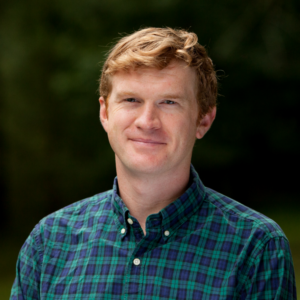
Tim Kelliher is the Roberts and Mikhail Distinguished Chair in Plant Genome Editing at North Carolina State University. He has a co-appointment in the Department of Entomology and Plant Pathology and the Department of Horticultural Science. Tim leads the Genome Editing Center, which is focused on creating novel traits in row crops, specialty crops, and ornamental species. The goal is to shorten the timespan to deploy genome engineering innovations to farmers.

He holds a Bachelor’s degree in Biology from Swarthmore College, and a Ph.D. in Biology from Stanford University, where he studied corn plant reproductive biology. He spent the past 12 years at Syngenta leading programs focusing on breeding technologies and genome editing trait development for Syngenta Seeds, serving as head of Trait and Technology Discovery. In that role he managed teams working on GM and Genome Editing in the US and Beijing.

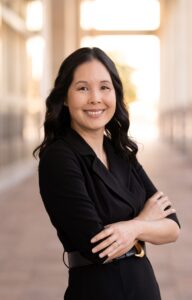
Yan Zhang

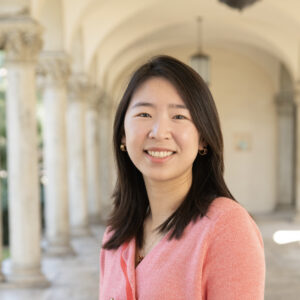
Dr. Yan Zhang is an assistant professor in the Department of Chemical and Biomolecular Engineering at Rice University. Her laboratory develops cell-free gene expression systems that enable the rapid design, construction, and screening of biological parts and systems. By integrating synthetic biology, systems-level characterization, and molecular engineering, the Zhang Lab develops foundational technologies to engineer complex biological functions outside living cells, with applications in human health, agriculture, and distributed biomanufacturing. Current research areas include host-independent bacteriophage engineering and the development of programmable biological systems for therapeutic and agricultural applications.

Prior to joining Rice, Dr. Zhang received her B.S. in Chemical Engineering from Cornell University and her Ph.D. in Chemical and Biomolecular Engineering from the Georgia Institute of Technology. She completed her postdoctoral training in the laboratories of Richard Murray and William Clemons at the California Institute of Technology, where she developed cell-free platforms for biological design and bacteriophage engineering. Her work was supported by the NIH MOSAIC K99/R00 Pathway to Independence Award. At Rice, her research program is supported by the Cancer Prevention and Research Institute of Texas (CPRIT) New Faculty Recruitment Award, which supports the development of next-generation biological technologies for cancer prevention and treatment.

Microbiological Assay Scientist, Mining

About the company
Fieldstone Bio is an early-stage synthetic biology company focused on environmental monitoring. Our technology, which originated at MIT, combines microbiology, synthetic biology, artificial intelligence, and advanced imagery to solve key challenges in mining, pollution surveillance, and national security.

Position summary
Fieldstone Bio is looking for a highly motivated Scientist to join our Reno, Nevada, Assay Team, where they will work to routinely run established assays for the identification of different metals in mining samples. The successful candidate will independently contribute to sample inventory management and spearhead the execution of established SOP workflows. This is a hands-on, lab-based role that will play a critical role in processing samples and delivering data to customers. This role is an opportunity to independently lead the execution of mining-sample workflow processing. This position will lead the development of Fieldstone’s presence in Reno, Nevada by supporting facility expansions and assay method optimization. The person in this role will report to the Head of Microbiology.

Key Responsibilities:

  • Receipt and organization of mining samples
  • Registration of materials for assay execution
  • Execute cell-based assays to screen for the presence of different metals in mining samples
  • Actively provide feedback on processes and offer solutions for methodology improvements
  • Preparation of assay working materials needed for each week
  • Work collaboratively with the AI Data Team to register and collect data for robust documentation practices
  • Ensure timely delivery of goals for set milestones
  • Document processes, results, and entity registration in an Electronic Lab Notebook (ELN) system

Qualifications:

  • PhD (or equivalent) in Microbiology, Bioengineering, Molecular Biology, or a related field
  • 1+ years’ of experience with assay execution (prior industry experience is strongly preferred)
  • Ability to work independently and manage multiple tasks simultaneously
  • Strong analytical and problem-solving skills
  • Excellent verbal and written communication
  • Diligent record keeper
  • Thrives in a fast-paced lab environment
  • Thrives working independently
  • Some travel to the Woburn, MA office is expected

Fieldstone Bio is committed to building a diverse and inclusive environment. All applicants will be considered without regard to race, color, religion, sex, sexual orientation, gender identity, national origin, protected veteran status or disability.

EBRC Global Forum 4.0 (2027)

This is an invitation-only event.


MEETING OVERVIEW

Following the success of the prior Global Forum events in 2019, 2023, and 2025, EBRC will host the fourth Global Forum on Engineering Biology from February 24-26, 2027 at the Cumberland Lodge in Windsor, United Kingdom. This summit will focus on strengthening international collaboration in engineering biology while addressing emerging scientific, economic, and policy opportunities shaping the global bioeconomy.

During the two day meeting global participants from across government, academia, industry, and nonprofit organizations will convene to exchange perspectives on the future direction of engineering biology and identify areas where international cooperation can accelerate scientific progress, innovation, and responsible stewardship. The Forum is intentionally designed to create an environment that supports candid discussion, relationship building, and the exploration of new collaborative opportunities.

Key agenda topics will include:

  • Updates on national engineering biology strategies, investments, and policy initiatives;
  • Emerging trends in engineering biology research, innovation, and the global bioeconomy;
  • International approaches to governance, standards, and responsible innovation;
  • Opportunities to strengthen cross-border collaboration on research, workforce development, and technology translation.


VENUE

The Forum will take place at Cumberland Lodge in Windsor, United Kingdom. Situated within Windsor Great Park, Cumberland Lodge provides a historic residential conference venue designed to foster thoughtful discussion and collaboration among international leaders. All invited participants will stay on-site at Cumberland Lodge, allowing for continued engagement throughout the meeting and informal networking outside of scheduled sessions.

 

TRAVEL INFORMATION

Participants are responsible for arranging and covering the cost of their travel to and from Windsor, United Kingdom, as well as covering the costs of accommodations. EBRC will coordinate accommodations for all invited guests on-site at Cumberland Lodge for the duration of the Forum. Additional travel guidance, including recommended airports, ground transportation options, and arrival information, will be shared with confirmed attendees in advance of the meeting. Limited travel assistance may be available on a case-by-case basis for participants requiring financial support.


EBRC Global Forum 3.0 (2025)

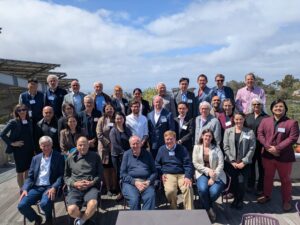
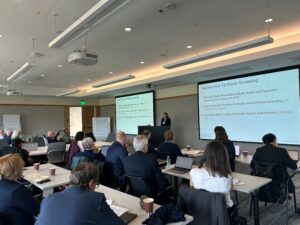
The third EBRC Global Forum for Engineering Biology (EBRC Global Forum 3.0) took place on March 27th and 28th, 2025 at the J. Craig Venter Institute in La Jolla, California. This international summit brought together global leaders from across academia, industry, government, and nonprofit organizations, representing 23 countries, to discuss national strategies around engineering biology, emerging trends in the global bioeconomy, and opportunities for strengthening international collaboration.


Baley Reeves

Baley Reeves has served as NCTM director since 2024. She has 20 years of experience in downstream processing and over 16 years of experience in biomanufacturing workforce training, and leads the NCTM downstream operations team with expertise in the recovery and purification of recombinant proteins, vaccines, and gene therapy products, as well as experience in cGMP manufacturing and process development. Prior to joining NCTM, Baley was a senior scientist at the Biomanufacturing Training and Education Center (BTEC), where she developed and taught courses for biotech industry leaders, regulatory agencies, and the WHO. She has also worked on numerous vaccine-related projects, including a global survey of the vaccine manufacturing landscape with the Bill and Melinda Gates Foundation. Baley holds a Ph.D. in chemical engineering from Princeton University, where she was a National Science Foundation Graduate Fellow. She has authored articles on protein purification in Trends in Biotechnology, Protein Science, Protein Expression and Purification, and Microbial Cell Factories, as well as articles on biomanufacturing training and education published in Chemical Engineering Education.

Cell 2026

Join the global hub for biologics innovation at NextGen Biomed 2026, where the brightest minds in drug discovery and development come together to accelerate life-saving treatments. This transformative event unites six thriving communities on one platform, empowering over 1,000 R&D experts to collaborate, innovate, and deliver breakthroughs sustainably and at scale.