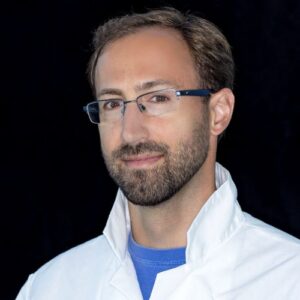
Harmon Bhasin

Harmon is a Member of Technical Staff and Biosecurity Group Lead at LatchBio, where his group works on AI × biosecurity benchmarks, biosecurity audits, and agentic know-your-customer (KYC) screening. His earlier work spans methods development for understanding gene regulation and an untargeted viral metagenomic sequencing pipeline that processes billions of reads. He holds a B.S. in Computer Science from the University of Wisconsin–Madison.

Felicia Wu

Felicia Wu is the John A. Hannah Distinguished Professor of Food Safety, Toxicology, and Risk Assessment at Michigan State University; University Distinguished Professor; and immediate Past-President of the Society for Risk Analysis. She is appointed by Governor Gretchen Whitmer as Chair of the Agriculture and Rural Development Commission for the state of Michigan. Dr. Wu works at the nexus of biotechnology, agriculture, food safety, and nutrition to improve public health. Currently she has five extramural grants with topics ranging from assessing the health risks of foodborne lead, arsenic, and cadmium; improving resilience of food systems against shocks; and reducing presence of mycotoxins, heavy metals, and pathogens in food crops. Dr. Wu is a Member of the Joint FAO/WHO Expert Committee on Food Additives (JECFA), co-chaired the US National Academies of Science, Engineering, and Medicine (NASEM) Committee on Supporting Responsible Innovation of Synthetic Cells, and now serves on the NASEM Food Forum and the WHO Dietary Guidelines Committee. She earned her PhD in Engineering and Public Policy at Carnegie Mellon University, and AB and SM in Applied Mathematics/Medical Sciences at Harvard University.

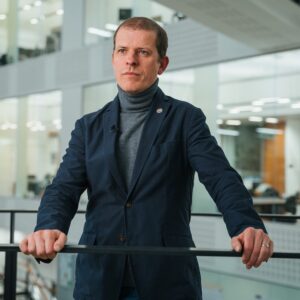
Neil Dixon

Neil Dixon is Professor of Sustainable Biotechnology at The University of Manchester and a recognised leader in engineering biology and sustainable biomanufacturing. His research focuses on developing advanced genetic tools, biosensors, engineered microbial systems and bioprocesses that enable the sustainable production of chemicals and materials from renewable and waste-derived feedstocks. He leads a multidisciplinary research programme at the Manchester Institute of Biotechnology that combines synthetic biology, microbial engineering and bioprocess innovation to address global challenges in climate change, resource efficiency and circular manufacturing.

Professor Dixon has over two decades of experience translating engineering biology research into industrial, environmental and societal impact. His work spans microbial engineering, biosensor design, biomanufacturing and circular bioeconomy innovation, with applications ranging from renewable chemical production to waste valorisation and low-carbon materials. He has led major UK and international research initiatives, including the UK arm of the Global Centre for Circular Economy (CIRCLE), and has built extensive partnerships with industry, government and academic collaborators across multiple continents.

Beyond research, Professor Dixon is active in shaping the future of engineering biology through policy engagement, international collaboration and community leadership. He contributes to national and international research strategy, supports the development of future talent through doctoral training and mentorship, and works to ensure that engineering biology delivers sustainable economic and environmental benefits. His interests align strongly with the Engineering Biology Research Consortium’s mission to advance engineering biology through interdisciplinary research, innovation, responsible development and international collaboration.

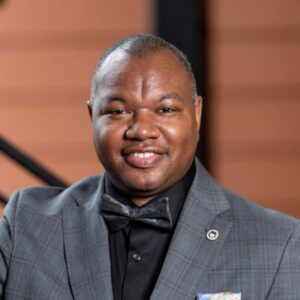
Karl Thompson

Karl Thompson, Ph.D., is a tenured Associate Professor at Howard University whose work focuses on the genetic analysis of bacterial pathogens, microbial genetics, RNA biology, genome engineering, biosafety, and engineering biology. His NIH-funded research examines RNA-mediated regulation of gene expression in bacteria, including the roles of small regulatory RNAs and RNA-binding factors in controlling bacterial physiology. His laboratory also uses gene fusions, site-directed mutagenesis, genome engineering, and sequence-defined variants in protein-coding and noncoding RNA systems to investigate sequence-function relationships.

Dr. Thompson serves as Howard University’s University Biosafety Officer and holds leadership roles in research and graduate education. He previously served as the inaugural Director of the Interdisciplinary Biomedical Science Graduate Program and as Director of the Microbiology Ph.D. Program. He is also developing graduate coursework in synthetic biology, biosecurity, and biotechnology.

His broader work includes participation as a Mid-Career Biosecurity Fellow with the Council on Strategic Risks and service on the National Academies Mirror Biology Planning Committee. His mentoring record includes undergraduate and graduate researchers across biology, microbiology, and engineering-related disciplines, including Howard University Goldwater Scholars.

His interests include strengthening HBCU research capacity in engineering biology, expanding pathways into synthetic biology and biomanufacturing, advancing responsible biotechnology and biosecurity, and connecting foundational research with national security and workforce-development priorities.

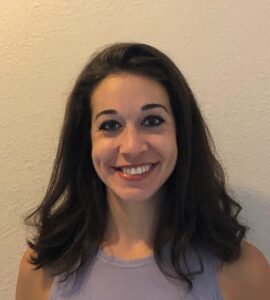
Dennis Mishler

Professor at UT Austin primarily working with undergraduate researchers as part of the Freshman Research Initiative (FRI).

Response to NIH’s Request for Information on Measuring and Rewarding Scientific Impact

Publication Date: August 2026

EBRC’s response to the National Institutes of Health (NIH) Office of Science Policy’s Request for Information on Measuring and Rewarding Scientific Impact.

Public Comment on OMB’s Proposed Rule “Regulation for Federal Financial Assistance”

Publication Date: July 2026

EBRC’s public comment in response to the Office of Management and Budget (OMB)’s proposed rule on Federal Financial Assistance.

2026 Central US Synthetic Biology Workshop

Join us for the 2026 Central US Synthetic Biology Workshop, which will bring together synthetic biology researchers to share their recent research. Registration is free but is required to attend the event.

This meeting is designed to foster conversation across academia, industry, and government to identify research opportunities that will advance the synthetic biology bioeconomy in the Central US. Topics will range from computational design, control theory, and modeling to programming eukaryotes for biomedicine to engineering for environmental systems. A subset of talks will be chosen from abstracts.

Biotechnology Program Coordinator

In this role, you will play a central role in advancing the Biotechnology (BIT) Program and supporting the students, faculty, and partners who make it successful. You will serve as the program expert and a trusted advisor to students, helping them navigate their academic programs, connect with opportunities, and achieve their educational and professional goals.

You will work closely with BIT leadership, faculty, university offices, students, and external sponsors to coordinate courses, monitor student progress, lead communications and events, and support program reporting. You will also lead data analysis and reporting for externally funded training programs, including NSF REU and NIH T32 grants, helping demonstrate program impact and support continuous improvement.

This position offers an opportunity to take ownership of meaningful program activities, build relationships across the university and beyond, and directly shape the student experience and continued growth of a dynamic biotechnology education and training program. This role focuses specifically on BIT program operations and does not oversee ISI-wide education or partnership initiatives.


Key Responsibilities:

Academic Program Leadership

  • Advise BIT undergraduate and graduate students on degree requirements, course planning, enrollment, and academic progression.
  • Coordinate courses, instructors, classrooms, catalog updates, and graduate program activities.
  • Maintain accurate student records and monitor enrollment, progression, and completion.

Data, Reporting & Program Operations

  • Manage program records, databases, calendars, and operational resources.
  • Lead data analysis, longitudinal tracking, and sponsor reporting for BIT programs, including NSF REU and NIH T32
  • Monitor program and budget information and provide leadership with insights to support planning and decision-making.

Communications, Outreach & Events

  • Lead BIT communications, website content, marketing, and outreach to showcase program opportunities.
  • Coordinate seminars, workshops, recruitment activities, visitors, and other program events.
  • Manage announcements, calendars, and communication channels to keep students and stakeholders informed and engaged.

Program Coordination & Support

  • Serve as a primary resource for BIT students, faculty, staff, and partners, helping them navigate program processes and university systems.
  • Coordinate meetings, schedules, presentations, reports, and other activities that support effective program operations.
  • Take ownership of day-to-day program needs, solve problems, and help advance the BIT program’s goals and student experience.

This is a visible, multifaceted position that combines student advising, academic program management, data and reporting, communications, and event coordination. The role is well suited to a proactive, organized professional who enjoys managing varied responsibilities, solving problems independently, and serving as a trusted resource to students, faculty, leadership, and university partners.

Success in this role requires strong communication and organizational skills, attention to detail, sound judgment, and the ability to manage multiple priorities while maintaining a high level of service and accuracy.


Internship at Good Food Institute

Posted: 08/12/2026

About the Company/Organization:

Good Food Institute
Type: Nonprofit/NGO
Size:
http://www.gfi.org/

The Good Food Institute is a nonprofit think tank working to make the global food system better for the planet, people, and animals. Alongside scientists, businesses, and policymakers, GFI’s teams focus on making plant-based and cultivated meat delicious, affordable, and accessible. Powered by philanthropy, GFI is an international network of organizations advancing alternative proteins as an essential solution needed to meet the world’s climate, global health, food security, and biodiversity goals. To learn more, please visit www.gfi.org.


Internship Project/Opportunity

Location: Remote
Anticipated internship dates: Monday, October 5
Target intern experience level: Undergraduate Students
https://job-boards.greenhouse.io/thegoodfoodinstitute80/jobs/8653980002

Scientific Community-Building Fellow
Remote (United States)

Grow the plant-based meat research community

The Good Food Institute (GFI) is a nonprofit think tank working to make the global food system better for the planet, people, and animals. Alongside scientists, businesses, and policymakers, GFI’s teams focus on making plant-based, fermentation-enabled, and cultivated meat delicious, affordable, and accessible. Powered by philanthropy, GFI is an international network of organizations advancing alternative proteins as an essential solution needed to meet the world’s climate, global health, food security, and biodiversity goals.

How you will make a difference

Advancing the science of plant-based meat depends on drawing in the right expertise, yet many of the disciplines best equipped to solve its hardest technical problems are not yet well represented in the field. In this fellowship, you will reach out to professionals in the physical sciences, engineering, and others outside of food science whose expertise is essential to solving the field’s hardest technical barriers. The Scientific Community-Building Fellow will be responsible for:

Creating an outreach strategy: Working closely with the Senior Scientific Partnerships Manager to create an outreach strategy for engaging critical and underrepresented disciplines in plant-based meat research — e.g. how we reach them, what we offer, and how we bring them into the ecosystem. Understanding the core scientific and technical concepts (e.g., in an academic research paper) of plant-based meat research and translating them into the language of other disciplines.
Mapping key disciplines, individuals, and forums: Creating a database of people, disciplines, and societies and identifying opportunities for GFI to have a presence at scientific forums where these stakeholders gather.

Building outreach materials: Developing the groundwork for relationship-building with individuals and academic departments — i.e., identifying target universities and department heads, and assembling the briefing materials, talking points, and persuasive, audience-tailored toolkit. Assessing opportunities to improve upon GFI’s existing outreach materials and tools, and implementing those recommendations.

Supporting outreach and engagement: Coordinating outreach to priority stakeholders, scheduling and facilitating meetings or symposia as identified above, and designing and conducting interviews and/or surveys. With your supervisor, pilot a small number of outreach contacts drawn from your target lists, and fold learnings back into the strategy and toolkit. Synthesizing and presenting findings: Creating a final report and presenting a summary of findings to GFI’s Science and Technology team at the end of the fellowship tenure.
Performing other duties as assigned.

Who we’re looking for

An ideal candidate for the Scientific Community-Building Fellow position will have experience that reflects the following:

  • Fluency in the culture of the physical sciences and/or engineering disciplines, as demonstrated by a Bachelor’s degree or equivalent in the discipline or at least 3 years of academic research.
  • Preference will be given to candidates who are pursuing a Master of Science (MSc) or higher degree in a relevant discipline for plant-based meat research, including but not limited to: physical sciences and engineering such as material sciences, mechanical engineering, soft matter physics, chemical or biological engineering, etc.
  • Ability to effectively translate technical concepts across academic disciplines.
  • Ability to professionally communicate verbally and in writing with students, researchers, and other innovators of both scientific audiences and science-interested lay audiences.
  • Preference for those with experience planning scientific and academic research events, community-building, or society/committee work aimed at bringing scientists together.
  • Strong skills in analyzing and interpreting literature and disparate data sources to draw meaningful conclusions and suggest future directions.
  • Ability to perform independent, self-paced work.
  • A commitment to fostering a work environment that is respectful, supportive, fair, and welcoming to all.
  • Comfort working remotely in a collaborative, caring, and high-performing culture that values inclusion and innovation.
  • Strong support for GFI’s philosophy and mission; demonstrated interest in plant-based & other alternative proteins, public health, environmentalism, climate change, animal protection, or hunger relief.
  • A commitment to GFI’s values: believe change is possible, do the most good we can, share knowledge freely, act on evidence, and invite everyone to the table.
  • GFI wants the best people and is committed to a fair hiring process. We use a third-party anonymizing tool to redact personal information from submitted applications — including name, location, contact details, and several other factors — to increase fairness in our process. We also prioritize an inclusive work environment absent of discrimination and harassment during the application process and after you join the team. Please see our full Equal Opportunity Statement: https://gfi.org/careers/#EEO-and-visa-disclaimer.

If you are passionate about GFI’s mission, think you have what it takes to be successful in this position, and meet many of the job requirements — even if you don’t check all the boxes — please apply. We’d appreciate the opportunity to consider your application.

The fine print

  • Position Type: Temporary, part-time employee
  • Position Term: 15 hours of work a week for 16 weeks
  • Reports to: Bianca Datta, Senior Scientific Partnerships Manager
  • Location: Remote, United States
  • This is a U.S.-based position: In compliance with federal law, all persons hired will be required to verify identity and eligibility to work for any employer in the United States and to complete the required employment eligibility verification form upon hire. At this time, GFI’s policy is not to sponsor or take over sponsorship of employment visas.
  • Pay rate: $7200 and will be paid pro-rata biweekly over the length of the assignment ($30/hour for 16 weeks)

Important dates

Application deadline: Tuesday, August 25

Anticipated start date: Monday, October 5

Application instructions

GFI uses an anonymized hiring system that redacts key identifying personal information from all applications. We are testing this tool as part of an effort to reduce bias in our hiring process. Following these instructions will help to ensure your application is not delayed by a failed redaction.

Where possible, limit the creative formatting of your documents. If the name on your resume is an inserted image file or is styled with large spaces between each letter, for example, the redaction is likely to fail. Colors and designs are OK, but wherever possible, the text itself should just be regular text.

Please use consistent names. It helps to ensure that the name you use in your resume and cover letter is the same as the name you type into the application below. For example, if your name is Jennifer, please sign your cover letter as “Jennifer” rather than “Jenny.”
Submit PDF or .docx files only. Other file formats, like .txt, are likely to fail redaction.

Please do not include personal identifying information in your responses to the application questions. Referencing past education, work experience, and mission-alignment is OK.

If you use smart technology, use it wisely. We want to get to know you — not a robot. Please ensure your application materials reflect your own voice and experience.
Please do not contact the role’s supervisor or any potential member of the hiring team. If you have questions, please email careers@gfi.org.

Contact: Email

Internship at Federation of American Scientists

Posted: 08/12/2026

About the Company/Organization:

Federation of American Scientists
Type: Nonprofit/NGO
Size:
https://fas.org/

After the devastating bombings of Hiroshima and Nagasaki, a group of atomic researchers, deeply concerned about the use of science for malice, created an organization committed to using science and technology to benefit humanity. The group they created – the Federation of Atomic Scientists – soon became the Federation of American Scientists in recognition of the hundreds of scientists across diverse disciplines who joined together to advance science policy and counter scientific misinformation.

Over 75 years later, the Federation of American Scientists is still working to minimize the risks of significant global threats, arising from nuclear weapons, biological and chemical agents, and climate change. The organization also works to advance progress on a broad suite of contemporary issues where science, technology, and innovation policy can deliver dramatic progress, and seeks to ensure that scientific and technical expertise have a seat at the policymaking table. In 2025, we expanded our work to better serve state and local governments, partnering with city halls, universities, and communities to advance innovation where people live and policy is put into practice.


Internship Project/Opportunity

Location: Washington, DC (Hybrid)
Anticipated internship dates: September 30, 2026 – February 28, 2027
Target intern experience level: Graduate Students, Postdocs
https://fas.org/career/ai-safety-pef/

AI Safety Policy Entrepreneurship Fellowship

Part-time fellow
Hybrid
$5,000 stipend

The Policy Entrepreneurship Fellowship (PEF) empowers and guides participants in advancing their policy ideas into practice. During the fellowship (running from September 30, 2026 – February 28, 2027), each Fellow works as a part-time FAS affiliate to advance a policy idea from concept toward implementation by engaging decision-makers, building coalitions, and pursuing opportunities for real-world policy impact.

This particular PEF cohort will concentrate on frontier AI safety issues. Fellows are encouraged to explore various aspects of this field, including:

  • Technical AI Safety: Ensuring frontier AI systems are reliable, aligned with human values, and behave predictably.
  • Governance and policy: Developing frameworks to guide the safe and secure use of frontier AI systems.
  • Risk assessment and mitigation for advanced AI systems.
  • Transparency and accountability: Enhancing these aspects in AI development and deployment.
  • We are especially interested in proposals that tackle themes such as cybersecurity, capability thresholds, risk taxonomies, impact on critical infrastructure, compute governance, model proliferation (open vs. closed systems), as well as general policy design and capacity considerations for governing catastrophic risks stemming from AI. Our expectation is that Fellows will identify a concrete problem related to frontier AI safety and outline a feasible pathway toward policy adoption, whether through legislation, regulation, standards, procurement, institutional design, or other governance mechanisms.

What you’ll be doing

The Policy Entrepreneurship Fellowship is designed as a flexible and open-ended opportunity for you to pursue impact with the help of FAS resources. Rather than focusing solely on research, the Fellowship emphasizes policy entrepreneurship, equipping participants to identify policy windows, build coalitions, engage decision-makers, and move promising ideas toward implementation.

  • Develop and publish a policy memo addressing a specific frontier AI safety challenge, including a practical policy solution and a strategy for engaging the key stakeholders responsible for implementation.
  • Participate in Policy Entrepreneurship training sessions and reading groups designed to deepen participants’ understanding of frontier AI safety, policymaking processes, and how to translate technical expertise into real-world policy impact.
  • Attend an in-person California retreat, tentatively scheduled for November 4–7, 2026, focused on mentorship, community building, and advancing fellows’ policy projects.
  • Attend an in-person capstone event in Washington, DC, tentatively scheduled for the week of February 22, 2027, to launch and disseminate fellows’ policy memos and engage with policymakers, experts, and other key stakeholders.

Selection Criteria

We encourage applications from individuals of all backgrounds. This fellowship is particularly well suited for early- to mid-career professionals with limited experience working directly in public policy who are eager to translate technical or subject-matter expertise into practical policy impact. Ideal applicants may come from technical AI research, academia, think tanks, civil society, industry, law, cybersecurity, national security, or related disciplines.

Applications will be evaluated holistically. We are looking for applicants who demonstrate:

  • A clear understanding of a significant frontier AI safety, security, or governance challenge.
  • A concrete, implementation-oriented policy idea with a credible pathway toward real-world adoption.
  • Thoughtful consideration of the institutions, decision-makers, and stakeholders needed to implement their proposal.
  • An understanding of the practical challenges associated with advancing policy and a willingness to engage constructively with them.
  • Curiosity, initiative, and a demonstrated interest in translating ideas into practical policy impact.

Professional Development

  • Participation in twice-monthly group check-ins. The FAS staff will make every effort to schedule these check-ins at times that accommodate all participants. FAS staff will accommodate select absences (e.g., due to illness, work conflicts, or vacation) given appropriate notice.
  • Mandatory participation in programming provided by FAS
  • The Fellows must commit to dedicating an average of 5 hours/week (20 hours/month) to the fellowship from September 30, 2026 – February 28, 2027, including the mandatory programming outlined above. NOTE: FAS will consider exempting participants from participation in mandatory sessions under exceptional circumstances.

Benefits

  • A $5,000 stipend. The Fellow with the most specific and actionable policy memo and advocacy plan may also receive an additional $1,000 merit award.
  • An additional travel stipend to cover select expenses for the California retreat and Washington, DC, Capstone event.
  • Professional editing of written products developed during the fellowship.
  • Invitations to FAS programming, curated updates on the rapidly evolving federal S&T landscape, and interactive “deep dive” sessions on practical aspects of policy entrepreneurship.
  • Policy-engagement training provided by the staff at the Federation of American Scientists
  • Support from FAS in connecting with key experts and actors.
  • Monthly individual check-ins with a dedicated FAS staff mentor, plus additional meetings and communications as needed.

Applications are due by 11:59 PM ET on September 7th, 2026. Please note that we are only accepting applications to this position submitted via the linked platform. When applying, you will be redirected to our application platform and will need to create an account to submit an application.

Questions? Contact FAS at dayoneproject@fas.org.

Contact: Email

Julia Scordo

Julia Scordo is Senior Program Manager for Special Projects at EBRC. She leads programs that promote safety and security in engineering biology globally. Prior to EBRC, Julia was at the Department of State where she led a team of talented program officers implementing global security assistance programs that countered biosecurity and biotechnology risks to national security. She received her Ph.D. in biomedical sciences from The Ohio State University and completed post-doctoral training in immunology and infectious disease at Texas Biomedical Research Institute in San Antonio.

EBRC 2026 Council Retreat

Register here


The EBRC 2026 Council Retreat will be hosted at the National Academy of Sciences in Washington, D.C. December 10-11, 2025. Join us to identify engineering biology community needs, strategies to address those needs, and to determine EBRC priorities for the coming year in the context of ongoing developments in research, policy, and across the engineering biology ecosystem.

Travel Support and Meeting Hotel:
We anticipate covering airfare and hotel expenses for EBRC Academic Council Members. To book your flights, please contact us at travel@ebrc.org. Please review EBRC’s revised travel policy.

Hotel information will be provided soon.

Health and Safety:
We are committed to hosting a safe event. We will be closely watching CDC recommendations in addition to all relevant local and state guidelines leading up to the Retreat and make any changes necessary for health and safety.

Internship at MIT linQ – Catalyst

Posted: 08/01/2026

About the Company/Organization:

MIT linQ – Catalyst
Type: Other
Size:
https://catalyst.mit.edu/

Catalyst is built on a principled methodology for needs identification and opportunity development, and an organizational model that fosters a vibrant multi-stakeholder community. The Catalyst mission is to increase the potential impact of biomedical research and improve the likelihood that newly developed solutions will address unmet health care needs.

MIT linQ developed the Catalyst methodology to challenge the generally accepted research paradigm in academia by shifting the focus to a clinical needs-driven approach, rather than pushing an existing line of work driven by a need to secure funds, to publish or other objectives different than creating valuable products. The Catalyst model also departs from the classic approach by bringing together multiple disciplines and professions at the outset, so that the work isn’t constrained by the expertise and work of a single lab or institution.


Internship Project/Opportunity

Location: Boston, MA and virtual
Anticipated internship dates: January–early July 2027
Target intern experience level: Graduate Students, Postdocs
https://catalyst.mit.edu/apply/

Begin your journey with a focused engagement of 10–15 hours per week from January through mid-July. During this phase, teams meet weekly online and participate in periodic multi-day, in-person “intensifications” that accelerate collaboration and progress.

Catalyst is a program located in the United States. We anticipate that Fellows will be physically present in the US from January to July 2027. Note that we do not provide sponsorship for visas.

January–early July 2027:

  • January 4, 2027: First meeting
  • Availability to meet during program schedule
    • Weekly sessions: Wednesdays 10:00am – 1:00pm ET
    • Weekly discussion groups: Mondays 10:00am – 11:00am ET
    • Three 3-day working sessions in person at MIT: January 19–21, March 9–11, and May 4–6.
  • June 30, 2027: Final session
  • Compatibility with current job, training, or activity
  • As appropriate, approval of your supervisor
  • See FAQs for more details: https://catalyst.mit.edu/faqs/

Beyond July

This is more than a short-term experience. Pending project proposal approval in July 2027, teams may continue into a multi-year, Fellow-led research phase—an exciting opportunity to advance innovation from concept to impact alongside committed peers and expert mentors.

Practically speaking, the time required will continue to be at least 10-15 hours per week, but many Fellows have found ways to devote more time than that to accelerate their progress. Again, no a priori commitment is expected, but if you are certain that it would be impossible to go beyond the initial six month period, consider holding off your application until there is some possibility of continuing. Feel free to reach out to us to discuss your situation (catalyst-program@mit.edu).

Cost

Thanks to the generosity of our donors and partners, this program does not require individuals to pay tuition.

Applications due August 10
The Catalyst application is a multi-stage process designed to help prospective participants get to know the program, and vice versa:

  • Complete your Expression of Interest (EOI): This collects basic contact and biographical information about you, and gives you a chance to ask questions to help you decide if you want to proceed to full application
  • Full application: Anytime after submitting your EOI you can complete your application. All applications completed by August 10 are prioritized.
  • Interview: Selected applicants will be invited to a full day of virtual activities and interviews is planned for Monday, September 21, 10am – 5pm ET. Please reserve the time/date to attend.

Start with your Expression of Interest: https://catalyst.mit.edu/eoi/

Contact: Email