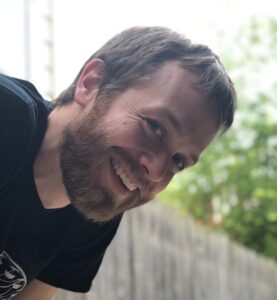
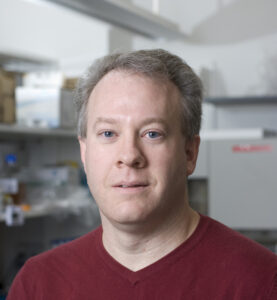
Sebastian Castillo-Hair

I am a postdoc in the Seelig Lab at UW. I’m using massively parallel reporter assays and deep learning methods to engineer synthetic biological systems in human cells. I obtained my PhD in Bioengineering at Rice University, where I worked in optogenetics and B. subtilis synthetic biology. As an undergrad, I studied Mechatronics Engineering at Universidad Nacional de Ingenieria in Lima, Peru, where I am from.

Tiffany Tsang

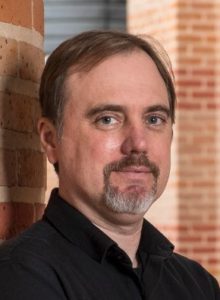
Ryan Tappel

Bachelor’s (John Carroll University) and Ph.D. (SUNY-Environmental Science & Forestry) in Biochemistry. Worked at LanzaTech as part of the Synthetic Biology team since 2014. Focus on enzymology-related research as well as regulatory efforts.

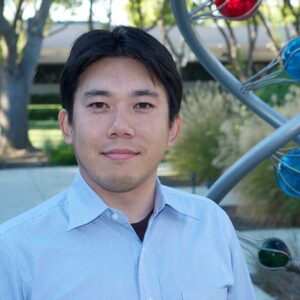
Yasuo Yoshikuni

Dr. Yasuo Yoshikuni is a staff scientist at Lawrence Berkeley National Lab. He leads the DNA synthesis science user program at the DOE Joint Genome Institute (JGI). His program has already supported more than 200 user projects globally, and several major publications were published through the program. Dr. Yoshikuni’s personal research focus is to study and understand microbe- and plant-microbe communications for sustainable agriculture, developing non-model yeast for fuel and chemical production, and biomaterials synthesis using systems and synthetic biology. Before joining the DOE JGI, Dr. Yoshikuni was co-founder and chief science officer at a clean technology start-up, Bio Architecture Lab, Inc. (BAL), where his significant achievement was using systems and synthetic biology to discover novel pathways assimilating unique sugar polymers in macroalgae and to develop the first microbial platform technologies unlocking the potential of macroalgae as an environmentally sustainable and cost-effective biomass for production of renewable fuels and chemicals. The development of this technology allowed the company to build a strong IP propositions and to raise ~$40 million from private funding sources, receive prestigious national grants, and build a commercial partnership with leading companies in the oil and chemical industries. The work also led to several patents and high-impact scientific publications.

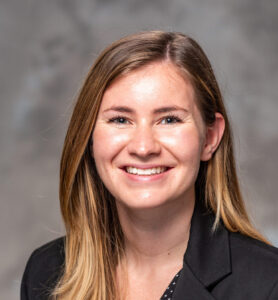
Alexandra “Lex” Patterson

Lex is currently a 3rd year bioengineering Ph.D. student at Georgia tech researching cell-free diagnostics. In the past, she has worked to establish large scale educational outreach events to encourage students to pursue careers in engineering. In her free time, she enjoys playing tennis and pickleball.

Assess your Success – Contribute to EBRC’s Assessment of Engineering Biology!

We need your input! EBRC is undertaking an assessment of our 2019 technical research roadmap, Engineering Biology. Vital to this process is input from EBRC members, affiliates, and stakeholders and the broader engineering biology community.

Assess progress towards the research milestones by completing a SURVEY and join us for an upcoming WORKSHOP to discuss and report on progress and remaining barriers.

Student or Postdoc? Click here for information about the hackathon!


Assessment Surveys

Please help us assess the roadmap by filling out the surveys linked below related to your research interests. Each survey will guide you through an evaluation of the Engineering Biology milestones and allow you to provide evidence (cite yourself!) associated with progress or barriers. Surveys may be saved and returned to prior to submission.

The information from this assessment will be invaluable to many different audiences: EBRC members, students, and postdocs to assess the utility of our roadmaps; for stakeholders, funders, and policymakers to understand the progress and continued challenges we face; and for the EBRC Roadmapping Working Group, so that we can create more accurate and effective roadmaps in the future.

The product of this assessment will include:

1) Summaries of milestone progress; commentary on technical and non-technical barriers to progress; and description of ethical, legal, social, or environmental considerations impacting milestone progression and opportunities for collaboration with social scientists; and

2) Case studies spotlighting examples of how technical progress is shaping, or is being shaped by, the Application and Impact Sectors (Energy, Health and Medicine, Industrial Biotechnology, Environmental Biotechnology, Food & Agriculture) outlined in Engineering Biology.

Please click the survey links above to begin your contribution. Surveys will close May 28, so fill yours out now! We are looking for responses from all members of the community, including graduate students, postdocs, PIs, industry scientists and leadership, government researchers, and additional stakeholders, to provide their candid assessments of the field.

If there are any questions, comments, or concerns, please email Albert Hinman (awh@ebrc.org).


Assessment Workshops

Please join us for workshops to discuss and summarize research progress and barriers in each of Engineering Biology’s four technical themes. Informed by our survey(s), these summaries will detail how technical theme research milestones have progressed since 2019, discuss technical and nontechnical barriers to Goal progression, and address ethical, legal, social, or environmental considerations associated with the Goals.

Please use the links below to learn more and register for a workshop of interest:

For more information about the workshops please email Albert Hinman (awh@ebrc.org).


Student and Postdoc Hackathon

Register for the Assessment of Engineering Biology Student and Postdoc Hackathon: Friday, May 28; 1-3pm EST / 10am-12pm PST! The technical expertise of graduate students and postdocs are critically needed for our Assessment of Engineering Biology survey(s).

This virtual Hackathon event (2 hours) will divide participants into four themed breakout rooms (Engineering DNA, Biomolecular Engineering, Host and Consortia Engineering, and Data Science) for each participant to complete an individual survey. Participants will:

  • Be introduced to the Assessment project about why this project is important, recommended advice on filling out the survey, and how they can contribute to EBRC Roadmaps;
  • Complete a survey with fellow graduate students and postdocs in an inclusive and cooperative setting;
  • Discuss and state any interesting technical and nontechnical barriers; ethical, legal, social, or environmental aspects associated with the technical research roadmap goals.

Please register for this event no later than May 26th. Whether you are a first year graduate student or a fifth year postdoc, we greatly need your participation. All EBRC SPA members or graduate students/postdocs in EBRC-member affiliated labs are welcome! All participants will receive contributorship (authorship) credit in Assessment publications and SPA members will be entered into a raffle for free EBRC swag. If you cannot attend this event, please still fill out a survey! These results are going to shape the narrative of how EBRC advocates with policymakers and science funders about the needs of our research field, and we greatly need your voice present. If there are any questions, comments, or concerns, email awh@ebrc.org.
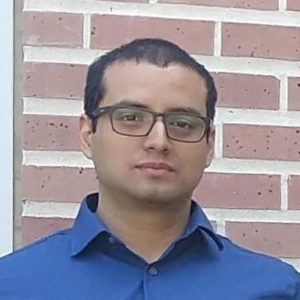

Todd Treangen

I am an Assistant Professor in the Computer Science Department at Rice University in Houston, TX. My research group focuses on bioinformatics, specializing in metagenomics, biosecurity, and microbial forensics. In addition, I have prioritized developing open-source bioinformatics software and analysis pipelines designed to facilitate exploratory and hypothesis-driven biological research, aimed at the intersection of microbial ecology, comparative genomics, and computer science. https://www.gitlab.com/treangenlab

Sifang Chen

Sifang is interested in applications of engineering biology toward sustainability and has just recently made the transition from the lab to science policy. Prior to joining EBRC, she worked on DNA computing and DNA data storage as a postdoctoral researcher at the University of Washington. Previously, she was an intern and visiting researcher at Microsoft Research, where she built chemical-based wearables and low-cost pollution sensors. Sifang received her Ph.D. in Physics from the University of Washington in 2019 researching DNA-based programmable materials. She is thrilled to have the opportunity to learn about science policy and work with a wide-ranging group of experts and stakeholders. She will be primarily working in the Roadmapping focus area and looking at how biotechnology could contribute to creating equitable climate solutions.

EBRC Announces Dr. India Hook-Barnard as the next Executive Director

Dear Colleagues:

With the growth of EBRC and its latest establishment of the BioMADE Manufacturing Innovation Institute, I am incredibly pleased to (re)introduce Dr. India Hook-Barnard as the next Executive Director of EBRC.

India has been a Senior Advisor with EBRC for the last several months and will now be taking over the day-to-day direction and operations of the Consortium. She has deep experience working across industry, government and academia to establish cross-sectoral programs in areas highly relevant to engineering biology. As part of this transition, she’s looking forward to connecting with EBRC’s members and government sponsors to discuss your priorities and our joint opportunities to advance engineering biology goals. I look forward to working with her to grow EBRC’s impact and grow the impact of our field. 

Prior to joining EBRC, India was Senior Advisor to the Beyond 2020: A Vision and Pathway for NIH Working Group, and Senior Vice President for Patient Outcomes and Experience at the National Marrow Donor Program. Before that, she served as the inaugural Executive Director of the California Initiative to Advance Precision Medicine and as the Director of Research Strategy at the University of California, San Francisco. Earlier in her career, India worked at the National Academies of Sciences, Engineering, and Medicine focusing on issues of emerging science and technology, including synthetic biology, precision medicine, biosecurity and biodefense. She earned her PhD in Microbiology—Medicine from the University of Missouri, and continued to study the regulation of gene expression in bacteria and phage during her postdoctoral fellowship at the NIH. India brings a wealth of experience to EBRC and we’re happy to have her join the team.

Reporting through the president to the board, India will oversee all EBRC staff and programs, develop and lead new initiatives, and be your primary EBRC point of contact. India is taking this role at a key time for EBRC: we now have a significant number of ongoing programs and will be up to 10 team members by summer. I will remain actively involved as president by participating in strategic initiatives and key projects. 

Thank you for your engagement with EBRC and I look forward to continuing our work together. 

Best,
Doug

EBRC Announces Dr. India Hook-Barnard as the next Executive Director

Dear Colleagues:

With the growth of EBRC and its latest establishment of the BioMADE Manufacturing Innovation Institute, I am incredibly pleased to (re)introduce Dr. India Hook-Barnard as the next Executive Director of EBRC.

India has been a Senior Advisor with EBRC for the last several months and will now be taking over the day-to-day direction and operations of the Consortium. She has deep experience working across industry, government and academia to establish cross-sectoral programs in areas highly relevant to engineering biology. As part of this transition, she’s looking forward to connecting with EBRC’s members and government sponsors to discuss your priorities and our joint opportunities to advance engineering biology goals. I look forward to working with her to grow EBRC’s impact and grow the impact of our field.

Prior to joining EBRC, India was Senior Advisor to the Beyond 2020: A Vision and Pathway for NIH Working Group, and Senior Vice President for Patient Outcomes and Experience at the National Marrow Donor Program. Before that, she served as the inaugural Executive Director of the California Initiative to Advance Precision Medicine and as the Director of Research Strategy at the University of California, San Francisco. Earlier in her career, India worked at the National Academies of Sciences, Engineering, and Medicine focusing on issues of emerging science and technology, including synthetic biology, precision medicine, biosecurity and biodefense. She earned her PhD in Microbiology—Medicine from the University of Missouri, and continued to study the regulation of gene expression in bacteria and phage during her postdoctoral fellowship at the NIH. India brings a wealth of experience to EBRC and we’re happy to have her join the team.

Reporting through the president to the board, India will oversee all EBRC staff and programs, develop and lead new initiatives, and be your primary EBRC point of contact. India is taking this role at a key time for EBRC: we now have a significant number of ongoing programs and will be up to 10 team members by summer. I will remain actively involved as president by participating in strategic initiatives and key projects.

Thank you for your engagement with EBRC and I look forward to continuing our work together.

Best,
Doug

India Hook-Barnard

Dr. India Hook-Barnard is Chief Executive Officer of the Engineering Biology Research Consortium (EBRC). Her primary interests are in the areas of synthetic biology, precision medicine, responsible innovation, and biosecurity. India enjoys building multidisciplinary collaborations and developing a vision and strategy to address complex challenges. She works with experts and leaders from across academia, industry, and government sectors to identify and shape scientific opportunities, technical feasibility, and policy issues. Her goal is to advance and accelerate engineering biology solutions across all application areas, drive innovation, and grow the bioeconomy for all.

Prior to joining EBRC, India was Senior Advisor to the Beyond 2020: A Vision and Pathway for NIH Working Group, and Senior Vice President for Patient Outcomes and Experience at the National Marrow Donor Program. She was the Director of Research Strategy and Associate Director, Precision Medicine at the University of California, San Francisco; she helped launch and was the Executive Director for the California Initiative to Advance Precision Medicine. Earlier in her career, India worked at the National Academies of Sciences, Engineering, and Medicine (NASEM), focusing on areas of emerging science and technology, including policy issues of data governance, regulation, bioethics, biodefense, and workforce development. At NASEM, she directed standing committees, workshops, and six consensus reports, including Toward Precision Medicine: Building a Knowledge Network for Biomedical Research and a New Taxonomy of Disease (2011).

As a postdoctoral research fellow at the National Institutes of Health, India studied the regulation of gene expression in bacteria and phage. She earned her PhD in Microbiology-Medicine from the Department of Molecular Microbiology and Immunology at the University of Missouri.

John Dileo

John Dileo manages the Biotechnology and Life Sciences Department at the MITRE Corporation in McLean, Virginia. He holds a Ph.D. in Molecular Genetics & Biochemistry from the University of Pittsburgh and has specialized in experimental and theoretical research in molecular, systems, and synthetic biology, while also providing support and oversight to numerous large Government research and development programs in those fields of study. At MITRE, his department has groups that focus on biosafety, security and quality; countering weapons of mass destruction; medical countermeasures development; and human performance optimization.

Moon lab alum among researchers who developed one of the first COVID-19 vaccines

Tatenda Shopera, an alum of EBRC member Tae Seok Moon‘s lab, is among the researchers who developed one of the first COVID-19 vaccines at Pfizer. Shopera was highlighted in Washington magazine. Click here to read the full article.

EBRC Virtual Seminar Series 2021

Please join us for an exciting seminar series highlighting research advancing the field. Seminars are open to all, so please feel free to share this information with your colleagues.

Seminars will be held on Zoom using the following link for all sessions:
Zoom link: https://berkeley.zoom.us/j/97626552307?pwd=alVlS3dXM0lZYklYeE9zVXljWUI0UT09
Meeting ID: 976 2655 2307
Passcode: EBRC2021


EBRC SEMINAR SERIES – MAY 4, 2021 (3:00 PM ET)

Click here for more information, including abstracts (when available).

Engineering multilevel CRISPR-based kill-switches for probiotic Escherichia coli
Austin Rottinghaus (Washington University in St. Louis)

Substrate-Activated Expression of a Biosynthetic Pathway in Escherichia coli
Cynthia Ni (MIT)

Robust direct digital-to-biological data storage in living cells
Sung Sun Yim (Columbia University)


EBRC SEMINAR SERIES – MAY 13, 2021 (2:00 PM ET)

Click here for more information, including abstracts (when available).

TBD
Aindrila Mukhopadhyay (Lawrence Berkeley National Lab)

“Non-canonical crRNAs derived from host transcripts enable multiplexable RNA detection by Cas9”
Chunlei Jiao (Helmholtz Institute for RNA-based Infection Research)

“Developing a mathematical framework for controlling complex biological systems”
Marcella Gomez (UC Santa Cruz)

“The Promoter Calculator – A Sequence-to-Function Biophysical Model of Transcriptional Initiation for Sigma70 Promoters with Any Sequence”
Travis La Fleur (Penn State)


EBRC SEMINAR SERIES – MAY 21, 2021 (4:00 PM ET)

Click here for more information, including abstracts (when available).

Sequence-function analysis helps identify multiple pathways to enhance Phenylalanine Ammonia-Lyase (PAL) activity
Nikhil Unni Nair (Tufts University)

Development of a yeast-based assay for bioavailable phosphorous
Heather Shepherd (University of Notre Dame)

Engineering alternative degradation tags for synthetic circuits
Prajakta Jadhav (South Dakota State University)