
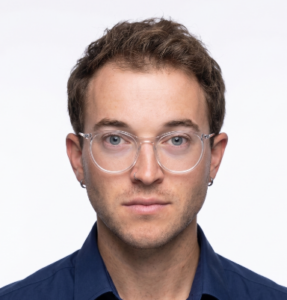
Xave Bower graduated from the University of Chicago in 2020 with a B.S. in Molecular Engineering, and a background in immunoengineering research. They spent 4 years in R&D at BillionToOne, a cell-free diagnostics startup in the Bay Area. Xave is now a Chemical & Biological Engineering Ph.D. student coadvised by Julius Lucks and Josh Leonard in Northwestern University’s Center for Synthetic Biology, working on applying AI and high throughput screening to design high performance functional RNA switches to control RNA-based therapeutics systems in mammalian cells.
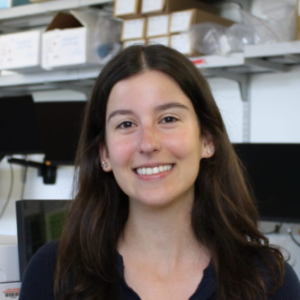
Stella Anastasakis graduated from the University of Washington in 2025 with a B.S. in Chemical Engineering, where she worked on tool development for engineering non-model microbes. Stella is now a Ph.D. student in the Stanford University Bioengineering department, working with Professor Michael C. Jewett on cell-free enzyme engineering for sustainable bioproduction.
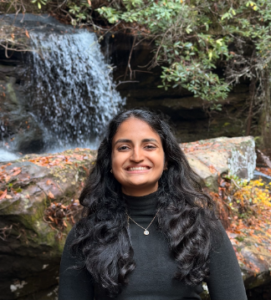
Pallavi Ramaswamy is a 3rd-year PhD student in the Genome Science and Technology (GST) program at the University of Tennessee, Knoxville working with Dr. Ilenne del Valle and Dr. Carrie Eckert at Oak RIdge National Laboratory. Her research focuses on the application of synthetic biology tools to understand and engineer non-model soil bacteria. Specifically, she develops biosensors for ecosystem engineering applications like understanding plant–microbe and microbe–microbe communication, and CRISPR systems for genotype-to-phenotype mapping in environmentally- and industrially-relevant bacteria.
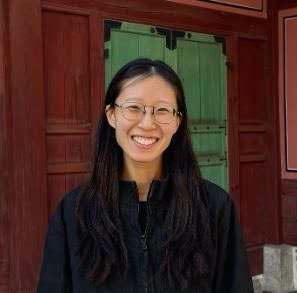
Yejun Kim graduated from Northwestern University with a B.S. in Chemical Engineering. After exploring process engineering (AbbVie), fungal phylogenomics (The Field Museum), and strain development (LanzaTech), she is currently a Chemical Engineering Ph.D. candidate and NSF GRFP fellow at the University of Washington. Yejun is studying platforms for optimizing microbial phenotypes to advance sustainable bioproduction capabilities.
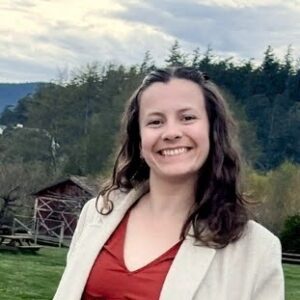
Mia Giallorenzi graduated from Dartmouth College with a B.E. in Biomedical Engineering. She is now a third year PhD student in Molecular Engineering and a NSF GRFP fellow at University of Washington. Her research focuses on engineering bacterial therapeutics for cancer immunotherapy.
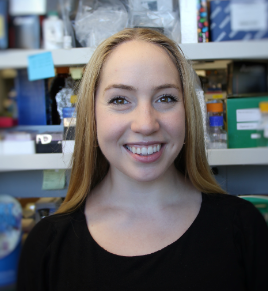
Kathryn (Kat) Myers is a fifth-year PhD Candidate in Bioengineering at Stanford University in the lab of Dr. Mike Jewett, where her work centers on protein engineering for sustainable, accessible manufacturing of therapeutics. She is also a National Defense Science and Engineering Graduate (NDSEG) fellow, a McCoy Center for Ethics and Society Graduate fellow, and previously an AI x Biosecurity fellow at Cambridge. Kat holds a B.S. in Biological Engineering from Purdue University and a M.S. in Chemical Engineering from Northwestern University.

Sudarshan GC completed his masters in synthetic biology and microfluidics from Universite Paris Cite and PSL Research University, France. He is now a PhD fellow at IIT, Italy, working on gene circuit designs in immune cells.
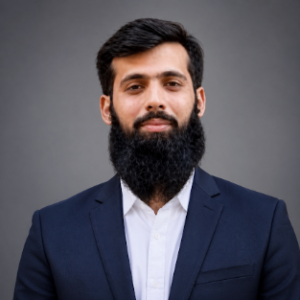
Muhammad Mubashar Beig is a veterinarian-microbiologist and PhD researcher at UVAS, Pakistan, specializing in pathogen genomics, arbovirus surveillance, antimicrobial resistance, and One Health. His research integrates qRT-PCR, next-generation sequencing, bioinformatics, and GIS. An IFBA-certified biorisk management, biosecurity and Cyberbiosecurity professional and ISO 35001:2019 Lead auditor, he also works in diagnostics and biosecurity. As EBRC SPA Mentorship Program Chair, he promotes global early-career researcher engagement.
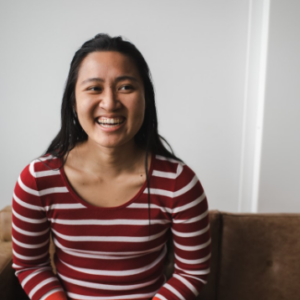
Felicia Oentoro is a PhD candidate at Georgia Tech advised by Mark Styczynski. Her research focuses on developing diagnostic platforms using synthetic biology. Beyond work, she enjoys being outside and can be found climbing with friends or running without headphones.
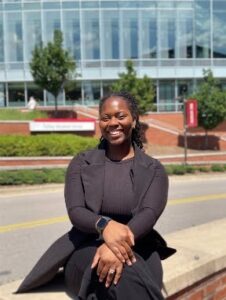
Glory J. Onajobi-Lee is a bioengineering Ph.D. candidate in the Wilson Lab at the Georgia Institute of Technology. She earned her B.S. in Chemistry from Emory University and her M.S. in Bioengineering from Georgia Tech. Her research focuses on engineering proteins and genetic circuits to expand the capabilities of biological systems for applications in biomanufacturing and living therapeutics. Beyond her research, she is passionate about connecting researchers, sharing opportunities, and making the synthetic biology community more accessible and engaging. As Communications Chair for EBRC SPA, she looks forward to highlighting the people, ideas, and initiatives shaping the field.

Dawn Beraud, Ph.D., serves as the Executive Director of AIMBE. As a science policy leader with senior government experience and a keen understanding of Capitol Hill processes, Dr. Beraud brings to AIMBE her passion for helping scientists join the conversation and influence policy decisions. She directs AIMBE’s strategic planning and partners with Fellows to provide advocacy leadership in medical and biological engineering. Dr. Beraud joins AIMBE from the National Institute on Aging (NIA) at NIH, where she led congressional relations and external outreach for almost a decade. Prior to joining the NIA, Dr. Beraud worked on autism spectrum disorder (ASD) research policy at the National Institute of Mental Health. Dr. Beraud received a B.S. in psychology from the University of Florida and a Ph.D. in neuroscience from Georgetown University.
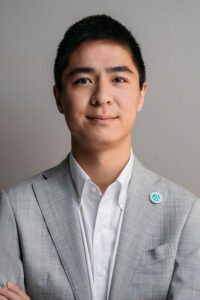
Jason Marvin, Ph.D., serves as the Director of Partnerships and External Relations at AIMBE. He received his B.S. and Ph.D. in biomedical engineering from The University of Texas at Dallas and Cornell University, respectively. He also completed postdoctoral training in genetics and regenerative biology at Harvard Medical School. At AIMBE, Jason leads multiscale advocacy initiatives that mobilize biomedical researchers across academia, industry, and government on a global scale. He directs broader coalition efforts, including AIMBE’s Council of Societies and the Friends of NIBIB (FoNIBIB). Jason organizes congressional activities, including Capitol Hill Days, educational briefings, and MedTech showcases for biomedical researchers to advocate for biomedical research. He also develops policy updates and educational programs to empower scientists of all career stages to engage meaningfully with non-scientific audiences. Prior to AIMBE, Jason served as Chair of the Orthopaedic Research Society (ORS) Public Outreach Committee and worked as a science policy analyst in the Texas House of Representatives.
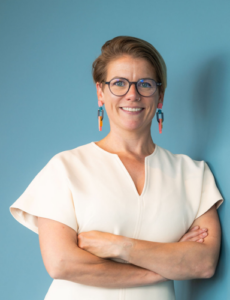
Jen holds a first-class Master’s and a PhD in Biochemistry from the University of Sheffield. With 20+ years in biotech across academia and industry, she’s led in R&D, sales, business development, and transformation. Now CEO of the BBIA, she champions the circular bioeconomy, working with government, industry, and academia to shape policy, attract investment, and drive innovation. Jen co-authored key national reports on biotech and sustainable chemicals and sits on several advisory boards, including the Industrial Biotechnology Leadership Forum. She also co-founded the UK Alliance for Sustainable Chemicals and Materials, and the BioRevolution Coalition.
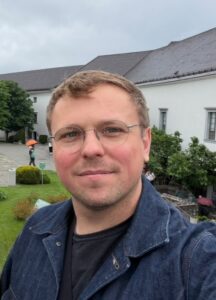
Daniel de Castro Assumpção is a Science Policy Postdoctoral Fellow at EBRC, where he works on biosecurity-related topics, after almost 15 years in between academia and industry. He earned his undergraduate degree in Chemical Engineering from the University of Campinas (Brazil), then worked at Gruppo Mossi Ghisolfi in Italy and Brazil on the commissioning and start-up of a commercial-scale cellulosic ethanol facility. He returned to the University of Campinas for a master’s degree, where he studied metabolic inhibition in Clostridium butanol fermentations. He then worked in fermentation process development at Codexis and Amyris in the San Francisco Bay Area before pursuing his Ph.D. in Chemical and Biological Engineering at Northwestern University with Prof. Danielle Tullman-Ercek, where he engineered protein shells as therapeutic carriers for targeted delivery. During his Ph.D., he was also an Arturo Falaschi Fellow at the International Centre for Genetic Engineering and Biotechnology (ICGEB) in Italy, where he worked on the development of diagnostic standards for pandemic response.
Call for abstracts + travel grants: Join the 28th EMBL PhD Symposium, “Shifting Gears: Automation, AI, and High-Throughput Methodologies,” at EMBL Heidelberg and online, 2–4 December 2026. Abstracts are accepted until 9 September 2026. Travel grants include a registration-fee waiver and travel support of up to €1,000 for international participants or €400 for EU participants. https://phdsymposium.embl-community.io/
About the company
Fieldstone Bio is an early-stage synthetic biology company focused on environmental monitoring. Our technology, which originated at MIT, combines microbiology, synthetic biology, artificial intelligence, and advanced imagery to solve key challenges in mining, pollution surveillance, and national security.
Position summary
Fieldstone Bio is looking for a highly motivated Senior Scientist or Principal Scientist to join our growing Synthetic Biology team, where they will work to design, build, and test microbial biosensors for function in lab-, soil-, water-, and rock-based environments. Target molecules for these biosensors will include metals (for mining applications) and small molecules relevant to Fieldstone’s ongoing and future programs. This role will drive development of biosensors for small molecules with no known regulators, requiring expertise in transcriptomics-based approaches and/or experience in protein engineering and directed evolution. A successful candidate will independently contribute to sensor design, construction, and testing, leveraging synthetic biology expertise to identify the genetic parts and microbial chassis most suited for the program. This is a lab-based role that will work collaboratively with the company’s Microbiology team and AI Data team. This role provides a unique opportunity to impact the development of research and development strategies at an early-stage biotechnology company. This role is on-site and located in Woburn, MA.
Key Responsibilities:
Qualifications:
Fieldstone Bio is committed to building a diverse and inclusive environment. All applicants will be considered without regard to race, color, religion, sex, sexual orientation, gender identity, national origin, protected veteran status or disability.
About the company
Fieldstone Bio is an early-stage synthetic biology company focused on environmental monitoring. Our technology, which originated at MIT, combines microbiology, synthetic biology, artificial intelligence, and advanced imagery to solve key challenges in mining, pollution surveillance, and national security.
Position summary
Fieldstone Bio is looking for a highly motivated Microbiologist to join our growing team, where they will test the diverse functions of our engineered microbial-based biosensors. The successful candidate will independently contribute to the development and implementation of different assays intended to discern functional output of a variety of engineered model and non-model microorganisms. This is a hands-on, lab-based role that will work collaboratively with the company’s Synthetic Biology team and AI Data team. This role provides a unique opportunity to impact the development of research strategies at an early-stage biotechnology company.
Key Responsibilities:
Qualifications:
Fieldstone Bio is committed to building a diverse and inclusive environment. All applicants will be considered without regard to race, color, religion, sex, sexual orientation, gender identity, national origin, protected veteran status or disability.