Programming Living Bacteria

A 30 minute overview of synbio, its applications and a brief description of the techniques used in biotechnology. A very accessible video designed for the general public, it has engaging and clear animations.

Produced by iBiology.org, this video features EBRC member Dr. Christopher Voight.

iGEM Style

Arguably the video that popularized the tradition of iGEM song parodies, and still a great way to get a feel for what it’s like to work in a lab as part of a team. A group that is not engaged and passionate about what they’re doing could not have produced something like this.

Video by iGEM Calgary (featuring “Gangnam Style” by PSY)

Biodesign in the Era of Automation

Zach Serber, CSO and one of the founders of Zymergen, gives an hour-long webinar with the hundreds of students and mentors for 2019’s Biodesign Challenge. He spoke on the need for bio-based materials in the face of dwindling petroleum supplies and climate change; the potential of bio-processes for creating new and superior products with increased molecular diversity; and the new methods being used to design microbes to make these products at useful scales.

Todd Treangen

Todd J. Treangen, Ph.D. is an Assistant Professor in the Department of
Computer Science at Rice University. Prior to joining Rice, Dr. Treangen was
a Research Scientist at the University of Maryland College Park and led the
Bioinformatics group at the National Biodefense Analysis and Countermeasures
Center (NBACC) in Frederick, MD. He received his Ph.D. in Computer Science
in 2008 from the Polytechnic University of Catalonia (Barcelona, Spain). His
research group focuses on solving large-scale computational problems
specific to computational biology, with focus on developing robust software
tools targeted towards biothreat screening, infectious disease monitoring,
and microbial forensics.

Bridget Luckie

I graduated from Clemson University in 2018 with a B.S. in Biochemistry and a B.S. in Genetics and am a rising 2nd year PhD student in the Department of Molecular and Cell Biology at UC Berkeley.

2nd Annual Synthetic Biology Congress

Over 600 senior-level delegates representing internationally renowned research & academic institutions, clinical research institutions and pharmaceutical companies.

Over 20 case studies and presentations demonstrating the latest synthetic biology tools and their therapeutic applications.

Including 2 interactive streams:

Synthetic Biology – Tool Design & Development
Synthetic Biology – Evaluating Applications

View Agenda: https://www.oxfordglobal.co.uk/syntheticbiology-congress/download-agenda/

Free Live Webinar
Machine Learning for and by Synthetic Biology
Presented by Jean-Loup Faulon, Director, Institute of Systems & Synthetic Biology iSSB and Professor, University of Manchester
Tuesday October 8th 2019, 9:30am BST
Register Now & Receive Free Recording: https://bit.ly/2JvoY8C

For further information, contact b.copeman@oxfordglobal.co.uk

Go Social: Follow @xgenseq and join the congress conversation on #GENSERIESUK19
Follow Linked In group and network with industry and academic peers

Neda Bagheri

Update My Profile

Please use the form below to request changes to your EBRC profile.

Larry Gilbertson

Roel Bovenberg

I am currently working on natural product discovery programs, yeast strains and enzymes that can convert agricultural residues into bioethanol and various microbial cell factory programs for more sustainable production of enzymes, biochemicals and natural products, such as antibiotics. Another aspect is the development of both traditional evolution and bioinformatics methods for fast screening and safe engineering of desired microbial cell factories. At the University of Groningen in the Netherlands, my projects focus on the development of new cell engineering methods for filamentous fungi, to accelerate the discovery of natural products for – among other things – new antibiotics.The aspect of my work that excites and inspires me the most is that Biotechnology can contribute in many ways to the big global societal challenges, as outlined by the UN Sustainable Development Goals, by addressing key technical challenges and that DSM is in the position to make a real contribution. The fast developments in the Biological Sciences are both a constant challenge and a source of inspiration, especially the increasing knowledge and technologies to characterize, understand and deploy microbial life. Another source of inspiration is the necessity to do so in a responsible manner, which requires good education, relevant stakeholder networks, clear communication and continuous learning.

Diane Pierotti

Diane Pierotti

Diane brings over 35 years of research program development and successful program funding efforts in excess of $3B, strategic planning and executive management experience. Diane was instrumental in EBRC’s successful launch in 2016 following the sunsetting of SynBERC. In this role, she coordinated the development and submission of the proposal that led to the Department of Defense (DoD) 2020 award to create the Bioindustrial Manufacturing and Design Ecosystem (BioMADE) Institute, a USA Manufacturing Institute and served as BioMADE’s Chief Financial and Operating Officer until 2024.

Diane is a graduate of UC Berkeley where she spent the majority of her career serving in many roles including as the Deputy Director of the QB3 Institute and Assistant Vice Chancellor for Research overseeing Research Enterprise Systems and the development of large-scale science initiatives. At Berkeley, she conceptualized, developed and shepherded large-scale science efforts and programs through successful resource procurement, launch and on-going operations. Notable efforts launched include the National Center for the Workplace, QB3 Institute, the Center for Computational and Genomic Biology, and the NSF-funded SynBERC,. Diane led Berkeley’s coordination efforts to establish the Stanford Underground Research Facility (SURF) and oversaw the successful proposal development establishing the Energy Biosciences Institute (EBI), a $500M award – the largest university-industry agreement in the nation’s history.

Following her time at UC Berkeley, Diane held positions at Lawrence Berkeley National Laboratory’s Biological Systems and Engineering (BSE) Division and Joint BioEnergy Institute (JBEI). She oversaw the development of three successful JBEI renewal proposals and coordinated large-scale proposal efforts. As Director of Research Advancement, Diane coordinated JBEI’s successful competitive renewal proposal and as BSE’s Deputy Operations Director and JBEI’s COO, Diane oversaw an annual budget of over $30M, a 65,000 sf research facility, EH&S, outreach and communications, lab operations and business services.

Diane also spent two years as Director of Institutional Philanthropy at Planned Parenthood Northern California (PPNorCal), the nation’s fifth largest affiliate serving 20 counties and providing services to 150,000+ people. She more than doubled their annual institutional philanthropy support. Diane has founded and served on the Boards of a number of non-profit organizations. She currently serves on the Board of Directors for Calidad Industries, a 501-C-3 providing training and employment opportunities for adults with physical, mental or psychological impairments.

Angela Lee

Angela is currently the Administrator at EBRC, managing event planning, administration, and program support. Prior to her role at EBRC, Angela was an Administrator at an international auction house specializing in antiques. A native of the bay area, she received her bachelors in International Relations from the University of California Davis and Masters of Business Administration at Golden Gate University.

Laurie Zoloth

Laurie Zoloth

A leader in the field of religious studies with particular scholarly interest in bioethics and Jewish studies, Laurie Zoloth’s research explores religion and ethics, drawing from sources ranging from Biblical and Talmudic texts to postmodern Jewish philosophy, including the writings of Emmanuel Levinas. Her scholarship spans the ethics of genetic engineering, stem cell research, synthetic biology, social justice in health care, and how science and medicine are taught. She also researches the practices of interreligious dialogue, exploring how religion plays a role in public discussion and policy.

Zoloth is author of Health Care and the Ethics of Encounter: A Jewish Discussion of Social Justice and co-editor of five books, including Notes from a Narrow Ridge: Religion and Bioethics and Jews and Genes: The Genetic Future in Contemporary Jewish Thought.

Zoloth has been the president of the American Academy of Religion and the American Society for Bioethics and Humanities. She was the inaugural director of the Jewish Studies program at San Francisco State University and director of graduate studies in religious studies at Northwestern. She is an elected member of the Hastings Center and a life member of Clare Hall, University of Cambridge. She is a founding board member of the Society for Scriptural Reasoning.

Her work on bioethics and health care led her to serve on the NASA Advisory Council, the space agency’s highest civilian advisory board; the International Planetary Protection Committee; the National Recombinant DNA Advisory Board, and the executive committee of the International Society for Stem Cell Research. She served as chair of the first bioethics advisory board at the Howard Hughes Medical Research Institute and has testified in front of Congress, the President’s Commission on Bioethics, and state legislatures.

Zoloth began her career as a neonatal nurse working in impoverished communities; she holds a bachelor’s degree in women’s studies from the University of California, Berkeley and a bachelor’s degree in nursing from the University of the State of New York. She received a master’s degree in Jewish studies and a doctorate in social ethics from the Graduate Theological Union. Zoloth also holds a master’s degree in English from San Francisco State University.

Prior to joining the University of Chicago, Zoloth served as a Charles McCormick Deering Professor of Teaching Excellence at Northwestern University, holding appointments in the Department of Religious Studies in the Weinberg College of Arts and Sciences and in the Feinberg School of Medicine. At Northwestern, she was founding director of the Brady Program in Ethics and Civic Life at the Weinberg College of Arts and Sciences and founding director of the Center for Bioethics, Science and Society at the Feinberg School of Medicine.

She currently serves on the Ethics Advisory Board of NASA; the steering committee of The Engineering Biology Research Committee; on the CDC (Biological Agents Working Group); and on the Ethics Board of the American Heart Association.
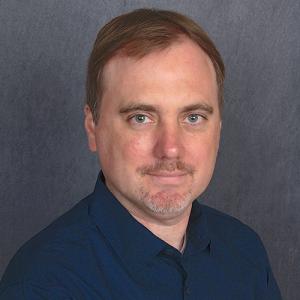
Steve Evans

Steven Evans

Steven L. Evans spent 30 years bringing biotechnology products to the field in small and large companies. Steve’s research blended high-resolution chemical analysis with enzymology and recombinant protein expression to explore agricultural and environmental applications of biotechnology. In 1988 he joined Mycogen Corporation, now Corteva Agriscience, where he was involved in developing natural and recombinant biopesticides, including several crop traits from the Mycogen genome pipeline. He worked to commercialize biochemical actives from natural products, several transgenic crops, and plant genome editing technology. After retiring as a Fellow from Dow AgroSciences he founded Re-Knowvate LLC. His passion is to use this experience and repurpose it today in organizations which drive 21st century biotechnology so that they may learn from the actions of the early pioneers in applied biotechnology, thus accelerating their ability to develop and deploy new technologies to benefit our world. Steve has been active in public-private partnerships such as the National Science Foundation–sponsored SynBERC synthetic biology consortium, which is now the Engineering Biology Research Consortium (EBRC). He served as Chair of the SynBERC the Industrial Advisory Board, and is now active in various roles at the EBRC. Steve served on the National Academies of Sciences Future Products of Biotechnology study and is currently on the NAS Safeguarding the Bioeconomy study. He was co-chair of the Biotechnology Innovation Organization’s Industrial and Environmental Section synthetic biology subteam. He received his BA and BS degrees in chemistry and microbiology from the University of Mississippi and a PhD in microbial physiology from the University of Mississippi Medical School. He was a National Institutes of Health postdoctoral fellow at the University of California, Berkeley, and subsequently with the U.S. Department of Agriculture (USDA) in Peoria, Illinois.

Fuzhong Zhang

Jeffrey Tabor

David Savage

David Savage

Michael Smanski

Michael Smanski is currently an Assistant Professor of Biochemistry, Molecular Biology, and Biophysics in the Biotechnology Institute at the University of Minnesota. He received his BS in Biochemistry from the University of California, San Diego and a PhD in Microbiology from the University of Wisconsin under the mentorship of Ben Shen. As an HHMI Postdoctoral Fellow of the Damon Runyon Cancer Research Foundation, he worked with Christopher Voigt in the Department of Biological Engineering at the Massachusetts Institute of Technology. He joined the faculty of the University of Minnesota in 2014. Throughout his career, Michael has studied and engineered multi-gene systems in bacteria. His group at UMN has developed a new platform for engineering ‘species-like’ barriers to sexual reproduction, and they are currently exploring applications for transgene biocontainment and the control of pest populations. Michael has been a member of EBRC since 2018 and has served on the EBRC Council from 2019-present.

Timothy Lu

Richard Kitney

Richard Kitney

Kitney is Professor of Biomedical Systems Engineering at Imperial College London and Co-Director of the UK’s National Industrial Translation Centre for Synthetic Biology/Engineering Biology (SynbiCITE). Kitney is a Fellow of The Royal Academy of Engineering (the UK’s National Academy of Engineering) and Chaired the Academy’s Inquiry into Synthetic Biology. He a member of the UK’s Ministerial Leadership Council for Engineering Biology. Kitney (with Professor Paul Freemont) has been responsible for founding and developing the Imperial College Engineering/Biology Hub. Kitney has considerable business experience, particularly in relation to start-ups and SMEs. For example, he was Co-founder and Chairman of Visbion Ltd (until December 2022) – a medical imaging and biomedical information systems company, with over 1000 installations in 10 countries. In 2022 Kitney Co-founded SynBioVen (SBV), a venture fund focussing on investment in UK Start-ups and SMEs in engineering biology. He is a Director of SBV. Kitney has published over 300 papers in the fields of engineering biology, mathematical modelling, biomedical information systems, and medical imaging and has worked extensively in and with industry. He was an author of both the UK Government’s Roadmaps for Synthetic Biology. Kitney is an Academician of the International Academy of Biomedical Engineering and is also a Fellow of AIMBE (the America Academy of Biomedical Engineering). In 2006 he was made an Honorary Fellow of both The Royal College of Physicians and The Royal College of Surgeons. In 2016 he was made a Fellow of The Royal Society of Edinburgh.

In June 2001, Kitney was awarded The Order of the British Empire (OBE) in the Queen’s Birthday Honours List for services to Information Technology in Healthcare.